cindy adams
Introduction
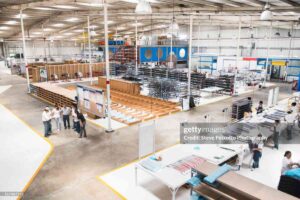
While the immediate effects of the Iran–USA–Israel war are visible in supply chain disruptions and rising energy costs, the deeper and more lasting impact lies in how the conflict is reshaping the global manufacturing landscape.
This war is accelerating structural changes that were already underway—such as deglobalization, regionalization, automation, and geopolitical risk management. Manufacturers are no longer focused solely on cost efficiency; resilience, flexibility, and strategic independence are now top priorities.
This article explores the long-term transformation of manufacturing and how companies are adapting to a new global reality shaped by geopolitical instability.
1. The End of Hyper-Globalization in Manufacturing
1.1 What is Hyper-Globalization?
For decades, manufacturing thrived on globalization:
- Production spread across multiple countries
- Companies sourced materials from the cheapest suppliers
- Efficiency and cost reduction were the main goals
1.2 How War is Disrupting Globalization
The Iran–USA–Israel conflict highlights key risks:
- Overdependence on specific regions
- Vulnerability to geopolitical shocks
- Fragile supply chains
As a result, companies are rethinking global strategies.
1.3 Shift Toward Regionalization
Manufacturers are now focusing on:
- Producing closer to end markets
- Reducing reliance on long-distance logistics
- Strengthening regional supply networks
This trend is reshaping global trade patterns.
2. Supply Chain Diversification as a Core Strategy
2.1 From Efficiency to Resilience
Previously, manufacturers prioritized:
- Low costs
- Lean inventory
- Single-source suppliers
Now, the focus is on:
- Risk reduction
- Redundancy
- Flexibility
2.2 Multi-Sourcing Strategies
Companies are:
- Partnering with multiple suppliers
- Expanding into different geographic regions
- Avoiding reliance on any single country
2.3 Challenges of Diversification
While beneficial, diversification leads to:
- Higher costs
- Increased complexity
- Coordination challenges
Despite this, resilience outweighs efficiency in the current environment.
3. Rise of Nearshoring and Reshoring
3.1 What is Nearshoring?
Nearshoring involves:
- Moving production closer to key markets
3.2 What is Reshoring?
Reshoring refers to:
- Bringing manufacturing back to the home country
3.3 Drivers Behind These Trends
The war accelerates these shifts due to:
- Supply chain disruptions
- Rising transportation costs
- Political uncertainties
3.4 Impact on Global Manufacturing Hubs
Traditional manufacturing hubs may see:
- Reduced dominance
- Redistribution of production capacity
New regions may emerge as manufacturing centers.
4. Acceleration of Automation and Smart Manufacturing
4.1 Labor Shortages and Rising Costs
War-related disruptions can cause:
- Labor shortages
- Increased wages
- Reduced workforce mobility
4.2 Role of Automation
Automation helps manufacturers:
- Maintain production continuity
- Reduce dependency on labor
- Improve efficiency
4.3 Smart Factory Technologies
Technologies transforming manufacturing include:
- Artificial Intelligence (AI)
- Internet of Things (IoT)
- Robotics
- Digital twins
These innovations enable:
- Real-time monitoring
- Predictive maintenance
- Optimized production
5. Geopolitical Risk Becomes a Core Business Factor
5.1 From Operational Risk to Strategic Risk
Geopolitical events are now:
- Central to business decision-making
- Incorporated into long-term planning
5.2 Risk Assessment and Scenario Planning
Manufacturers are investing in:
- Risk modeling
- Scenario analysis
- Crisis management strategies
5.3 Supply Chain Transparency
Companies aim for:
- Greater visibility across supply chains
- Real-time data tracking
- Early warning systems
6. Growth of Defense and Military Manufacturing
6.1 Increased Defense Spending
War leads to:
- Higher government defense budgets
- Increased demand for military equipment
6.2 Expansion of Defense Manufacturing
Industries benefiting include:
- Aerospace
- Weapons systems
- Surveillance technologies
6.3 Spillover Effects
Defense innovation can lead to:
- Civilian technology advancements
- New industrial capabilities
7. Structural Changes in Global Trade
7.1 New Trade Alliances
Countries may:
- Form new partnerships
- Strengthen regional cooperation
7.2 Alternative Trade Routes
To avoid conflict zones:
- New logistics corridors are developed
- Shipping patterns shift
7.3 Impact on Global Trade Flow
Changes include:
- Reduced reliance on Middle East routes
- Increased regional trade
8. Sustainability and Energy Independence
8.1 Shift Toward Renewable Energy
Manufacturers are investing in:
- Solar power
- Wind energy
- Green hydrogen
8.2 Benefits of Energy Independence
Advantages include:
- Reduced exposure to geopolitical risks
- Lower long-term costs
- Environmental sustainability
8.3 Circular Economy in Manufacturing
Companies are adopting:
- Recycling
- Waste reduction
- Resource efficiency
9. Digital Transformation of Manufacturing
9.1 Industry 4.0
The war accelerates adoption of:
- Digital supply chains
- Cloud-based systems
- Data analytics
9.2 Cybersecurity Importance
With increased digitalization:
- Cyber threats become more significant
- Companies must invest in security systems
9.3 Remote Operations
Digital tools enable:
- Remote monitoring
- Virtual collaboration
- Reduced physical dependency
10. Impact on Workforce and Skills
10.1 Changing Skill Requirements
Demand is rising for:
- Technical skills
- Data analysis
- Engineering expertise
10.2 Workforce Reskilling
Companies must:
- Train employees
- Adapt to new technologies
- Build future-ready teams
11. Impact on Emerging Economies
11.1 Opportunities for Growth
Countries like Indonesia can:
- Attract new manufacturing investments
- Become alternative production hubs
11.2 Challenges to Overcome
These include:
- Infrastructure limitations
- Regulatory barriers
- Skilled labor shortages
11.3 Strategic Positioning
Emerging economies must:
- Improve business environments
- Invest in infrastructure
- Promote industrial development
12. Long-Term Outlook for Manufacturing
12.1 A More Resilient Industry
Future manufacturing will be:
- Less dependent on single regions
- More flexible and adaptive
12.2 Higher Costs but Greater Stability
Efficiency may decrease, but:
- Stability and reliability improve
12.3 Continuous Innovation
Innovation will be essential for:
- Competitiveness
- Growth
- Sustainability
Conclusion
The Iran–USA–Israel war is not just a temporary disruption—it is a catalyst for long-term transformation in the global manufacturing industry. From supply chain diversification and regionalization to automation and sustainability, manufacturers are redefining how they operate in a world shaped by geopolitical uncertainty.
Companies that embrace resilience, invest in technology, and adapt to changing global dynamics will emerge stronger and more competitive in the new manufacturing era.

