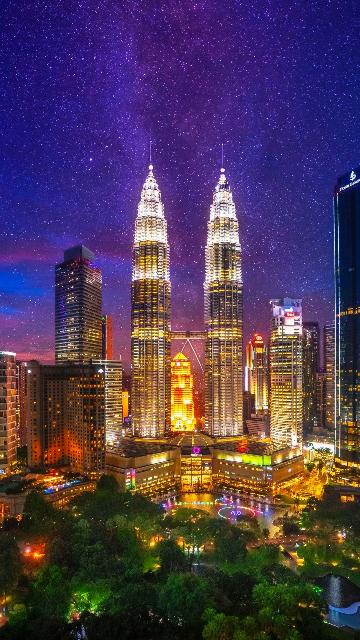
Kuala Lumpur (KL) is the capital and largest city of Malaysia. It’s a vibrant and modern metropolis, known for its impressive skyline, diverse culture, and bustling urban life. Here are some key things about KL:
1. Culture & Diversity:
- KL is a melting pot of cultures, with Malay, Chinese, Indian, and various other ethnic groups living side by side. This diversity is reflected in the city’s food, festivals, and daily life.
- The city has a rich history, blending traditional Malay culture with colonial influences from the British, and more recent global trends.
2. Landmarks:
- Petronas Twin Towers: These iconic towers were once the tallest buildings in the world (1998-2004) and are a symbol of KL. Visitors can go up to the skybridge for stunning views of the city.
- Batu Caves: A limestone hill with caves and temples, it’s a major Hindu pilgrimage site, featuring a massive golden statue of Lord Murugan.
- Merdeka Square: A historical site where Malaysia declared its independence in 1957.
3. Food:
- KL is a food paradise, offering everything from street food to high-end restaurants. Local dishes like nasi lemak (coconut rice with sambal), satay (skewered meats), and char kway teow (stir-fried noodles) are must-tries.
- The city’s food scene is heavily influenced by Chinese, Indian, and Malay cuisines.
4. Shopping:
- KL is a shopping hub, with everything from luxury malls like Suria KLCC (at the base of the Petronas Towers) to bustling street markets like Petaling Street (Chinatown) and Central Market.
- There’s also Bukit Bintang, a popular shopping and entertainment district.
5. Weather:
- KL has a tropical rainforest climate, meaning it’s hot and humid year-round, with frequent rainfall. The temperature generally ranges between 25°C and 32°C (77°F to 90°F).
6. Transportation:
- KL has a well-developed public transportation system, including buses, trains (LRT, MRT), and the monorail. The KLIA airport connects the city internationally, and KL Sentral is the main transport hub.
7. Nightlife:
- The city comes alive at night with vibrant nightlife options, from rooftop bars with panoramic views (like SkyBar or Marini’s on 57) to nightclubs, pubs, and night markets.
8. Economy:
- KL is the economic and business center of Malaysia, with a focus on industries like finance, real estate, and technology. It’s home to the regional headquarters of many international companies.
KL is a city where modernity and tradition coexist, making it an exciting place for visitors. Whether you’re interested in shopping, food, history, or nature, there’s something for everyone.
Kuala Lumpur is a major business and economic hub in Southeast Asia, and its business environment is dynamic and growing. Here’s an overview of the business landscape in KL:
1. Key Industries:
- Finance & Banking: KL is Malaysia’s financial center, home to the Kuala Lumpur Stock Exchange (KLSE), major banks (e.g., Maybank, CIMB), and international financial institutions. The city’s financial district, Tun Razak Exchange (TRX), is a key area for financial services and investments.
- Real Estate & Property Development: The real estate sector is thriving with large-scale projects like the TRX development, KL Eco City, and high-rise residential buildings. KL’s property market is attractive for both local and international investors.
- Technology & Startups: KL has seen significant growth in the tech industry, with a growing number of startups in sectors like e-commerce, fintech, and software development. The Cyberjaya area, just outside KL, is a hub for tech companies, and there are various government initiatives to support innovation and entrepreneurship.
- Manufacturing: KL is also home to a strong manufacturing sector, particularly in electronics, machinery, and chemicals. Many multinational corporations have production facilities or regional headquarters in KL.
- Tourism & Hospitality: Given KL’s global appeal as a tourist destination, the tourism and hospitality industries are significant economic contributors, with numerous hotels, resorts, and tourism services thriving.
2. Business Environment:
- Foreign Investment: Malaysia, and KL in particular, is open to foreign investments. The country has various tax incentives, especially for businesses in technology, manufacturing, and export sectors. KL is seen as a gateway to Southeast Asia, and many international companies set up their regional offices here.
- Ease of Doing Business: Malaysia generally ranks well in terms of ease of doing business, and KL has a well-developed infrastructure that supports companies. Setting up a business in Malaysia is relatively straightforward, with a streamlined process for company registration and various legal structures available, such as limited liability companies (LLCs) or joint ventures.
- Multinational Presence: Major global companies like Google, Microsoft, Shell, and Deloitte have their regional offices in KL. The presence of these companies reflects the city’s importance as a business hub.
3. Business Infrastructure:
- KL Sentral: As the transportation hub of KL, KL Sentral connects to multiple public transport systems, making it a key location for business offices and commercial spaces.
- TRX (Tun Razak Exchange): This area is specifically designed as a financial and business district, offering modern office spaces and proximity to key financial institutions and corporate headquarters.
- Petaling Jaya: Just outside of central KL, Petaling Jaya is another key commercial area that offers office spaces, retail outlets, and residential properties, and is home to many multinational businesses.
4. Government Support:
- The Malaysian government provides various incentives to businesses, including tax breaks and grants, particularly in sectors like technology, research & development (R&D), and manufacturing.
- There are also initiatives like the Malaysia Digital Economy Corporation (MDEC) to encourage digital and tech-driven businesses.
- The Malaysian Investment Development Authority (MIDA) supports investors looking to establish or expand operations in Malaysia.
5. Networking and Events:
- KL hosts numerous business conferences, trade shows, and exhibitions throughout the year, attracting international and regional professionals. Events like the Asia Pacific Business Forum and World Trade Summit are great networking opportunities for business leaders.
- There are also many professional organizations, chambers of commerce, and networking groups for entrepreneurs and business professionals.
6. Challenges:
- Cost of Living: While KL is generally more affordable compared to other major cities like Singapore or Hong Kong, the cost of living can still be high for expatriates, particularly in terms of housing and schooling.
- Competition: The business environment in KL is competitive, especially in sectors like retail, real estate, and technology. Companies looking to enter the market need to understand local consumer behavior and market dynamics.
- Bureaucracy: While Malaysia is improving in terms of ease of doing business, some bureaucratic hurdles can still exist, particularly for foreign businesses trying to navigate regulations and compliance.
7. Startups & Entrepreneurial Scene:
- KL has a growing startup ecosystem, supported by accelerators like MaGIC (Malaysian Global Innovation & Creativity Centre), which provides mentorship, funding, and resources for new businesses.
- There’s a strong focus on innovation in industries like fintech, edtech, and health tech. The Southeast Asia startup scene, in general, is booming, and KL is at the heart of this growth.
Overall, KL’s business environment is diverse, well-connected, and full of opportunities, particularly for foreign investors and entrepreneurs looking to tap into the growing Southeast Asian market.
Real estate in Kuala Lumpur is a key sector in the city’s economy, driven by both local demand and foreign investment. The market has shown resilience over the years, and KL’s real estate landscape offers diverse opportunities, from residential properties to commercial developments. Here’s an overview of the current real estate scene in KL:
1. Residential Market:
- Types of Properties:
- Condominiums & Apartments: High-rise condominiums are particularly popular in KL, especially in prime locations like the KLCC (Kuala Lumpur City Centre), Bukit Bintang, and Mont Kiara. These properties attract both locals and expatriates, offering amenities like pools, gyms, and security.
- Terrace Houses: While less common in the city center, terrace houses are popular in suburban areas like Petaling Jaya, Subang Jaya, and Cheras. These are more suitable for families, offering more space and typically located in quieter neighborhoods.
- Luxury Residences: KL has a growing market for luxury residential properties, especially near the KLCC area. High-end developments with world-class amenities attract both international buyers and high-net-worth individuals.
- Foreign Investment:
- Foreigners can buy property in Malaysia, but there are restrictions. Typically, foreigners are allowed to purchase properties priced above a certain threshold (around RM 1 million, depending on the state). Foreign buyers are particularly attracted to luxury condos and developments in prime locations.
- KL has been a popular destination for expatriates and retirees, and this has driven demand for residential units in high-demand areas.
- Recent Trends:
- Overbuilding in Some Segments: In recent years, there has been an oversupply of high-end residential units in KL, leading to softening prices in some segments, particularly for condominiums. However, affordable housing is still in high demand.
- Government Initiatives: The Malaysian government has introduced various measures to boost the affordable housing sector, such as the PR1MA (People’s Housing) initiative, which provides affordable homes for lower to middle-income groups.
2. Commercial Real Estate:
- Office Spaces:
- KLCC and TRX (Tun Razak Exchange) are prime business districts, home to multinational corporations, banks, and financial institutions. These areas offer Grade A office spaces, with high demand from both local and international companies.
- Petaling Jaya and Cyberjaya are also important office hubs, attracting tech companies and startups.
- There is an increasing trend towards flexible office spaces and co-working spaces, driven by the rise of startups and remote work culture. Companies like WeWork and Common Ground have expanded their presence in KL.
- Retail Market:
- KL is known for its shopping scene, with luxury malls like Suria KLCC (next to the Petronas Towers) and Pavilion KL in Bukit Bintang, along with popular street markets like Petaling Street.
- The retail market has faced some challenges due to changing consumer habits and e-commerce growth, but there remains strong demand for well-located malls, especially in prime areas.
- Shopping Malls and Retail Spaces in mixed-use developments are in high demand, particularly in tourist-heavy areas, as tourism is a major driver for retail in KL.
- Industrial & Warehouse Real Estate:
- With the rise of e-commerce, industrial and warehouse spaces are becoming more important. There’s growing demand for distribution centers and logistics hubs, especially around the outskirts of KL and neighboring states like Selangor.
3. Real Estate Investment Trusts (REITs):
- REITs are popular investment vehicles in Malaysia. They offer a way for investors to gain exposure to the real estate market without having to buy property directly. Malaysian REITs focus on commercial properties, such as office buildings, shopping malls, and hotels.
- Some of the prominent REITs in KL include KLCC Property Holdings and CapitaLand Malaysia Mall Trust.
4. Property Development:
- Mixed-use Developments: KL has seen an increase in mixed-use developments that combine residential, retail, and office spaces in a single location. These developments often target urban professionals and investors looking for high-yield returns.
- Government-Backed Projects: The Malaysian government has been working to revitalize certain areas of KL with large infrastructure projects, such as the River of Life project (aimed at cleaning up the Klang River and developing the surrounding areas) and KL’s Smart City Initiatives to promote sustainable urban growth.
- Infrastructure Developments: The development of new transport infrastructure, like the MRT and LRT lines, has boosted property values in areas near new stations, making suburban locations more attractive for real estate investment.
5. Challenges in the Real Estate Market:
- Oversupply in Certain Segments: There’s been an oversupply of high-end residential properties in certain parts of KL, which has led to price adjustments. Developers are now shifting focus toward affordable housing and mid-range properties.
- Property Prices and Affordability: Despite relatively affordable property prices compared to global cities like Singapore, affordability remains a challenge for many Malaysians, especially first-time homebuyers. The government is focusing on affordable housing solutions, but prices in certain urban areas, especially around KLCC, remain high.
- Impact of Economic Conditions: The real estate market is sensitive to broader economic conditions. Economic slowdowns or changes in government policies can affect demand and supply dynamics in the property market.
6. Investment Opportunities:
- Foreign Investment: Malaysia remains an attractive destination for foreign investors, offering relatively low property prices (especially in comparison to other major cities in Asia) and good returns on investment.
- Tourism-Driven Real Estate: With KL being a tourism hotspot, properties such as serviced apartments, hotels, and short-term rental units (Airbnb) are good investment opportunities, particularly in central areas and near tourist attractions.
- Commercial Real Estate: With KL being the business hub of Malaysia, commercial properties, especially in prime business districts like KLCC and TRX, offer solid investment potential, though the market is competitive.
7. Future Outlook:
- Sustainable Developments: There’s growing interest in eco-friendly and sustainable buildings. Developments that focus on green spaces, energy efficiency, and smart technologies are gaining popularity.
- Urban Revitalization: The government’s focus on urban regeneration, including improving public spaces and infrastructure, is expected to continue driving investment in both residential and commercial real estate in KL.
Key Areas for Real Estate Investment in KL:
- KLCC: High-end residential and office spaces. Strong demand from international companies.
- Bukit Bintang: A retail and entertainment hub, with potential for mixed-use developments.
- Mont Kiara & Desa ParkCity: Expats and high-net-worth individuals tend to favor these areas for residential properties.
- TRX (Tun Razak Exchange): The new financial district, offering opportunities in office and retail spaces.
Overall, the KL real estate market is competitive, and while certain segments may be experiencing oversupply, there are still many opportunities for both local and international investors. The market’s future will likely be driven by infrastructure developments, government policies, and growing demand for both residential and commercial properties.
Kuala Lumpur is one of Southeast Asia’s top travel destinations, offering a mix of modern skyscrapers, cultural heritage, shopping, and amazing food. Here are some of the top travel attractions in KL:
🏙 Iconic Landmarks
- Petronas Twin Towers 🏗
- The most famous symbol of KL, once the tallest buildings in the world.
- Visit the Skybridge (41st floor) and Observation Deck (86th floor) for breathtaking city views.
- Best time to visit: Evening for skyline views, or night when the towers are beautifully lit.
- Menara Kuala Lumpur (KL Tower) 🌆
- Offers a 360-degree panoramic view from 300 meters above ground.
- Has a Sky Box, a glass-floored viewing deck for thrill-seekers.
- Fun fact: It’s taller than the Petronas Towers when measured from sea level!
- Merdeka Square 🇲🇾
- Historic site where Malaysia declared independence in 1957.
- Surrounded by colonial-era buildings like the Sultan Abdul Samad Building.
- Tip: Visit at night when the buildings are beautifully illuminated.
- Batu Caves 🏞
- A limestone cave temple dedicated to Lord Murugan, with a 42-meter gold statue.
- Climb 272 colorful steps to the main cave and temple.
- Watch out for cheeky monkeys that might steal your snacks!
🕌 Cultural & Historical Attractions
- Thean Hou Temple 🏯
- A beautiful Chinese temple with a stunning view of the city.
- Dedicated to Thean Hou, the goddess of the sea.
- Best visited during Chinese New Year for vibrant decorations.
- Islamic Arts Museum Malaysia 🕌
- One of the best Islamic art museums in the world.
- Features ancient Quran manuscripts, jewelry, ceramics, and textiles.
- Chinatown (Petaling Street) 🏮
- A bustling market street full of street food, bargain shopping, and Chinese culture.
- Try Hokkien Mee, Dim Sum, and roasted duck here.
- Tip: Best experienced at night when the street comes alive with neon signs and vendors.
🌳 Nature & Outdoor Spots
- Perdana Botanical Gardens 🌿
- KL’s largest green space, perfect for a peaceful walk.
- Features a deer park, hibiscus garden, and orchid garden.
- KL Forest Eco Park 🌲
- A rainforest reserve in the heart of the city!
- Walk on the canopy bridge for a unique city-meets-nature experience.
- Titiwangsa Lake Gardens 🚣
- A scenic lake park with an amazing view of KL’s skyline.
- Great for jogging, cycling, and hot-air balloon rides (on certain occasions).
🛍 Shopping & Markets
- Pavilion KL 🛍
- Luxury shopping mall with brands like Gucci, Chanel, and Louis Vuitton.
- The Pavilion Crystal Fountain at the entrance is a popular Instagram spot.
- Central Market (Pasar Seni) 🎨
- A great place to buy Malaysian souvenirs, handicrafts, and traditional batik fabrics.
- Has a lively street performance area outside.
- Little India (Brickfields) 🌺
- A colorful district filled with Indian culture, temples, and delicious food.
- Try banana leaf rice and masala chai.
🍽 Best Food & Dining Experiences
- Jalan Alor Night Market 🍢
- The best street food in KL, with dishes like satay, grilled seafood, and durian desserts.
- Open late into the night—perfect for supper lovers.
- Hutong Food Court (Lot 10 Mall) 🍜
- A hidden food court featuring KL’s most famous hawker stalls in one place.
- Try the legendary Kim Lian Kee Hokkien Mee.
- Sky Dining at Atmosphere 360 🍷
- A revolving restaurant at the top of KL Tower with fine dining and city views.
🎢 Fun & Entertainment
- Sunway Lagoon Theme Park 🎢
- A huge amusement park with water slides, roller coasters, and even a zoo.
- Perfect for families and thrill-seekers.
- Berjaya Times Square Theme Park 🎠
- Malaysia’s largest indoor theme park, located inside a shopping mall.
- Saloma Link Bridge 🌉
- A futuristic LED-lit bridge connecting Kampung Baru to KLCC.
- Looks amazing at night for photos!
🌅 Day Trips from KL
- Genting Highlands 🎰
- A cool-weather resort town with casinos, theme parks, and shopping malls.
- Take the Awana SkyWay cable car for stunning mountain views.
- Putrajaya 🕌
- A planned city with beautiful architecture, mosques, and the famous Putrajaya Lake Cruise.
- Sekinchan 🌾
- A charming paddy field town known for scenic landscapes and fresh seafood.
🔥 Bonus: KL’s Best Views
- Heli Lounge Bar 🍸 (A rooftop bar on a helipad!)
- Vertigo @ Banyan Tree 🌃 (Amazing skyline dining)
- SkyBar @ Traders Hotel 🥂 (Unobstructed view of the Petronas Towers)
🎟 Travel Tips for KL
✔ Best Time to Visit: November–March (less rain, cooler weather)
✔ Getting Around: Use MRT, LRT, Monorail, or Grab (ride-hailing app)
✔ Currency: Malaysian Ringgit (MYR)
✔ Local Etiquette: Dress modestly when visiting religious sites
Kuala Lumpur is a vibrant city with something for every traveler—whether you love history, adventure, shopping, or food.