Jessy obrien
Introduction
Electrical calculations are an essential part of electronics, electrical engineering, circuit design, electrical troubleshooting, automotive systems, renewable energy projects, and countless everyday applications. One of the most important relationships in electrical engineering is Ohm’s Law, which explains the relationship between voltage, current, and resistance.
The Ohm’s Law Calculator is a free online tool designed to make these calculations faster, easier, and more convenient. Instead of manually rearranging formulas every time you need to determine an unknown electrical value, you can enter the known values and immediately calculate the missing value.
Whether you are a student learning basic electronics, a hobbyist building circuits, an electrician checking an electrical system, an engineer designing a circuit, or simply someone trying to understand how electricity works, an Ohm’s Law Calculator can save time and reduce calculation errors.
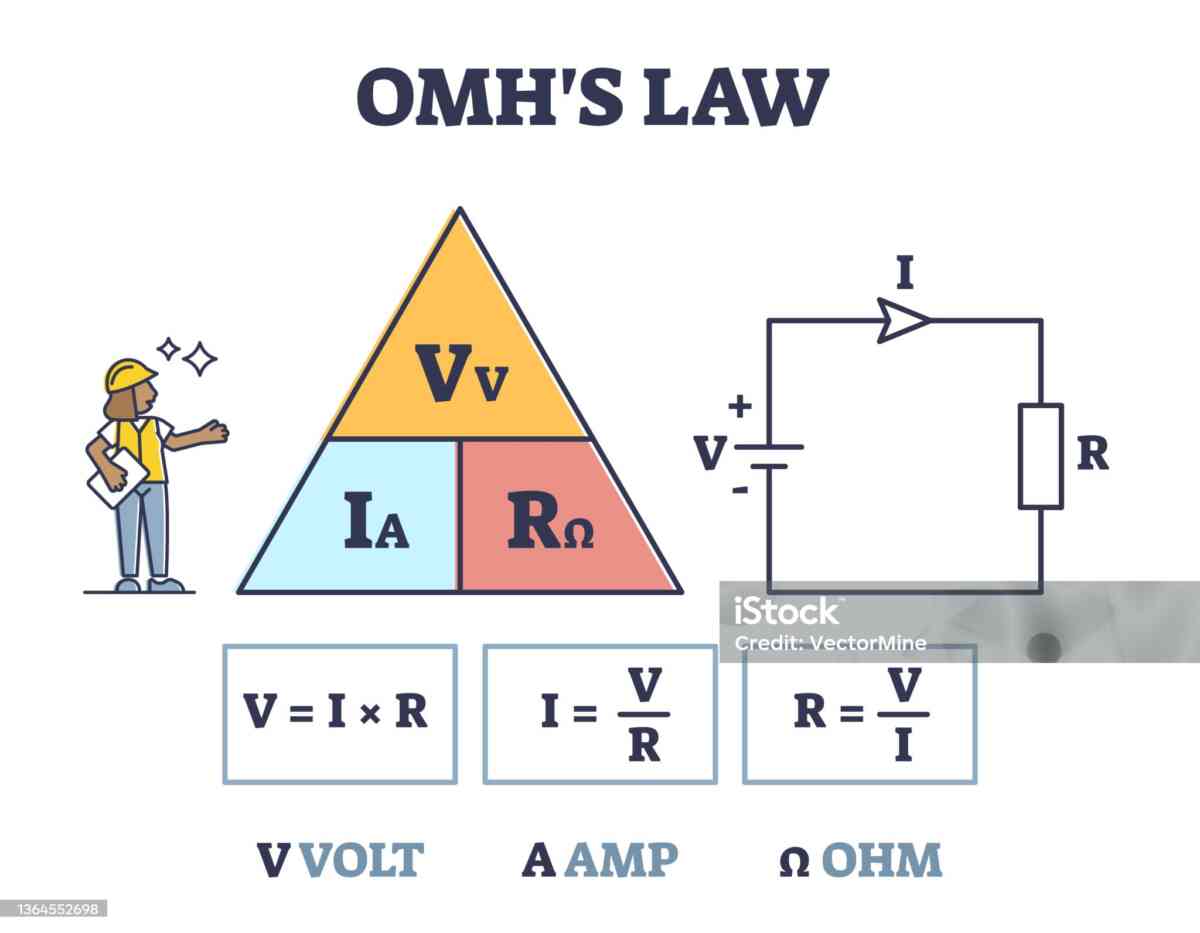
The fundamental relationship is:
V = I × R
Where:
- V = voltage in volts (V)
- I = current in amperes (A)
- R = resistance in ohms (Ω)
From this basic relationship, you can calculate any one of the three variables when the other two are known.
For example:
- Voltage = Current × Resistance
- Current = Voltage ÷ Resistance
- Resistance = Voltage ÷ Current
This article explains what an Ohm’s Law Calculator is, how it works, how to use it, the formulas behind it, practical examples, common mistakes, and important electrical safety considerations.
What Is an Ohm’s Law Calculator?
An Ohm’s Law Calculator is a digital calculation tool that determines voltage, current, or resistance using Ohm’s Law.
The calculator typically allows you to enter two known values and calculates the third.
For example, if you know:
- Voltage = 12 V
- Resistance = 6 Ω
The calculator can determine current:
I = V ÷ R
I = 12 ÷ 6
I = 2 A
Therefore, the circuit current is 2 amperes.
The same tool can work in reverse. If you know current and resistance, it can calculate voltage. If you know voltage and current, it can calculate resistance.
This makes the calculator useful for both educational exercises and practical circuit analysis.
Why Use a Free Ohm’s Law Calculator?
Manual electrical calculations are usually simple, but mistakes can occur when formulas are rearranged or units are converted incorrectly.
A free calculator provides several advantages.
1. Faster calculations
Instead of writing formulas manually, you can enter the known values and obtain the result quickly.
2. Reduced calculation errors
A calculator can help prevent arithmetic mistakes, especially when working with decimal values, large resistances, or small currents.
3. Convenient for students
Students can use the tool to check homework calculations and better understand how voltage, current, and resistance interact.
4. Useful for electronics projects
Hobbyists can calculate resistor values and expected current in simple circuits.
5. Helpful for troubleshooting
Technicians can estimate expected current or resistance based on measured voltage.
6. Works with different electrical units
Depending on the calculator, values may be entered using units such as volts, millivolts, amperes, milliamperes, ohms, and kilohms.
The Three Main Ohm’s Law Formulas
Ohm’s Law has three common forms.
Voltage
To calculate voltage:
V = I × R
If current is 0.5 A and resistance is 20 Ω:
V = 0.5 × 20 = 10 V
Current
To calculate current:
I = V ÷ R
If voltage is 24 V and resistance is 8 Ω:
I = 24 ÷ 8 = 3 A
Resistance
To calculate resistance:
R = V ÷ I
If voltage is 12 V and current is 2 A:
R = 12 ÷ 2 = 6 Ω
These three formulas are simply different arrangements of the same electrical relationship.
Ohm’s Law Triangle
A popular educational method is the Ohm’s Law triangle.
Imagine a triangle divided into three sections:
- V at the top
- I at the bottom left
- R at the bottom right
Covering the variable you want to calculate reveals the required mathematical relationship.
For voltage:
V = I × R
For current:
I = V ÷ R
For resistance:
R = V ÷ I
This technique is especially useful for beginners.
How to Use an Ohm’s Law Calculator
Using an online calculator is generally straightforward.
Step 1: Identify what you know
Determine whether you already know voltage, current, or resistance.
For example, you may know:
- Voltage = 9 V
- Resistance = 450 Ω
You need to calculate current.
Step 2: Enter the known values
Enter 9 volts for voltage and 450 ohms for resistance.
Step 3: Select the unknown value
Choose current as the value you want to calculate.
Step 4: Calculate
The calculator applies:
I = V ÷ R
Therefore:
I = 9 ÷ 450 = 0.02 A
Step 5: Convert the result if necessary
0.02 A is equal to:
20 mA
Therefore, the current is 20 milliamperes.
Ohm’s Law Example: Calculating Current
Suppose a circuit contains a 10 Ω resistor connected to a 20 V supply.
Known:
- V = 20 V
- R = 10 Ω
Calculate current:
I = V ÷ R
I = 20 ÷ 10
I = 2 A
The expected current is 2 A under ideal conditions.
Ohm’s Law Example: Calculating Resistance
Suppose a circuit operates at 5 V and draws 0.25 A.
Known:
- V = 5 V
- I = 0.25 A
Calculate resistance:
R = V ÷ I
R = 5 ÷ 0.25
R = 20 Ω
The resistance is 20 ohms.
Ohm’s Law Example: Calculating Voltage
Suppose a circuit carries 0.1 A through a 100 Ω resistor.
Known:
- I = 0.1 A
- R = 100 Ω
Calculate voltage:
V = I × R
V = 0.1 × 100
V = 10 V
The voltage across the resistor is 10 volts.
Understanding Voltage
Voltage represents electrical potential difference between two points.
It can be thought of as the electrical force that drives current through a circuit.
Voltage is measured in volts (V).
Common voltage levels include:
- 1.5 V for some batteries
- 3.3 V for many electronic circuits
- 5 V for many digital electronics applications
- 9 V for common battery applications
- 12 V for automotive and battery systems
- 24 V for some control systems
- 120 V or 230 V for household electrical systems depending on the country
Voltage alone does not determine current. Resistance and circuit conditions also matter.
Understanding Current
Current is the flow of electric charge through a circuit.
Current is measured in amperes (A).
Smaller currents are commonly expressed in milliamperes:
1 A = 1,000 mA
For example:
0.025 A = 25 mA
Current is important when selecting wires, switches, connectors, power supplies, fuses, circuit breakers, and electronic components.
Understanding Resistance
Resistance describes how strongly a component opposes current flow.
Resistance is measured in ohms (Ω).
Higher resistance generally results in lower current for the same applied voltage.
For example:
At 12 V:
- 1 Ω → 12 A
- 6 Ω → 2 A
- 12 Ω → 1 A
- 120 Ω → 0.1 A
This demonstrates the inverse relationship between resistance and current when voltage remains constant.
Ohm’s Law and Electrical Power
Ohm’s Law is closely related to electrical power.
Power is measured in watts (W).
The basic power formula is:
P = V × I
Using Ohm’s Law, several additional power formulas can be derived.
Power using voltage and resistance
P = V² ÷ R
Power using current and resistance
P = I² × R
These formulas are extremely useful when selecting resistors and evaluating circuit components.
For example, a 12 V source connected across a 6 Ω resistor produces:
P = V² ÷ R
P = 12² ÷ 6
P = 144 ÷ 6
P = 24 W
The resistor would theoretically dissipate 24 watts.
A real application would require a resistor with an appropriate power rating and sufficient safety margin.
Resistor Power Rating
Calculating resistance alone is not enough when designing a circuit.
You must also consider resistor power.
If a resistor is expected to dissipate 24 W continuously, using a resistor rated for only 1 W would be inappropriate and potentially dangerous.
Common resistor power ratings include:
- 0.125 W
- 0.25 W
- 0.5 W
- 1 W
- 2 W
- 5 W
- 10 W
- Higher power ratings for specialized applications
In practical circuit design, engineers commonly choose a resistor with a power rating comfortably above the expected operating power.
Unit Conversion for Ohm’s Law
Correct unit conversion is essential.
Current
1 A = 1,000 mA
Therefore:
0.5 A = 500 mA
Resistance
1 kΩ = 1,000 Ω
Therefore:
4.7 kΩ = 4,700 Ω
Voltage
1 V = 1,000 mV
Therefore:
0.75 V = 750 mV
Before using Ohm’s Law, make sure your units are compatible.
For example, if voltage is 5 V and resistance is 2 kΩ, convert 2 kΩ to 2,000 Ω:
I = 5 ÷ 2,000
I = 0.0025 A
or:
2.5 mA
Common Applications
An Ohm’s Law Calculator can be useful in many areas.
LED circuits
When designing an LED circuit, resistance can be estimated using:
R = (Vsupply − VLED) ÷ ILED
For example, if a 12 V supply is used with an LED having a forward voltage of 2 V and desired current of 20 mA:
R = (12 − 2) ÷ 0.020
R = 500 Ω
A practical design would then consider the nearest standard resistor value and resistor power rating.
Automotive electrical systems
Ohm’s Law can help understand:
- Sensor circuits
- Lighting circuits
- Relays
- Motors
- Heating elements
- Wiring voltage drops
Automotive systems can be more complicated than a simple resistor circuit, so Ohm’s Law should be applied with appropriate knowledge of the complete circuit.
Battery systems
Ohm’s Law can help estimate current draw from a known voltage and load resistance.
For example:
I = V ÷ R
However, real batteries have internal resistance, voltage sag, temperature effects, and discharge limitations.
Electronics
Ohm’s Law is fundamental for:
- Resistor networks
- Voltage dividers
- LED circuits
- Transistor biasing
- Sensor circuits
- Pull-up and pull-down resistors
- Signal conditioning
- Amplifier circuits
Voltage Divider Applications
A voltage divider uses resistors to produce a lower voltage from a larger voltage.
For two resistors:
Vout = Vin × R2 ÷ (R1 + R2)
For example:
- Vin = 12 V
- R1 = 10 kΩ
- R2 = 10 kΩ
Then:
Vout = 12 × 10 ÷ 20
Vout = 6 V
Voltage dividers are widely used in electronics, although the load connected to the divider can affect the actual output voltage.
Series Circuits and Ohm’s Law
In a simple series circuit, resistances add:
Rtotal = R1 + R2 + R3 + …
Suppose:
- R1 = 10 Ω
- R2 = 20 Ω
- R3 = 30 Ω
Then:
Rtotal = 60 Ω
If the supply voltage is 12 V:
I = 12 ÷ 60
I = 0.2 A
The same current flows through each component in an ideal series circuit.
Parallel Circuits and Ohm’s Law
Parallel circuits behave differently.
For two resistors in parallel:
Rtotal = (R1 × R2) ÷ (R1 + R2)
Suppose:
- R1 = 10 Ω
- R2 = 20 Ω
Then:
Rtotal = (10 × 20) ÷ (10 + 20)
Rtotal = 200 ÷ 30
Rtotal ≈ 6.67 Ω
At 12 V:
I = 12 ÷ 6.67
Approximately:
1.8 A
Parallel circuits require careful consideration of branch currents and total current.
Ohm’s Law and Measurement
A calculator is useful, but measurements from a multimeter are often necessary for real-world troubleshooting.
Typical measurements include:
- Voltage measurement
- Resistance measurement
- Current measurement
- Continuity testing
If you measure voltage and resistance, you can estimate expected current using Ohm’s Law.
However, measured resistance may differ from the resistance while the component is operating in a circuit. Components may also have nonlinear behavior.
Important Limitations of Ohm’s Law
Ohm’s Law is fundamental, but it should not be misunderstood.
The simple equation:
V = I × R
works directly for components or operating regions where resistance is appropriately defined and behaves in an approximately linear manner.
Not every electrical component behaves like an ideal resistor.
Examples include:
- Diodes
- LEDs
- Transistors
- Thermistors
- Certain sensors
- Semiconductor devices
- Gas-discharge devices
For these components, the relationship between voltage and current may be nonlinear.
Safety Considerations
Electrical calculations should not replace proper safety procedures.
Working with electricity can cause:
- Electric shock
- Burns
- Equipment damage
- Fire
- Arc flash
- Battery hazards
Low-voltage electronics are generally safer than mains electricity, but even low-voltage batteries can deliver very high currents under short-circuit conditions.
Do not use an Ohm’s Law Calculator as the only basis for working on household mains systems or industrial electrical equipment.
When working with dangerous voltages, qualified professionals and appropriate safety procedures should be used.
Frequently Asked Questions
What is an Ohm’s Law Calculator?
It is a tool that calculates voltage, current, or resistance using the relationship between these three electrical quantities.
What is the formula for Ohm’s Law?
The primary formula is:
V = I × R
How do I calculate current?
Use:
I = V ÷ R
How do I calculate resistance?
Use:
R = V ÷ I
How do I calculate voltage?
Use:
V = I × R
Can I use an Ohm’s Law Calculator for LEDs?
Yes, it can help calculate the current-limiting resistor for an LED circuit when supply voltage, LED forward voltage, and desired current are known.
Can Ohm’s Law calculate power?
Ohm’s Law itself relates voltage, current, and resistance, but those relationships can be combined with the power equation to calculate electrical power.
What does Ω mean?
The symbol Ω represents the ohm, the SI unit of electrical resistance.
Is 1 kΩ equal to 1,000 Ω?
Yes.
Is 1 A equal to 1,000 mA?
Yes.
Conclusion
The Ohm’s Law Calculator is a simple but powerful tool for electrical and electronic calculations. It helps users quickly determine voltage, current, or resistance without repeatedly rearranging equations manually.
Understanding the formulas behind the calculator is equally important. The central relationship is:
V = I × R
From this relationship, you can calculate:
- Voltage: V = I × R
- Current: I = V ÷ R
- Resistance: R = V ÷ I
When combined with electrical power formulas, Ohm’s Law becomes an essential foundation for analyzing circuits, selecting components, troubleshooting electrical systems, and learning electronics.
For students, hobbyists, technicians, and engineers, a free online Ohm’s Law Calculator provides a convenient way to verify calculations and improve productivity. Always check units, consider real-world component limitations, and follow appropriate electrical safety practices when applying calculations to physical circuits.
Ohm’s Law Calculator for Electronics, LEDs, Automotive Systems, and Electrical Projects
Introduction
From a simple LED circuit to a complex electrical system, understanding the relationship between voltage, current, and resistance is fundamental. One of the most useful tools for working with these values is an Ohm’s Law Calculator.
Ohm’s Law provides a mathematical relationship between voltage, current, and resistance:
V = I × R
This equation is simple, but its applications are enormous. It can help determine how much current a resistor will draw, what resistance is needed to limit current, how much voltage appears across a component, and how electrical power relates to resistance and current.
A free Ohm’s Law Calculator makes these calculations convenient for students, engineers, electronics hobbyists, automotive technicians, electricians, makers, and DIY users.
This article focuses on practical applications, including LEDs, resistor networks, voltage dividers, batteries, automotive circuits, wiring, sensors, motors, power supplies, and troubleshooting.
What Can an Ohm’s Law Calculator Calculate?
An Ohm’s Law Calculator generally calculates three fundamental quantities:
Voltage
V = I × R
Current
I = V ÷ R
Resistance
R = V ÷ I
Many advanced calculators may also provide power calculations.
Electrical power can be calculated using:
P = V × I
And by combining Ohm’s Law:
P = I²R
or:
P = V² ÷ R
These additional equations make the calculator particularly useful when selecting electrical components.
Practical Example: Designing a Simple Circuit
Imagine a circuit powered by a 12 V supply.
You want a load to draw 0.5 A.
Using Ohm’s Law:
R = V ÷ I
R = 12 ÷ 0.5
R = 24 Ω
The required ideal resistance is 24 Ω.
Now calculate power:
P = V × I
P = 12 × 0.5
P = 6 W
Therefore, a simple 24 Ω load would dissipate approximately 6 W.
This demonstrates why resistance and power should be considered together.
LED Current-Limiting Resistor Calculator
One of the most common applications of Ohm’s Law is calculating an LED resistor.
An LED generally requires current limiting when connected to a voltage source.
The resistor equation is:
R = (Vsupply − Vforward) ÷ I
Suppose:
- Supply = 12 V
- LED forward voltage = 2 V
- Desired current = 20 mA
Convert 20 mA:
20 mA = 0.020 A
Then:
R = (12 − 2) ÷ 0.020
R = 500 Ω
The theoretical resistance is 500 Ω.
The designer should select a suitable standard resistor and verify the resulting current and power.
LED resistor power
The resistor voltage is:
12 − 2 = 10 V
Resistor power:
P = V × I
P = 10 × 0.020
P = 0.2 W
A resistor rated exactly at 0.2 W would provide little margin. In practical designs, a higher-rated resistor may be preferred depending on operating conditions.
Why LED Forward Voltage Matters
An LED is not simply a resistor.
Its current-voltage relationship is nonlinear.
Different LED types have different forward voltage characteristics.
Examples can include:
- Red LEDs
- Green LEDs
- Blue LEDs
- White LEDs
- Infrared LEDs
- High-power LEDs
Forward voltage also varies with current, temperature, and individual component characteristics.
Therefore, an LED resistor calculation should use appropriate specifications from the component datasheet.
Voltage Divider Design
A voltage divider uses resistors to generate a lower voltage.
For two resistors:
Vout = Vin × R2 ÷ (R1 + R2)
Suppose:
- Vin = 10 V
- R1 = 10 kΩ
- R2 = 5 kΩ
Then:
Vout = 10 × 5 ÷ 15
Vout ≈ 3.33 V
This configuration may be useful for signal conditioning or measurement circuits.
However, if a significant load is connected to the divider output, the actual voltage can change.
Pull-Up and Pull-Down Resistors
Ohm’s Law also helps explain pull-up and pull-down resistor behavior in digital electronics.
A resistor can provide a defined logic state while limiting current when a switch or transistor pulls the signal toward another voltage.
For example, suppose a 5 V supply is connected through a 10 kΩ resistor.
If a switch pulls the node to ground:
I = V ÷ R
I = 5 ÷ 10,000
I = 0.0005 A
or:
0.5 mA
This relatively small current helps limit power consumption while establishing the desired circuit behavior.
Sensor Circuits
Many sensors use resistance or produce signals related to voltage and current.
Examples include:
- Thermistors
- Photoresistors
- Resistive position sensors
- Strain gauges
- Potentiometers
- Resistive temperature devices
For a resistive sensor, Ohm’s Law can help determine current from a known excitation voltage and sensor resistance.
Suppose a sensor has 2 kΩ resistance and receives 5 V:
I = 5 ÷ 2,000
I = 0.0025 A
or:
2.5 mA
The actual sensor circuit may require additional equations depending on how the sensor is connected.
Thermistors
Thermistors are resistive components whose resistance changes significantly with temperature.
Because their resistance varies with temperature, the current also changes when voltage is applied.
Suppose a thermistor is 10 kΩ at a particular temperature and receives 5 V:
I = 5 ÷ 10,000
I = 0.0005 A
or:
0.5 mA
At another temperature, if the resistance changes to 5 kΩ:
I = 5 ÷ 5,000
I = 1 mA
The current doubled because resistance decreased by half while voltage remained constant.
Automotive Applications
Automotive electrical systems provide many practical applications for Ohm’s Law.
Technicians may use voltage, resistance, and current measurements to investigate:
- Headlights
- Tail lights
- Relays
- Solenoids
- Sensors
- Electric fans
- Fuel-system components
- Heating elements
- Motors
- Wiring
- Ground connections
Example: electrical load
Suppose an automotive load measures approximately 6 Ω under a specified test condition.
At 12 V:
I = 12 ÷ 6
I = 2 A
The theoretical current is 2 A.
But actual vehicle systems can have changing voltage and temperature, and inductive or electronic components may not behave as fixed resistors.
Diagnosing a High-Resistance Connection
One of the most useful automotive applications is understanding voltage drop.
Suppose a starter circuit carries 100 A.
If a poor connection introduces only 0.02 Ω of resistance:
Vdrop = I × R
Vdrop = 100 × 0.02
Vdrop = 2 V
Power dissipated at that resistance is:
P = I²R
P = 100² × 0.02
P = 200 W
That is a large amount of heat.
This example shows why a connection that appears electrically insignificant when measured at low current can become a serious problem under high-current conditions.
Battery and Solar Applications
Ohm’s Law can be useful for estimating loads in battery and solar systems.
Suppose a 24 V battery system powers a 48 Ω resistive load.
I = 24 ÷ 48
I = 0.5 A
Power:
P = 24 × 0.5
P = 12 W
In a real solar or battery installation, additional factors must be considered, including:
- Battery voltage variation
- Converter efficiency
- Cable resistance
- Temperature
- State of charge
- Inverter losses
- Maximum current ratings
- Fuse and breaker requirements
Therefore, Ohm’s Law is an important starting point rather than a complete system-design method.
DC Motor Applications
Motors are more complicated than simple resistors.
A DC motor has winding resistance, but when the motor spins, it also generates back electromotive force.
At startup, the motor speed is near zero, so back EMF is initially low. This can result in a high starting current.
For a simplified winding resistance of 0.5 Ω and 12 V:
I = 12 ÷ 0.5
I = 24 A
Actual startup behavior depends on the motor design and other factors.
As the motor accelerates, back EMF increases and current changes.
This is why calculating motor current using only a fixed resistance can be misleading during normal operation.
AC Circuits
Basic Ohm’s Law is directly applicable to purely resistive AC loads.
However, AC circuits containing inductors and capacitors require the concept of impedance.
In such cases, the relationship is often expressed using:
V = I × Z
where Z represents impedance.
Impedance can include both resistance and reactance.
Therefore, a simple DC Ohm’s Law Calculator should not automatically be treated as a complete AC circuit-analysis tool.
Resistor Networks
Ohm’s Law becomes especially powerful when combined with resistor-network equations.
Series resistors
Rtotal = R1 + R2 + R3
Two parallel resistors
Rtotal = (R1 × R2) ÷ (R1 + R2)
Multiple parallel resistors
1/Rtotal = 1/R1 + 1/R2 + 1/R3 + …
After determining total resistance, Ohm’s Law can calculate total current.
Example of a Mixed Circuit
Suppose two 100 Ω resistors are connected in parallel.
Their equivalent resistance is:
Rparallel = 50 Ω
This parallel combination is then connected in series with a 50 Ω resistor.
Total resistance:
Rtotal = 50 + 50
Rtotal = 100 Ω
With a 10 V supply:
I = 10 ÷ 100
I = 0.1 A
The total circuit current is 100 mA.
The parallel combination receives the appropriate voltage based on the circuit configuration.
This demonstrates how resistor-network calculations and Ohm’s Law work together.
Measuring Resistance With a Multimeter
A digital multimeter can measure resistance directly.
However, resistance measurements should generally be made with the circuit de-energized and the component appropriately isolated when necessary.
Applying Ohm’s Law to measured voltage and current can also estimate resistance:
R = V ÷ I
For example, if a component has:
- Voltage = 8 V
- Current = 0.2 A
Then:
R = 8 ÷ 0.2
R = 40 Ω
This is the effective resistance under that operating condition.
Understanding Electrical Power
Power is crucial when analyzing real circuits.
A resistor converts electrical energy into heat.
The power is:
P = V × I
Suppose:
- V = 10 V
- I = 0.5 A
Then:
P = 5 W
The component must be able to safely dissipate this power.
Using resistance
If resistance and current are known:
P = I²R
If resistance is 20 Ω and current is 0.5 A:
P = 0.5² × 20
P = 5 W
Using voltage and resistance
P = V² ÷ R
If voltage is 10 V and resistance is 20 Ω:
P = 100 ÷ 20
P = 5 W
All three approaches produce the same theoretical result.
Choosing a Resistor
A resistor should not be selected based only on resistance.
Important specifications include:
- Resistance value
- Power rating
- Tolerance
- Temperature coefficient
- Maximum working voltage
- Physical size
- Environmental conditions
For example, two resistors may both be 1 kΩ, but one may be rated for 0.25 W while another is rated for 5 W.
The correct choice depends on the application.
Resistor Tolerance
Real resistors are not perfectly exact.
A resistor marked 100 Ω with ±5% tolerance may have an actual resistance between approximately:
95 Ω and 105 Ω
This can affect current and voltage calculations.
For precision circuits, tighter tolerance components may be required.
Ohm’s Law and Fuses
Ohm’s Law can help estimate expected current, which is important when considering circuit protection.
Suppose a resistive load at 24 V has an equivalent resistance of 12 Ω:
I = 24 ÷ 12
I = 2 A
A protection device must be selected according to the complete circuit design, expected operating current, startup current, conductor rating, applicable standards, and manufacturer requirements.
A fuse should not simply be selected by blindly using the calculated current.
Why the Calculator Is Useful for Troubleshooting
When troubleshooting a circuit, technicians often compare:
- Expected voltage
- Measured voltage
- Expected resistance
- Measured resistance
- Expected current
- Measured current
An Ohm’s Law Calculator can quickly convert between these values.
For example, a technician expects a 12 V load to draw 1 A.
The expected resistance would be:
R = 12 ÷ 1
R = 12 Ω
If the measured behavior is significantly different, further investigation may be required.
Possible causes include:
- Open circuit
- Short circuit
- Poor connection
- Incorrect component
- Wiring resistance
- Component failure
- Changing operating conditions
Ohm’s Law and Short Circuits
A short circuit can create extremely high current because the effective resistance becomes very low.
Suppose a 12 V source sees an effective resistance of only 0.1 Ω:
I = 12 ÷ 0.1
I = 120 A
Actual current depends on the source’s internal resistance, wiring, protection devices, and other factors.
This demonstrates why short circuits can be dangerous even at relatively low nominal voltages.
Why Battery Voltage Does Not Always Equal Load Voltage
In a real circuit, wires and connections have resistance.
A battery may have an internal resistance as well.
When current flows, voltage can drop across these resistances.
Consequently:
Vsource ≠ Vload
under some operating conditions.
This is particularly important in:
- Automotive systems
- High-current battery systems
- Long cable runs
- Solar installations
- Portable power systems
- Motor circuits
Ohm’s Law Calculator for Education
Teachers and students can use the calculator to explore electrical relationships.
A useful exercise is to hold resistance constant while changing voltage.
For example, with 100 Ω:
| Voltage | Current |
|---|---|
| 1 V | 10 mA |
| 2 V | 20 mA |
| 3 V | 30 mA |
| 4 V | 40 mA |
| 5 V | 50 mA |
The linear relationship becomes obvious.
Another exercise is to hold voltage constant and change resistance.
At 10 V:
| Resistance | Current |
|---|---|
| 10 Ω | 1 A |
| 20 Ω | 0.5 A |
| 50 Ω | 0.2 A |
| 100 Ω | 0.1 A |
| 200 Ω | 0.05 A |
This demonstrates the inverse relationship between resistance and current.
Best Practices When Using an Ohm’s Law Calculator
Check your units
Convert milliamps to amperes and kilohms to ohms when necessary.
Identify the correct formula
Do not assume that every calculation uses multiplication.
Check whether the component is linear
Simple Ohm’s Law is most straightforward for resistive loads.
Consider power
Always evaluate whether the component can safely dissipate the calculated power.
Verify with measurements
For physical circuits, use appropriate test equipment when necessary.
Account for real-world conditions
Temperature, tolerances, wiring resistance, source limitations, and component characteristics can affect actual results.
Frequently Asked Questions
What is Ohm’s Law?
Ohm’s Law describes the relationship between voltage, current, and resistance in an electrical circuit.
What does an Ohm’s Law Calculator do?
It calculates one unknown value when the other two values are known.
What formula calculates current?
I = V ÷ R
What formula calculates resistance?
R = V ÷ I
What formula calculates voltage?
V = I × R
Can the calculator be used for LED circuits?
Yes. It can help calculate the resistor needed to limit LED current when supply voltage, forward voltage, and desired current are known.
Can I use it for automotive troubleshooting?
Yes, for basic electrical relationships. More complex components and systems may require additional diagnostic procedures.
Can Ohm’s Law calculate watts?
Power can be calculated using equations derived from Ohm’s Law, such as P = I²R and P = V²/R.
Does a higher resistance always mean lower current?
For a fixed voltage across an ideal resistive load, yes. Current decreases as resistance increases.
Does higher voltage always mean higher current?
For a fixed resistance, increasing voltage increases current.
Conclusion
A free Ohm’s Law Calculator is one of the most useful basic electrical calculation tools available.
It can help with:
- Voltage calculations
- Current calculations
- Resistance calculations
- Resistor selection
- LED circuits
- Voltage dividers
- Sensor circuits
- Automotive troubleshooting
- Battery systems
- Solar projects
- Power calculations
- Wiring analysis
- Electronics education
The foundation is the simple relationship:
V = I × R
But the practical value of Ohm’s Law extends far beyond that single equation. When combined with power calculations and circuit-analysis techniques, it becomes an essential tool for understanding how electrical systems behave.
For accurate real-world design, always consider component specifications, tolerances, power ratings, temperature, wiring resistance, source limitations, and electrical safety.
A calculator can provide the mathematics quickly, but understanding the electrical system behind the numbers is what makes the calculation truly useful.
Ohm’s Law Calculator: A Complete Guide to Voltage, Current, Resistance, and Power
Introduction
Electrical circuits may appear complicated when they contain multiple wires, resistors, switches, sensors, batteries, and electronic components. However, many basic electrical calculations begin with three fundamental quantities: voltage, current, and resistance.
These three quantities are connected by one of the most important equations in electrical engineering: Ohm’s Law.
A FREE Ohm’s Law Calculator makes it easy to calculate an unknown electrical value when the other values are known. Instead of manually rearranging formulas, users can enter their information and quickly determine voltage, current, or resistance.
Ohm’s Law is useful for students, electricians, electronics hobbyists, engineers, automotive technicians, DIY enthusiasts, and anyone learning how electrical circuits work.
The basic equation is:
V = I × R
Where:
- V = voltage in volts
- I = current in amperes
- R = resistance in ohms
The equation can be rearranged into three forms:
Voltage: V = I × R
Current: I = V ÷ R
Resistance: R = V ÷ I
Understanding these equations allows you to solve many everyday electrical problems.
What Is an Ohm’s Law Calculator?
An Ohm’s Law Calculator is an online electrical calculation tool that determines voltage, current, or resistance using Ohm’s Law.
For example, imagine you have a 12-volt supply connected to a 6-ohm resistor.
You know:
- Voltage = 12 V
- Resistance = 6 Ω
You want to calculate current.
The formula is:
I = V ÷ R
Therefore:
I = 12 ÷ 6
I = 2 A
The calculator performs this calculation automatically.
Likewise, if you know voltage and current, it can calculate resistance. If you know current and resistance, it can calculate voltage.
This makes an Ohm’s Law Calculator a convenient tool for basic electrical analysis.
Why Ohm’s Law Is Important
Ohm’s Law is important because it provides a simple mathematical relationship between voltage, current, and resistance.
If one variable changes, the other variables can be analyzed.
For a fixed resistance:
- Increasing voltage increases current.
- Decreasing voltage decreases current.
For a fixed voltage:
- Increasing resistance decreases current.
- Decreasing resistance increases current.
This relationship is fundamental to circuit design and troubleshooting.
The Ohm’s Law Formula
The central equation is:
V = I × R
This means that voltage equals current multiplied by resistance.
From this equation, two other equations can be created.
Calculating Current
To find current:
I = V ÷ R
Example:
Voltage = 24 V
Resistance = 12 Ω
I = 24 ÷ 12
I = 2 A
Calculating Resistance
To find resistance:
R = V ÷ I
Example:
Voltage = 10 V
Current = 0.5 A
R = 10 ÷ 0.5
R = 20 Ω
Calculating Voltage
To find voltage:
V = I × R
Example:
Current = 0.2 A
Resistance = 50 Ω
V = 0.2 × 50
V = 10 V
How to Use a FREE Ohm’s Law Calculator
Using an online calculator is simple.
Step 1: Identify the known values
Determine which electrical values are already available.
For example:
- Supply voltage = 5 V
- Resistance = 1,000 Ω
Step 2: Identify the unknown
You want to know the current.
Step 3: Enter the values
Enter:
- Voltage: 5 V
- Resistance: 1,000 Ω
Step 4: Calculate
The calculator applies:
I = V ÷ R
Step 5: Read the result
I = 5 ÷ 1,000
I = 0.005 A
This can also be expressed as:
5 mA
Understanding Voltage
Voltage is the difference in electrical potential between two points.
It is measured in volts (V).
Voltage provides the electrical potential that drives current through a circuit.
Common voltage levels include:
- 1.5 V
- 3 V
- 3.3 V
- 5 V
- 9 V
- 12 V
- 24 V
- 48 V
- 120 V
- 230 V
Different systems use different voltage levels.
For example, small electronic circuits commonly use low-voltage DC supplies, while household electrical systems use much higher AC voltages.
Understanding Current
Current represents the movement of electric charge.
The unit of current is the ampere (A).
Smaller currents are commonly expressed in milliamperes.
1 A = 1,000 mA
For example:
0.1 A = 100 mA
0.025 A = 25 mA
0.005 A = 5 mA
Understanding current is essential when selecting:
- Wires
- Fuses
- Power supplies
- Switches
- Connectors
- Resistors
- Batteries
- Electronic components
Understanding Resistance
Resistance is the opposition to electrical current.
It is measured in ohms (Ω).
A higher resistance generally allows less current to flow when voltage remains constant.
For example, with a 12 V supply:
| Resistance | Current |
|---|---|
| 2 Ω | 6 A |
| 4 Ω | 3 A |
| 6 Ω | 2 A |
| 12 Ω | 1 A |
| 24 Ω | 0.5 A |
| 120 Ω | 0.1 A |
The table demonstrates the inverse relationship between resistance and current.
Ohm’s Law Calculator and Electrical Power
Voltage, current, and resistance are also closely connected to electrical power.
Power is measured in watts.
The basic power formula is:
P = V × I
Ohm’s Law allows additional power equations to be derived.
Power from voltage and resistance
P = V² ÷ R
Power from current and resistance
P = I² × R
These equations are especially useful when selecting resistors.
Example: Calculating Resistor Power
Suppose a resistor has:
- Voltage = 10 V
- Resistance = 20 Ω
First calculate current:
I = V ÷ R
I = 10 ÷ 20
I = 0.5 A
Now calculate power:
P = V × I
P = 10 × 0.5
P = 5 W
The resistor dissipates approximately 5 watts under these ideal conditions.
A resistor must therefore have an appropriate power rating for the application.
Why Resistor Power Rating Matters
A resistor is not selected based solely on resistance.
For example, suppose you need a 100 Ω resistor.
A 100 Ω resistor may be available in:
- 0.125 W
- 0.25 W
- 0.5 W
- 1 W
- 2 W
- 5 W
- 10 W
Although the resistance value is identical, the components have different power-handling capabilities.
If your circuit dissipates 3 W, a 0.25 W resistor would be unsuitable.
The resistance value may be correct, but the physical component could overheat or fail.
Using an Ohm’s Law Calculator for LED Circuits
One of the most popular applications is calculating the resistor required for an LED.
An LED normally requires current limiting in many basic circuits.
The resistor can be estimated using:
R = (Vsupply − VLED) ÷ ILED
Where:
- Vsupply = supply voltage
- VLED = LED forward voltage
- ILED = desired LED current
Example
Suppose:
- Supply = 9 V
- LED forward voltage = 2 V
- Desired current = 20 mA
Convert current:
20 mA = 0.020 A
Then:
R = (9 − 2) ÷ 0.020
R = 7 ÷ 0.020
R = 350 Ω
The theoretical resistance is 350 Ω.
In an actual circuit, you would choose an appropriate standard resistor value and verify the LED’s recommended operating current.
LED Resistor Power
The resistor also dissipates power.
The resistor voltage is:
9 − 2 = 7 V
Power:
P = V × I
P = 7 × 0.020
P = 0.14 W
The resistor dissipates approximately 0.14 W.
A suitable resistor power rating should be selected with appropriate margin.
Ohm’s Law Calculator for Voltage Dividers
Voltage dividers are another important application.
A simple voltage divider contains two resistors.
The output voltage is:
Vout = Vin × R2 ÷ (R1 + R2)
Suppose:
- Vin = 12 V
- R1 = 10 kΩ
- R2 = 10 kΩ
Then:
Vout = 12 × 10 ÷ 20
Vout = 6 V
The two equal resistors divide the input voltage approximately in half when the output is not significantly loaded.
Voltage Divider Loading
One important limitation is that the output of a voltage divider can change when a load is connected.
For example, a divider designed to produce 5 V without a load may produce a lower voltage when connected to another circuit.
The reason is that the load creates another path for current.
Therefore, voltage divider calculations should consider the input impedance of the connected circuit when accuracy matters.
Ohm’s Law in Series Circuits
In a simple series circuit, resistors add together.
The total resistance is:
Rtotal = R1 + R2 + R3
Suppose:
- R1 = 100 Ω
- R2 = 200 Ω
- R3 = 300 Ω
Then:
Rtotal = 100 + 200 + 300
Rtotal = 600 Ω
If the supply voltage is 12 V:
I = 12 ÷ 600
I = 0.02 A
or:
20 mA
The same current flows through each resistor in an ideal series circuit.
Ohm’s Law in Parallel Circuits
Parallel circuits behave differently.
For two resistors:
Rtotal = (R1 × R2) ÷ (R1 + R2)
Suppose:
- R1 = 100 Ω
- R2 = 100 Ω
Then:
Rtotal = (100 × 100) ÷ (100 + 100)
Rtotal = 10,000 ÷ 200
Rtotal = 50 Ω
If the circuit receives 10 V:
I = 10 ÷ 50
I = 0.2 A
The total current is 0.2 A.
Each 100 Ω branch carries:
Ibranch = 10 ÷ 100
Ibranch = 0.1 A
The branch currents add together to produce the total current.
Ohm’s Law and Wire Voltage Drop
Wires are not perfectly resistance-free.
When current flows through a wire, some voltage can be lost because of conductor resistance.
The basic voltage-drop relationship is:
Vdrop = I × R
Suppose:
- Current = 10 A
- Wire resistance = 0.05 Ω
Then:
Vdrop = 10 × 0.05
Vdrop = 0.5 V
The load may receive approximately 0.5 V less than the source voltage, depending on the complete circuit.
This is particularly important for long wires and high-current applications.
Why High Current Makes Resistance More Important
A small resistance can become significant when current is high.
The power loss is:
P = I²R
Suppose a connection has only 0.01 Ω resistance and carries 30 A.
P = 30² × 0.01
P = 9 W
Nine watts of heat generated at a connection can be significant.
This is why high-current systems require:
- Proper conductor sizing
- Secure connections
- Suitable terminals
- Appropriate fuses
- Proper connectors
- Good grounding
Ohm’s Law for Automotive Troubleshooting
Automotive electrical systems frequently involve 12 V or similar low-voltage systems, but currents can be substantial.
Ohm’s Law can help technicians understand:
- Headlights
- Fans
- Relays
- Solenoids
- Heating elements
- Motors
- Sensors
- Wiring
- Grounds
- Electrical accessories
Example
Suppose a resistive load is approximately 4 Ω and receives 12 V.
I = 12 ÷ 4
I = 3 A
The theoretical current is 3 A.
Actual automotive components may not behave like fixed resistors, especially motors, lamps, coils, and electronic modules.
Voltage Drop Testing in Automotive Systems
Voltage drop is often more useful than simply measuring resistance in a powered high-current circuit.
Suppose a starter circuit has a connection with 0.015 Ω resistance.
If current reaches 100 A:
Vdrop = 100 × 0.015
Vdrop = 1.5 V
Power dissipated at the connection:
P = 100² × 0.015
P = 150 W
This demonstrates why poor electrical connections can become hot and cause major performance problems.
Ohm’s Law and Batteries
Ohm’s Law can estimate the current drawn by a resistive load connected to a battery.
Suppose a 12 V battery supplies a 24 Ω load.
I = 12 ÷ 24
I = 0.5 A
Power:
P = 12 × 0.5
P = 6 W
However, real batteries do not behave like perfect voltage sources.
Battery voltage can vary because of:
- State of charge
- Temperature
- Internal resistance
- Age
- Chemistry
- Discharge rate
- Load conditions
Therefore, the calculator provides an idealized electrical calculation.
Ohm’s Law and Solar Power Systems
Solar systems also involve voltage, current, resistance, and power.
For example, if a resistive load operates at 24 V and draws 2 A:
P = V × I
P = 24 × 2
P = 48 W
If the load is approximately resistive:
R = V ÷ I
R = 24 ÷ 2
R = 12 Ω
Real photovoltaic systems are more complex because panel output depends on sunlight, temperature, load conditions, and electrical configuration.
Ohm’s Law and Power Supplies
An Ohm’s Law Calculator can help determine whether a power supply may be appropriate for a basic load.
Suppose a circuit operates at 5 V and has an equivalent resistance of 10 Ω.
Current:
I = 5 ÷ 10
I = 0.5 A
Power:
P = 5 × 0.5
P = 2.5 W
A power supply would need to support the required voltage and current, with suitable margin for the actual application.
Ohm’s Law and Sensors
Many electronic sensors involve changing resistance or voltage.
Examples include:
- Thermistors
- Photoresistors
- Potentiometers
- Resistive position sensors
- Strain gauges
Suppose a sensor has a resistance of 5 kΩ at a certain operating point and is connected to 10 V.
I = 10 ÷ 5,000
I = 0.002 A
or:
2 mA
If the sensor resistance changes to 10 kΩ:
I = 10 ÷ 10,000
I = 1 mA
The current changes because the resistance changed.
Ohm’s Law and Motors
Motors require additional consideration.
A motor winding has resistance, but a running motor also produces back EMF.
At startup, the motor can draw substantially more current than during normal operation.
A simplified resistance-only calculation can therefore overestimate or otherwise misrepresent normal operating conditions.
For serious motor analysis, factors such as:
- Back EMF
- Motor speed
- Torque
- Winding resistance
- Inductance
- Mechanical load
- Temperature
should be considered.
Ohm’s Law and Heating Elements
Resistive heaters are a particularly straightforward application.
Suppose a heater has:
- Voltage = 120 V
- Resistance = 24 Ω
Current:
I = 120 ÷ 24
I = 5 A
Power:
P = 120 × 5
P = 600 W
This means the heater converts approximately 600 W of electrical power into heat under the assumed conditions.
Real heating systems require appropriate wiring, protection, temperature control, and safety measures.
Understanding Ohm’s Law for AC Circuits
For purely resistive AC loads, the basic voltage-current-resistance relationship remains useful.
However, AC systems may contain:
- Inductors
- Capacitors
- Motors
- Transformers
- Filters
In these circuits, impedance becomes important.
Impedance is measured in ohms but is not always the same as simple resistance.
For sinusoidal AC analysis, the relationship can be represented using impedance:
V = I × Z
Therefore, a basic Ohm’s Law Calculator should not automatically be used as a complete AC impedance calculator.
When Ohm’s Law Does Not Behave as a Simple Linear Relationship
Ohm’s Law is often introduced as if every component follows a fixed resistance.
Real components can be more complicated.
Examples include:
- LEDs
- Diodes
- Transistors
- Thermistors
- Incandescent lamps
- Motors
- Semiconductor devices
For a resistor, the voltage-current relationship is approximately linear over its normal operating range.
For a diode, current can change dramatically as voltage changes.
Therefore, using a single resistance value may not fully describe such components.
Common Calculation Errors
Using the wrong formula
For current, use:
I = V ÷ R
Not:
I = V × R
Forgetting unit conversions
Remember:
1 A = 1,000 mA
and:
1 kΩ = 1,000 Ω
Ignoring power
A correct resistance value can still result in an overheated resistor if the power rating is insufficient.
Confusing voltage and current
Voltage and current are different electrical quantities.
Assuming every load is resistive
Motors, LEDs, capacitors, inductors, and electronic devices can behave differently from simple resistors.
Quick Ohm’s Law Reference Table
| Goal | Formula |
|---|---|
| Calculate Voltage | V = I × R |
| Calculate Current | I = V ÷ R |
| Calculate Resistance | R = V ÷ I |
| Calculate Power | P = V × I |
| Power using Current | P = I²R |
| Power using Voltage | P = V²/R |
This table can be used as a quick reference when working with an Ohm’s Law Calculator.
Example Calculations
Example 1: Current
Voltage = 18 V
Resistance = 9 Ω
I = 18 ÷ 9 = 2 A
Example 2: Resistance
Voltage = 24 V
Current = 3 A
R = 24 ÷ 3 = 8 Ω
Example 3: Voltage
Current = 0.5 A
Resistance = 20 Ω
V = 0.5 × 20 = 10 V
Example 4: Power
Voltage = 12 V
Current = 2 A
P = 12 × 2 = 24 W
Example 5: Resistance and Power
Voltage = 10 V
Resistance = 50 Ω
Current:
I = 10 ÷ 50 = 0.2 A
Power:
P = 10 × 0.2 = 2 W
How to Check Whether Your Answer Makes Sense
A calculator gives a numerical result, but you should still evaluate it.
Suppose you calculate 50 A for a tiny electronic circuit powered by a 5 V supply.
That result should immediately make you question the input values.
Perhaps resistance was accidentally entered in kilohms instead of ohms.
For example:
5 V across 10 kΩ:
I = 5 ÷ 10,000
I = 0.0005 A
or:
0.5 mA
If someone incorrectly uses 10 instead of 10,000, they would calculate:
5 ÷ 10 = 0.5 A
That is a thousand times higher.
Unit checking is therefore essential.
Ohm’s Law Calculator for Students
Students can use the tool to reinforce their understanding of electrical theory.
A good approach is to solve the equation manually first and then use the calculator to verify the result.
For example:
A 20 Ω resistor is connected to 10 V.
Manual calculation:
I = 10 ÷ 20
I = 0.5 A
Entering the same values into the calculator should produce 0.5 A.
This approach helps students understand the mathematics rather than simply copying calculator results.
Ohm’s Law Calculator for Electronics Hobbyists
Electronics hobbyists frequently need quick calculations for:
- LEDs
- Resistors
- Transistors
- Sensors
- Switches
- Voltage dividers
- Battery projects
- Arduino-type circuits
- Microcontroller projects
- Small DC circuits
For simple circuits, an Ohm’s Law Calculator can significantly reduce repetitive calculations.
It is especially helpful when experimenting with different resistor values.
Ohm’s Law Calculator for Electrical Troubleshooting
Troubleshooting involves comparing expected values with measured values.
For example, suppose a load is expected to have 20 Ω resistance and receive 10 V.
Expected current:
I = 10 ÷ 20
I = 0.5 A
If measurements indicate something very different, possible explanations could include:
- Incorrect resistance
- Open circuit
- Short circuit
- Wiring resistance
- Incorrect supply voltage
- Faulty component
- Measurement error
- Changing operating condition
Ohm’s Law provides a useful starting point for investigation.
Why Resistance Measurements Can Be Misleading
Measuring resistance in an energized circuit can produce incorrect readings or damage the meter.
Resistance measurements should normally be performed with the circuit appropriately de-energized.
Furthermore, measuring a component while it remains connected to other circuit components can produce a reading affected by parallel paths.
Therefore, resistance measurements must be interpreted carefully.
Ohm’s Law and Circuit Protection
Calculating expected current can help with basic planning for circuit protection.
If a resistive load requires 5 A under normal conditions, the circuit needs conductors and protective devices appropriate for the application.
Protection decisions should consider:
- Normal operating current
- Startup current
- Conductor capacity
- Ambient temperature
- Installation conditions
- Fault conditions
- Applicable electrical codes
- Manufacturer specifications
An Ohm’s Law Calculator should therefore be considered one calculation tool rather than a complete electrical safety design system.
Safety When Using Ohm’s Law
Electrical calculations are useful, but electricity can be hazardous.
Always consider:
- Voltage level
- Available fault current
- Stored electrical energy
- Battery short-circuit capability
- Proper insulation
- Circuit protection
- Appropriate test equipment
- Safe working procedures
Household mains and industrial systems can be particularly dangerous.
Do not rely solely on a calculator when performing hazardous electrical work.
Frequently Asked Questions
What is Ohm’s Law?
Ohm’s Law describes the relationship between voltage, current, and resistance.
What is the main Ohm’s Law equation?
V = I × R
How can I calculate current?
Divide voltage by resistance:
I = V ÷ R
How can I calculate resistance?
Divide voltage by current:
R = V ÷ I
How can I calculate voltage?
Multiply current by resistance:
V = I × R
What does Ω mean?
Ω is the symbol for ohms, the unit of electrical resistance.
What does A mean?
A means amperes, the unit of electrical current.
What does V mean?
V means volts, the unit of electrical voltage.
Can an Ohm’s Law Calculator calculate watts?
Many calculators can calculate power directly, while the power equations can also be calculated separately.
Can I use Ohm’s Law for LEDs?
Yes, but LEDs are nonlinear devices, so LED forward voltage and current specifications must be considered.
Can I use Ohm’s Law for motors?
It can be useful for basic resistance calculations, but motor behavior involves additional factors such as back EMF and inductance.
Can I use the calculator for automotive circuits?
Yes, it can help with basic voltage, current, and resistance calculations, including voltage-drop analysis.
Why does current increase when resistance decreases?
For constant voltage:
I = V ÷ R
Therefore, reducing resistance increases current.
Conclusion
The FREE Ohm’s Law Calculator is a practical tool for understanding and calculating fundamental electrical relationships.
It can quickly determine:
- Voltage
- Current
- Resistance
- Electrical power
It is useful for:
- Electronics
- LED circuits
- Resistor selection
- Voltage dividers
- Automotive troubleshooting
- Battery projects
- Solar systems
- Power supplies
- Wiring calculations
- Electrical education
The most important equations are:
V = I × R
I = V ÷ R
R = V ÷ I
When power is involved, the following equations are also useful:
P = V × I
P = I²R
P = V²/R
The calculator makes these relationships fast to apply, but understanding the principles behind the numbers is equally important.
Always verify units, check component ratings, consider power dissipation, account for real-world circuit behavior, and follow appropriate electrical safety practices.
Whether you are learning electronics for the first time or checking a practical circuit calculation, an Ohm’s Law Calculator can be a valuable free resource for obtaining fast and reliable basic electrical calculations.


