
Nicky Love
Introduction
Before applying for a mortgage, auto loan, personal loan, or other form of credit, it is important to understand how your existing debt compares with your income.
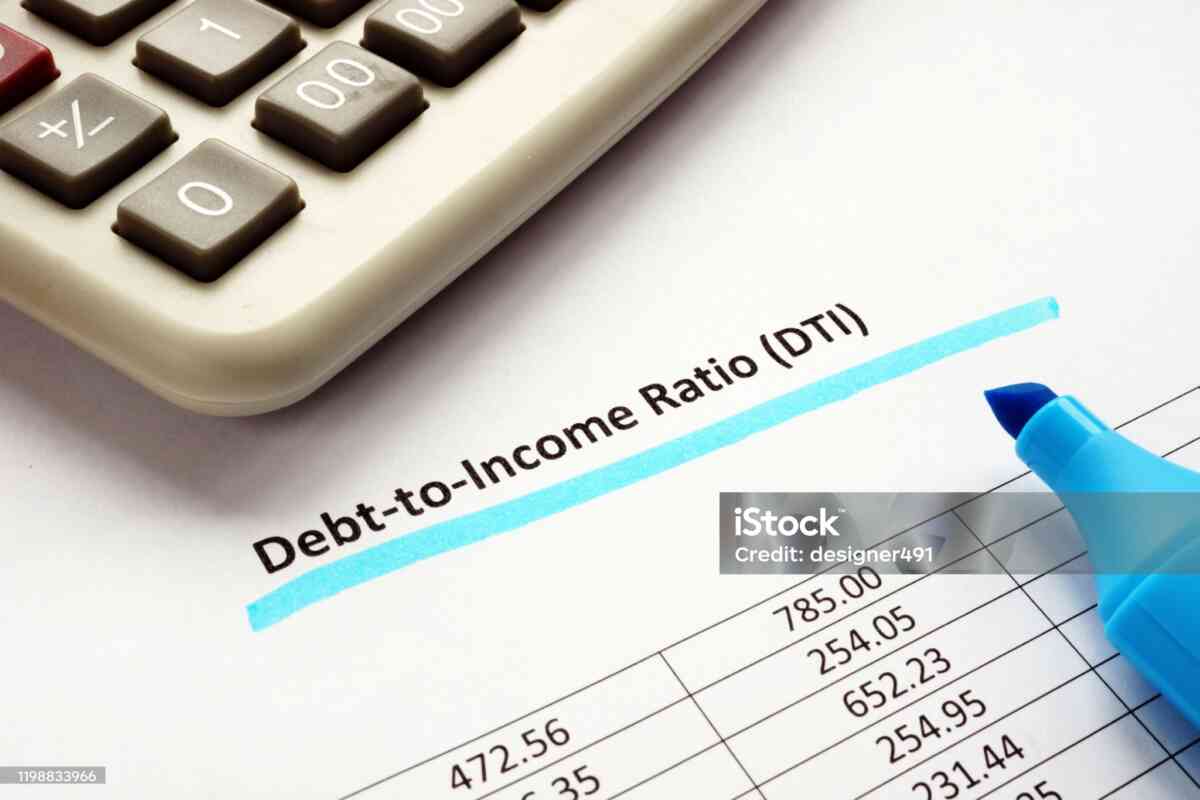
One of the most useful measurements for this purpose is the Debt-to-Income Ratio, commonly abbreviated as DTI.
A free Debt-to-Income Ratio Calculator can calculate this percentage within seconds. Instead of manually adding debt payments and performing the mathematical calculation, you can enter your gross monthly income and qualifying monthly debt obligations and immediately estimate your DTI.
The concept is simple:
DTI = Monthly Debt Payments ÷ Gross Monthly Income × 100
For example, if your gross monthly income is $8,000 and your qualifying monthly debt payments are $2,800:
$2,800 ÷ $8,000 × 100 = 35%
Your estimated DTI is therefore 35%.
While the formula is simple, understanding what the result means can be more complicated. Different lenders and loan programs may use different definitions of qualifying income and debt. In addition, DTI is only one part of a broader financial picture.
This comprehensive guide explains how to use a free DTI calculator, how lenders may evaluate the result, how different debts affect your ratio, how to estimate the effect of a new loan, and how to reduce your DTI over time.
What Is a Debt-to-Income Ratio?
Debt-to-Income Ratio measures the relationship between your recurring monthly debt obligations and your gross monthly income.
It is expressed as a percentage.
A lower DTI generally means that a smaller percentage of your income is committed to debt payments.
A higher DTI means that a larger percentage of income is already committed to debt.
For example:
- $1,500 debt on $7,500 income = 20% DTI
- $2,250 debt on $7,500 income = 30% DTI
- $3,000 debt on $7,500 income = 40% DTI
- $3,750 debt on $7,500 income = 50% DTI
The income stays the same in these examples while debt obligations increase.
This demonstrates why DTI can be useful when evaluating new borrowing.
Why Use a Free DTI Calculator?
A calculator is useful because most people have multiple debt obligations.
You may have:
- A mortgage
- One or more auto loans
- Student loans
- Credit cards
- Personal loans
- Home-equity debt
- Other recurring obligations
Adding everything manually can lead to errors.
A free calculator simplifies the process.
A well-designed DTI calculator can help you:
- Calculate your current DTI.
- Estimate your projected DTI.
- Compare different loan scenarios.
- Understand the effect of paying down debt.
- Estimate how income changes affect DTI.
- Prepare for a mortgage application.
- Evaluate vehicle financing.
- Analyze personal-loan affordability.
- Monitor debt-management progress.
The Basic DTI Formula
The basic formula is:
Debt-to-Income Ratio = Total Monthly Debt ÷ Gross Monthly Income × 100
Suppose:
Gross monthly income = $6,500
Monthly debt = $1,950
Calculation:
$1,950 ÷ $6,500 = 0.30
Multiply by 100:
30%
Your DTI is 30%.
What Is Gross Monthly Income?
Gross monthly income is income before taxes and other deductions.
For example, suppose your annual salary is $90,000.
Divide by 12:
$90,000 ÷ 12 = $7,500
Your gross monthly salary is $7,500.
If your take-home pay is only $5,900 after taxes, insurance, and retirement contributions, the standard DTI calculation generally starts with the gross amount rather than the net amount.
However, personal budgeting should also consider your actual take-home pay.
Gross Income vs. Net Income
This distinction causes many DTI calculation mistakes.
Gross Income
Money earned before deductions.
Net Income
Money received after deductions.
For example:
Annual salary: $96,000
Gross monthly income:
$96,000 ÷ 12 = $8,000
Suppose your monthly take-home pay is $6,300.
For a traditional DTI estimate, you would generally use the $8,000 gross figure.
However, if you are asking:
“Can I comfortably afford this payment every month?”
Your $6,300 take-home income is extremely important.
This is why lender-style DTI and personal affordability are not exactly the same thing.
What Debts Are Included in DTI?
The exact definition can depend on the lender and loan program.
Common qualifying obligations may include:
- Mortgage payments
- Auto loans
- Student loans
- Personal loans
- Credit card minimum payments
- Certain support obligations
- Other recurring debt payments
The important principle is that DTI generally focuses on recurring debt obligations rather than every household expense.
Mortgage Payments and DTI
Mortgage payments can be one of the largest components of DTI.
Depending on the applicable underwriting rules, the housing obligation may include components such as:
- Principal
- Interest
- Property taxes
- Homeowners insurance
- Association dues
- Certain other housing expenses
A borrower should therefore avoid assuming that the principal-and-interest payment shown by a mortgage calculator represents the complete housing obligation.
Auto Loans and DTI
Vehicle financing is another major component.
Suppose your current income is $7,000 per month.
Existing debt:
Mortgage = $1,800
Student loan = $300
Credit cards = $200
Total = $2,300
Current DTI:
$2,300 ÷ $7,000 × 100 = 32.86%
Now suppose you add a $500 auto payment.
New debt:
$2,800
New DTI:
$2,800 ÷ $7,000 × 100 = 40%
The new car increased the DTI from approximately 32.9% to 40%.
This is why checking DTI before financing a vehicle can be useful.
Credit Cards and DTI
Credit card debt can affect DTI through required monthly payments.
Suppose you have:
Card A = $75 monthly payment
Card B = $125
Card C = $200
Total:
$400
If gross monthly income is $8,000:
$400 ÷ $8,000 × 100 = 5%
The credit card obligations contribute 5 percentage points to the simplified DTI calculation.
However, the exact payment used for underwriting can depend on lender rules and documentation.
Student Loans and DTI
Student loans can also influence DTI.
For example:
Gross monthly income = $7,500
Student loan payment = $400
The student loan represents:
$400 ÷ $7,500 × 100 = 5.33%
of gross monthly income.
However, different loan programs can have specific requirements for calculating student loan obligations.
Borrowers should verify the applicable rules before relying on an online estimate for an actual loan application.
Personal Loans and DTI
Personal loans generally create recurring monthly payments.
Suppose:
Income = $6,000
Personal loan = $450
The loan represents:
$450 ÷ $6,000 × 100 = 7.5%
If you already have $1,500 of other qualifying monthly debt, the new total becomes $1,950.
Projected DTI:
$1,950 ÷ $6,000 × 100 = 32.5%
What Is a Good DTI?
There is no single DTI percentage that guarantees approval or represents financial health for every person.
Different lenders and loan programs may have different requirements.
As a general educational framework:
Below 20%
This indicates a relatively low debt burden compared with gross income.
20%–35%
This often represents a moderate level of recurring debt.
36%–43%
This range can become especially relevant in many lending scenarios.
44%–50%
A higher DTI may create additional qualification challenges depending on the loan program.
Above 50%
A very high percentage of gross income is committed to debt.
These ranges are not universal approval standards.
Why You Should Not Treat DTI Thresholds as Guarantees
Suppose you calculate a DTI of 40%.
You might conclude:
“I am below 43%, so my loan will definitely be approved.”
That conclusion would be incorrect.
Lenders can consider many other factors, including:
- Credit history
- Credit score
- Income stability
- Employment
- Assets
- Down payment
- Loan amount
- Loan-to-value ratio
- Loan type
- Documentation
- Existing obligations
- Underwriting rules
DTI is important, but it is not the entire application.
Front-End DTI
Mortgage discussions sometimes distinguish between front-end and back-end ratios.
The front-end ratio focuses primarily on housing expenses.
The simplified formula is:
Housing Expense ÷ Gross Monthly Income × 100
Suppose:
Housing expense = $2,200
Gross income = $8,000
Front-end ratio:
$2,200 ÷ $8,000 × 100 = 27.5%
Back-End DTI
Back-end DTI includes housing and other qualifying debt.
Suppose:
Housing = $2,200
Car = $400
Student loan = $300
Credit cards = $200
Total = $3,100
Income = $8,000
Back-end DTI:
$3,100 ÷ $8,000 × 100 = 38.75%
This is the type of calculation consumers often mean when they refer to their overall DTI.
How to Calculate DTI Step by Step
You can calculate your DTI in four basic steps.
Step 1: Determine Gross Monthly Income
If annual income is $84,000:
$84,000 ÷ 12 = $7,000
Step 2: List Monthly Debt Payments
For example:
Mortgage = $1,700
Auto loan = $450
Student loan = $300
Credit cards = $150
Total = $2,600
Step 3: Divide Debt by Income
$2,600 ÷ $7,000 = 0.3714
Step 4: Convert to Percentage
0.3714 × 100 = 37.14%
Estimated DTI = 37.14%
DTI Example for a First-Time Homebuyer
Consider a buyer earning $85,000 annually.
Monthly gross income:
$85,000 ÷ 12 = $7,083.33
Existing debts:
Car = $425
Student loan = $250
Credit cards = $125
Total existing debt = $800
Current DTI:
$800 ÷ $7,083.33 × 100 ≈ 11.29%
The buyer is considering a mortgage-related payment of $2,300.
Projected debt:
$800 + $2,300 = $3,100
Projected DTI:
$3,100 ÷ $7,083.33 × 100 ≈ 43.76%
The calculator reveals how dramatically the proposed housing payment changes the debt ratio.
DTI Scenario Planning for Homebuyers
Instead of calculating only one home-payment scenario, test several.
Suppose gross monthly income is $8,000.
Existing debt = $900.
$2,000 Housing Payment
Total debt = $2,900
DTI = 36.25%
$2,300 Housing Payment
Total debt = $3,200
DTI = 40%
$2,600 Housing Payment
Total debt = $3,500
DTI = 43.75%
$2,900 Housing Payment
Total debt = $3,800
DTI = 47.5%
This scenario analysis shows how a higher home payment can rapidly change the ratio.
DTI Calculator for Auto Loans
Suppose:
Income = $7,200
Existing debt = $1,600
Current DTI:
22.22%
A new vehicle adds $650.
New debt:
$2,250
New DTI:
$2,250 ÷ $7,200 × 100 = 31.25%
The buyer can see the effect before committing to financing.
DTI Calculator for Personal Loans
Suppose your gross monthly income is $5,500.
Existing debt:
$1,400
Current DTI:
25.45%
You are considering a personal loan with a $350 payment.
New debt:
$1,750
New DTI:
31.82%
The new loan increases DTI by more than six percentage points.
DTI Calculator for Debt Consolidation
Debt consolidation can potentially reduce the number of monthly payments and simplify repayment.
Suppose you currently have:
Credit card 1 = $150
Credit card 2 = $250
Personal loan = $400
Total = $800
A consolidation loan produces a $600 payment.
The monthly obligation decreases by $200.
If income is $8,000:
Old contribution:
$800 ÷ $8,000 × 100 = 10%
New contribution:
$600 ÷ $8,000 × 100 = 7.5%
This could improve DTI.
But consolidation should be evaluated based on total interest and fees, not only the monthly payment.
How to Lower Your Debt-to-Income Ratio
There are two primary mathematical methods.
Method 1: Reduce Debt
Lower the numerator.
Method 2: Increase Income
Increase the denominator.
You can also work on both simultaneously.
Paying Off a Credit Card
Suppose:
Income = $7,000
Current debt = $2,800
DTI = 40%
A credit card has a qualifying payment of $250.
After paying it off and eliminating the monthly obligation:
New debt = $2,550
New DTI:
$2,550 ÷ $7,000 × 100 = 36.43%
The DTI decreases by approximately 3.57 percentage points.
Paying Off an Auto Loan
Suppose your auto loan payment is $500.
Income = $8,000
Current debt = $3,000
Current DTI = 37.5%
After the auto loan is paid off:
Debt = $2,500
New DTI:
31.25%
That is a meaningful improvement.
Increasing Income
Suppose monthly debt is $2,800.
At $7,000 income:
40%
At $8,000:
35%
At $9,000:
31.11%
At $10,000:
28%
The same debt becomes a smaller percentage as income rises.
Should You Increase Income or Pay Down Debt?
There is no universal answer.
Increasing income can be powerful, but it may require:
- Career development
- More working hours
- A second job
- Business growth
- Additional education
Debt repayment can sometimes produce immediate improvement but requires available cash.
In many cases, a combination is effective.
DTI and the Debt Avalanche Method
The debt avalanche strategy generally prioritizes high-interest debt first.
For example:
Credit card A = 24% APR
Credit card B = 19%
Personal loan = 10%
Auto loan = 6%
The avalanche method focuses additional payments on the highest-interest debt.
This can reduce interest costs over time.
However, the DTI benefit depends on whether the payoff eliminates or changes the required monthly payment.
DTI and the Debt Snowball Method
The debt snowball strategy focuses on paying off the smallest balance first.
The main advantage is psychological momentum.
Once a debt is eliminated, the payment can be redirected toward another account.
Again, the effect on DTI depends on the monthly payment that disappears.
DTI and Monthly Cash Flow
DTI is based on gross income.
But your household budget runs on actual cash flow.
Suppose:
Gross income = $9,000
Debt = $3,150
DTI = 35%
Take-home income = $6,800
Debt payments represent:
$3,150 ÷ $6,800 × 100 ≈ 46.32%
This demonstrates why someone should not use DTI as the only affordability metric.
DTI and Emergency Funds
Emergency savings can protect households from having to take on new debt.
Imagine your car breaks down and the repair costs $2,500.
Without savings, you might use a credit card.
That creates additional debt.
With adequate emergency savings, you may be able to pay the expense without adding another monthly obligation.
Reducing the risk of new debt can help protect your future DTI.
DTI and Financial Goals
A lower DTI can create more flexibility for other goals.
For example:
- Retirement savings
- Investment contributions
- Emergency savings
- Education
- Travel
- Business investment
- Home improvements
Debt reduction is therefore not only about qualifying for loans.
It can also be about creating financial freedom.
DTI and Retirement
Consider a $600 monthly debt payment.
Annual cost:
$600 × 12 = $7,200
Once the debt is eliminated, that cash flow could potentially be redirected.
Even without discussing investment returns, $7,200 per year represents substantial additional savings capacity.
DTI and Financial Independence
Financial independence often involves reducing fixed expenses and increasing financial assets.
Debt payments are fixed obligations.
Reducing them can lower the amount of income required to maintain your lifestyle.
For this reason, DTI can serve as one measurement in a broader financial independence strategy.
Common DTI Mistakes
Mistake 1: Using Take-Home Pay
Traditional DTI calculations generally use gross qualifying income.
Mistake 2: Forgetting Debt Payments
Small monthly payments can add up.
Mistake 3: Using Credit Card Balances Instead of Payments
DTI generally focuses on monthly obligations rather than simply adding balances.
Mistake 4: Assuming Every Expense Is Debt
Normal living expenses are different from debt obligations.
Mistake 5: Assuming a Calculator Guarantees Approval
It does not.
Mistake 6: Ignoring New Debt
Calculate projected DTI before taking on a new obligation.
Mistake 7: Looking Only at Monthly Payment
A low payment can sometimes result from a longer repayment term and higher total interest.
DTI vs. Credit Utilization
These terms are frequently confused.
DTI
Measures monthly debt obligations against income.
Credit Utilization
Measures revolving credit balances against available credit limits.
For example:
Credit limit = $10,000
Balance = $2,000
Utilization = 20%
That is not a DTI calculation.
DTI vs. Debt-to-Asset Ratio
Debt-to-asset ratio measures total liabilities against total assets.
For example:
Assets = $500,000
Debt = $200,000
Debt-to-assets = 40%.
This is different from DTI.
DTI measures monthly debt obligations against monthly income.
DTI and Net Worth
Net worth is calculated as:
Assets − Liabilities
Suppose:
Assets = $400,000
Liabilities = $250,000
Net worth = $150,000.
Your DTI may be high or low regardless of this net worth figure.
Both measurements provide different information.
How Often Should You Calculate DTI?
Consider checking your DTI when:
- Applying for a mortgage
- Buying a vehicle
- Taking a personal loan
- Refinancing
- Consolidating debt
- Paying off a major loan
- Receiving a significant income increase
- Taking on a new monthly obligation
You can also calculate it periodically as part of a personal financial review.
Build a Personal DTI Tracking System
Create a simple record containing:
Month
Gross Monthly Income
Mortgage
Auto Loans
Student Loans
Credit Cards
Personal Loans
Other Qualifying Debt
Total Debt
DTI
For example:
| Month | Income | Debt | DTI |
|---|---|---|---|
| January | $7,500 | $3,000 | 40% |
| April | $7,600 | $2,900 | 38.16% |
| July | $7,800 | $2,700 | 34.62% |
| October | $8,000 | $2,500 | 31.25% |
This makes financial progress visible.
DTI and Loan Shopping
When shopping for loans, compare more than eligibility.
Look at:
- Interest rate
- APR
- Monthly payment
- Loan term
- Fees
- Total repayment
- Prepayment conditions
- Closing costs
- Insurance requirements
A loan that fits a DTI threshold can still be expensive.
Why APR Matters
Two loans can have the same monthly payment but different total costs.
Suppose Loan A has a shorter term.
Loan B has a longer term.
Loan B may have a lower monthly payment, but the borrower may pay more total interest.
DTI focuses on the monthly payment.
Financial planning should also consider total borrowing cost.
DTI and Refinancing Decisions
Refinancing should be evaluated carefully.
Suppose:
Current payment = $1,200
Refinanced payment = $950
That is a $250 monthly reduction.
If the borrower has $8,000 gross income:
Current contribution = 15%
New contribution = 11.875%
This may improve DTI.
But closing costs and total interest should also be examined.
DTI for Couples and Joint Applications
Couples may combine income and debt in certain loan applications.
Example:
Partner A = $4,500
Partner B = $3,500
Combined income = $8,000
Debt:
Mortgage = $1,800
Car = $400
Student loans = $300
Credit cards = $200
Total = $2,700
Combined DTI:
$2,700 ÷ $8,000 × 100 = 33.75%
Actual underwriting treatment can vary.
DTI and Variable Income
Variable income requires caution.
Examples include:
- Bonuses
- Commissions
- Overtime
- Seasonal work
- Freelance income
- Business income
Do not assume that your highest recent month automatically represents sustainable qualifying income.
A lender may require historical documentation.
DTI and Investment Income
Some borrowers receive:
- Dividends
- Interest
- Rental income
- Other investment income
The treatment of these income sources can vary.
For personal financial planning, you can model them separately.
For lending, consult the applicable lender’s requirements.
DTI for Entrepreneurs
Business owners should distinguish between:
Business revenue
and
Qualifying personal income.
A business with high revenue may have high operating expenses.
Therefore, entering gross business revenue into a personal DTI calculator could produce a misleading result.
Using DTI Before Taking on New Debt
Before signing a loan agreement, ask:
- What is my current DTI?
- What is the new monthly payment?
- What is my projected DTI?
- What is the total interest cost?
- How long will I make the payments?
- What happens if my income decreases?
- Will the payment interfere with savings?
- Do I have an emergency fund?
This process can prevent many avoidable borrowing mistakes.
DTI Calculator Example: $10,000 Income
Suppose:
Gross income = $10,000
Mortgage = $2,200
Auto = $500
Student loan = $400
Credit cards = $300
Total debt = $3,400
DTI:
$3,400 ÷ $10,000 × 100 = 34%
Now consider a new $600 loan.
New debt = $4,000
New DTI = 40%
The calculator immediately shows the impact.
DTI Calculator Example: $5,000 Income
Income = $5,000
Debt = $1,750
DTI = 35%
New payment = $400
Projected debt = $2,150
Projected DTI:
43%
This illustrates how the same $400 payment can have a larger impact on lower income.
DTI Calculator Example: $12,000 Income
Income = $12,000
Debt = $3,000
DTI = 25%
New payment = $700
Projected debt = $3,700
Projected DTI:
30.83%
The payment has a smaller percentage impact because the income is higher.
Why DTI Is Useful Even When You Are Not Borrowing
You do not have to be applying for a loan to use DTI.
It can help answer:
- Is my debt increasing?
- Is my income keeping pace?
- Am I becoming more financially flexible?
- How much of my income is committed?
- How would another loan affect me?
- Should I prioritize debt repayment?
This makes DTI useful as a personal financial health indicator.
DTI as an Early Warning System
Suppose DTI increases:
25% → 28% → 32% → 38% → 44%
The trend suggests that debt obligations are growing relative to income.
That may be an early warning sign.
You can respond before the situation becomes more difficult by:
- Reducing discretionary borrowing
- Paying down debt
- Increasing income
- Refinancing where appropriate
- Reviewing your budget
DTI and Financial Resilience
Financial resilience means being able to absorb unexpected changes.
A household with lower fixed debt obligations generally has more room to adjust.
For example, if income falls by 10%, a household with very high fixed payments may immediately experience financial pressure.
A household with lower recurring obligations may have more flexibility.
Final Checklist for Using a DTI Calculator
Before calculating your DTI, gather:
- Gross annual income
- Gross monthly income
- Mortgage payment
- Auto loan payments
- Student loan payments
- Credit card payments
- Personal loan payments
- Other qualifying obligations
- Proposed new loan payment
Then calculate:
Current DTI
and
Projected DTI
Finally, compare the result with your actual monthly budget.
Frequently Asked Questions
What does DTI stand for?
DTI stands for Debt-to-Income Ratio.
How do I calculate DTI?
Divide qualifying monthly debt payments by gross monthly income and multiply by 100.
Is a 30% DTI good?
A 30% DTI generally means 30% of gross monthly income is committed to qualifying debt payments. Whether that is acceptable depends on the lender, loan program, and overall financial situation.
Is 40% DTI high?
A 40% DTI means 40% of gross monthly income goes toward qualifying debt payments. It can be significant, but interpretation varies.
Can I lower DTI without paying off debt?
Potentially. Increasing qualifying income can reduce DTI even when debt remains unchanged.
Does paying extra toward principal lower DTI?
Not necessarily. If the required monthly payment does not change, the DTI calculation may not change immediately.
Can refinancing lower DTI?
Potentially, if refinancing results in a lower qualifying monthly payment.
Does DTI affect mortgage approval?
Yes, DTI can be an important factor in mortgage underwriting.
Does DTI affect credit score?
DTI itself is generally not a credit-score calculation. However, borrowing and debt behavior can affect credit-related factors.
Is DTI the same as credit utilization?
No. Credit utilization compares revolving balances with credit limits, while DTI compares monthly debt obligations with income.
Conclusion
A free Debt-to-Income Ratio Calculator is a practical financial planning tool that can help you understand your current debt burden and evaluate future borrowing decisions.
The fundamental calculation is simple:
DTI = Monthly Debt ÷ Gross Monthly Income × 100
But the usefulness of DTI extends far beyond a single percentage.
You can use it to evaluate mortgages, auto loans, personal loans, student debt, credit card obligations, debt consolidation, refinancing, and long-term financial goals.
The most valuable feature of a calculator is the ability to compare scenarios.
You can see what happens if:
- You add a new loan.
- You pay off a credit card.
- You eliminate a car payment.
- Your income increases.
- You refinance.
- Your debt decreases.
This transforms DTI from a passive number into an active financial planning tool.
At the same time, remember that DTI is not a complete measure of affordability. Lenders may use different rules, and your personal budget contains expenses that may not appear in a traditional DTI calculation.
For the best financial decisions, combine DTI with cash flow analysis, emergency savings, credit information, total loan cost, interest rates, assets, liabilities, and long-term financial objectives.
Used correctly, a free DTI calculator can help you borrow more responsibly, identify debt problems earlier, and build a stronger foundation for long-term financial health.


