
tina hils
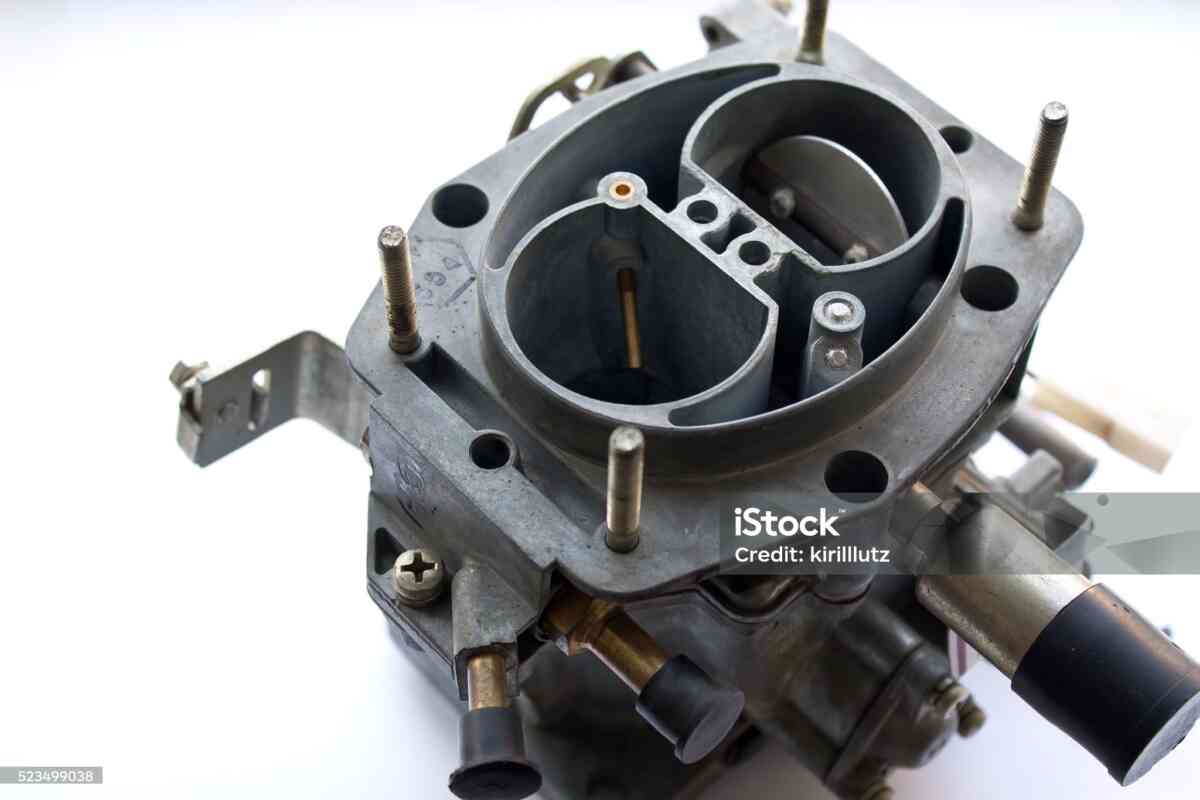
Selecting the correct carburetor is one of the most important decisions when building or modifying a carbureted gasoline engine. The carburetor must supply enough air for the engine to produce its intended power without becoming unnecessarily large and difficult to tune.
This is where a Carburetor CFM Calculator becomes extremely useful.
CFM stands for cubic feet per minute, a measurement of airflow. A carburetor’s CFM rating describes its airflow capacity under a specified test condition. Engine builders use CFM calculations to estimate how much airflow an engine needs based on displacement, RPM, and volumetric efficiency.
However, carburetor sizing is more complicated than simply choosing the biggest CFM number available. A properly selected carburetor should work with the engine’s operating range, cylinder heads, camshaft, intake manifold, compression ratio, transmission, gearing, and intended use.
This comprehensive guide explains how a Carburetor CFM Calculator works, how to calculate airflow manually, how to interpret results, and how to avoid common carburetor sizing mistakes.
What Is a Carburetor CFM Calculator?
A Carburetor CFM Calculator is a free tool that estimates the airflow capacity required by an internal combustion engine.
The calculator generally uses three major inputs:
- Engine displacement
- Maximum or target RPM
- Volumetric efficiency
For a traditional four-stroke naturally aspirated engine, a commonly used equation is:
CFM = (CID × RPM × VE) ÷ 3456
Where:
- CFM = estimated carburetor airflow requirement
- CID = cubic-inch displacement
- RPM = engine speed
- VE = volumetric efficiency expressed as a decimal
- 3456 = four-stroke conversion constant
For example, an engine with 350 cubic inches, 6,000 RPM, and 85% volumetric efficiency would be calculated as:
CFM = (350 × 6,000 × 0.85) ÷ 3456
The estimated airflow is approximately 516 CFM.
That number gives the engine builder a useful starting point for comparing commercially available carburetors.
Why Carburetor Size Matters
A carburetor controls the amount of air and fuel entering a carbureted engine.
If the carburetor is too small, it can become an airflow restriction at high RPM. The engine may have good low-speed response but lose its ability to produce power as RPM increases.
If the carburetor is too large, airflow velocity can become unnecessarily low at lower engine speeds. This can affect throttle response, fuel metering, drivability, and tuning.
The objective is therefore to find a carburetor that provides enough airflow while maintaining a strong fuel signal and good response.
This is why the calculated CFM number should be considered a target range rather than an absolute requirement.
What Does CFM Mean?
CFM means cubic feet per minute.
It describes the volume of air flowing through a carburetor.
For example, a 600-CFM carburetor is designed to flow approximately 600 cubic feet of air per minute under its specified rating conditions.
However, CFM ratings from different manufacturers should not always be compared as though they were identical laboratory measurements.
Different manufacturers may use different test pressures or rating standards.
Therefore, the advertised CFM should be considered alongside the carburetor’s design and intended application.
Understanding the Carburetor CFM Formula
The standard formula is:
CFM = (CID × RPM × VE) ÷ 3456
Let’s break down each component.
Engine Displacement
CID means cubic-inch displacement.
A larger engine generally requires more airflow than a smaller engine when operating at the same RPM and volumetric efficiency.
Examples include:
- 283 CID
- 305 CID
- 327 CID
- 350 CID
- 383 CID
- 400 CID
- 427 CID
- 454 CID
- 496 CID
- 502 CID
The displacement input should be accurate.
If the engine’s displacement is provided in liters, convert it to cubic inches.
One liter is approximately:
61.024 cubic inches
For example:
5.7 liters × 61.024 ≈ 348 cubic inches
This is why a 5.7-liter engine is commonly referred to as approximately a 350-CID engine.
Understanding RPM
RPM means revolutions per minute.
RPM is one of the most important variables in the calculation.
An engine operating at higher RPM processes air more rapidly.
Consider a 350-CID engine with 85% VE.
At 4,500 RPM:
CFM ≈ 387
At 5,500 RPM:
CFM ≈ 473
At 6,500 RPM:
CFM ≈ 559
This demonstrates why a high-RPM performance engine can require a substantially larger carburetor than a similar-displacement street engine.
What RPM Should You Enter?
One of the most common mistakes is entering an unrealistic RPM value.
You should generally use a realistic engine operating speed that corresponds with the engine’s airflow demand.
For performance applications, the RPM at which the engine reaches peak power can be especially useful.
For example, if an engine has a 7,000-RPM redline but produces peak power around 6,000 RPM, calculating the carburetor requirement at 6,000 RPM may provide a more practical starting point.
The purpose is not to maximize the calculator’s answer.
The purpose is to estimate the airflow the engine can actually use.
Understanding Volumetric Efficiency
Volumetric efficiency, or VE, describes how effectively an engine fills its cylinders with air compared with its theoretical displacement.
An engine with 100% VE would theoretically fill its cylinders with an amount of air equal to its displacement during each intake cycle under the reference conditions used for the calculation.
Real engines operate at different efficiencies.
A basic stock engine may have relatively modest VE.
A performance engine may have significantly higher VE.
Factors affecting VE include:
- Cylinder-head design
- Intake-port size
- Valve size
- Valve lift
- Camshaft duration
- Camshaft timing
- Intake manifold design
- Exhaust system
- Compression ratio
- RPM
- Combustion chamber design
- Intake-air temperature
- Atmospheric pressure
Because VE changes with RPM, a single percentage should be treated as an approximation.
Typical Volumetric Efficiency Estimates
There is no single VE number that applies to every engine.
For rough calculations, engine builders may consider ranges such as:
Mild Stock Engine
Approximately 70–80%.
Performance Street Engine
Approximately 80–90%.
Highly Efficient Naturally Aspirated Engine
Approximately 90–100% or potentially higher at certain operating points.
Competition Engine
Potentially above 100% at specific RPM ranges.
These figures should not be treated as universal specifications.
Actual VE depends on the specific engine.
Why a Carburetor CFM Calculator Is Better Than Guessing
A common traditional approach to carburetor selection is to use a rule of thumb based only on engine displacement.
For example, someone may recommend a certain carburetor simply because the engine has 350 cubic inches.
The problem is that two 350-CID engines can have completely different operating characteristics.
One might be:
- Stock
- Low compression
- Mild camshaft
- Small cylinder heads
- Low RPM
Another could have:
- High compression
- Large valves
- High-flow cylinder heads
- Aggressive camshaft
- High-flow intake
- High RPM
These engines have dramatically different airflow requirements.
A CFM calculator accounts for at least some of these differences.
Example: 350-CID Street Engine
Consider a 350-CID engine with:
- 350 CID displacement
- 5,000 RPM
- 80% VE
The calculation is:
CFM = (350 × 5,000 × 0.80) ÷ 3456
The result is approximately:
405 CFM
A carburetor around 400–500 CFM could be investigated for this type of application.
The final selection would depend on the engine’s actual configuration.
Example: 350-CID Performance Engine
Now consider a modified 350-CID engine operating at:
- 6,500 RPM
- 90% VE
The calculation becomes:
CFM = (350 × 6,500 × 0.90) ÷ 3456
The result is approximately:
593 CFM
This engine may justify a carburetor around 600 CFM or potentially another size depending on its application.
The difference between the two examples illustrates the importance of RPM and VE.
The displacement did not change.
The airflow requirement did.
Example: 383 Stroker Engine
A 383-CID stroker engine is another common performance combination.
Suppose the engine operates at 6,000 RPM and has an estimated VE of 85%.
The formula is:
CFM = (383 × 6,000 × 0.85) ÷ 3456
The result is approximately:
565 CFM
A 600-CFM carburetor could therefore be a reasonable starting point for a street-oriented combination.
A more aggressive engine operating at higher RPM may justify a larger carburetor.
Example: 454-CID Engine
Now consider a 454-CID engine operating at 6,000 RPM with 90% VE.
CFM = (454 × 6,000 × 0.90) ÷ 3456
The estimated airflow is approximately:
710 CFM
This suggests that a carburetor around the 700–750 CFM range could be investigated.
Again, this is not an instruction to purchase a specific carburetor.
It is a calculated starting point.
Example: High-RPM 302 Engine
A 302-CID engine designed for high RPM can have a surprisingly significant airflow requirement.
Suppose it operates at:
- 7,000 RPM
- 90% VE
The calculation becomes:
CFM = (302 × 7,000 × 0.90) ÷ 3456
The result is approximately:
550 CFM
This demonstrates an important principle:
Engine displacement does not determine carburetor size by itself.
RPM and volumetric efficiency can dramatically change the result.
Why an Oversized Carburetor Can Cause Problems
Many people believe that installing a larger carburetor automatically creates more power.
That is not necessarily true.
An oversized carburetor can reduce airflow velocity through the venturi at lower engine speeds.
The result may include:
- Weak throttle response
- Hesitation
- Poor low-speed performance
- Difficult tuning
- Poor fuel atomization
- Unstable part-throttle operation
- Excessive fuel consumption
These symptoms can also have other causes, so carburetor size should not be blamed automatically.
Nevertheless, oversized carburetors are a common source of tuning challenges.
Why an Undersized Carburetor Can Limit Power
A carburetor that is too small can become a restriction at high RPM.
Potential symptoms include:
- Strong low-speed torque
- Good throttle response
- Power dropping at high RPM
- Engine struggling to reach target RPM
- Reduced peak horsepower
- Increased intake restriction
The engine may feel excellent around town but fail to deliver its potential at the top of the RPM range.
This is especially relevant to high-RPM performance engines.
Airflow Velocity and Fuel Metering
Carburetors rely on pressure differences to meter fuel.
Air moving through a venturi creates a pressure signal that helps draw fuel from the carburetor’s metering system.
Air velocity therefore matters.
If a carburetor is much larger than necessary, airflow velocity at lower engine speeds may decrease.
That can weaken the fuel signal.
This is one reason why a correctly sized carburetor often feels more responsive than a much larger carburetor on the same engine.
Carburetor CFM and Throttle Response
Throttle response is especially important in everyday driving.
A street vehicle spends much of its time below peak RPM.
The engine needs to respond smoothly during:
- Starting
- Idling
- Pulling away from a stop
- Passing
- Climbing hills
- Light acceleration
- Part-throttle cruising
A carburetor selected purely for maximum high-RPM airflow may not provide the best street experience.
Carburetor CFM and Racing
Racing applications can be different.
A competition engine may spend much more time operating near its upper RPM range.
The engine may have:
- High-flow cylinder heads
- Large valves
- Aggressive camshaft
- High compression
- High-flow intake manifold
- Free-flowing exhaust
- High RPM capability
Such an engine can take advantage of additional airflow.
This is why larger carburetors can be appropriate for serious performance combinations.
Vacuum Secondary vs Mechanical Secondary
Carburetors generally use different approaches to controlling secondary airflow.
Vacuum Secondary
A vacuum-secondary carburetor uses engine airflow demand to determine secondary opening.
This can provide good street drivability.
The secondary side does not simply open according to accelerator-pedal movement.
Mechanical Secondary
Mechanical-secondary carburetors connect secondary operation directly to throttle movement.
They can provide immediate airflow and are commonly used in performance applications.
However, the engine must be capable of using the airflow effectively.
Carburetor CFM and Intake Manifolds
The intake manifold is a critical part of the engine’s airflow system.
Common designs include:
- Dual-plane manifolds
- Single-plane manifolds
- Tunnel-ram systems
- Specialized racing manifolds
A dual-plane manifold generally emphasizes street and mid-range performance.
A single-plane manifold often favors higher-RPM airflow.
The carburetor should be matched to the manifold and engine operating range.
Installing a large carburetor on an otherwise restrictive intake system may provide little benefit.
Cylinder Heads and Airflow
Cylinder heads can dramatically affect an engine’s airflow capability.
Important characteristics include:
- Port size
- Port shape
- Valve diameter
- Valve lift
- Chamber design
- Flow characteristics
- Intake and exhaust efficiency
High-flow heads allow an engine to process more air.
However, simply installing large ports does not automatically improve performance.
Port velocity, engine size, RPM range, and overall combination must be considered.
Camshaft and CFM Requirements
Camshaft design has a major influence on an engine’s operating range.
A mild camshaft may emphasize low-speed torque and smooth idle.
A more aggressive camshaft may shift the engine’s power band toward higher RPM.
When the camshaft allows the engine to breathe efficiently at higher RPM, the engine may require greater airflow capacity.
This is why carburetor selection should be made after considering the camshaft specifications.
Compression Ratio and Carburetor Selection
Compression ratio is not directly part of the standard CFM equation.
However, it is an important part of the overall engine combination.
A high-compression performance engine may have substantially different airflow and power characteristics from a low-compression stock engine.
Compression should therefore be considered as supporting information when selecting the overall induction system.
Does Horsepower Determine Carburetor CFM?
Horsepower can provide useful information, but it should not be the only factor.
For example, a 500-horsepower engine can be:
- Large displacement and low RPM
- Small displacement and high RPM
- Naturally aspirated
- Forced induction
Each configuration can have different airflow requirements.
The displacement/RPM/VE approach is often a better starting point because it considers how the engine processes air.
Carburetor CFM for Different Driving Applications
Daily Driver
Prioritize:
- Throttle response
- Smooth idle
- Fuel economy
- Easy starting
- Low-speed drivability
Street Performance
Prioritize:
- Mid-range torque
- Strong acceleration
- Good throttle response
- Adequate high-RPM airflow
Drag Racing
Prioritize:
- High-RPM airflow
- Peak power
- Rapid throttle response
- Competition tuning
Off-Road
Prioritize:
- Predictable throttle control
- Low-speed torque
- Consistent operation
- Appropriate fuel control
Towing
Prioritize:
- Low- and mid-range torque
- Stable operation
- Temperature control
- Drivability under load
How to Use a Free Carburetor CFM Calculator
Using an online calculator is simple.
Step 1: Identify Engine Displacement
Find the engine’s actual displacement.
Step 2: Determine Target RPM
Use a realistic operating RPM.
Step 3: Estimate VE
Select a reasonable volumetric-efficiency estimate.
Step 4: Enter the Values
Enter the information into the calculator.
Step 5: Review the CFM Result
Use the result as an estimated airflow requirement.
Step 6: Compare Carburetor Sizes
Compare the result with commercially available carburetors.
Step 7: Evaluate the Entire Combination
Consider the intake, heads, camshaft, transmission, gearing, vehicle weight, and intended use.
Calculating CFM Without an Online Tool
You can manually calculate CFM using:
CFM = (CID × RPM × VE) ÷ 3456
For example:
CID = 400
RPM = 5,500
VE = 0.85
Then:
CFM = (400 × 5,500 × 0.85) ÷ 3456
CFM ≈ 541
The engine therefore has an estimated airflow requirement of approximately 541 CFM at those conditions.
An online calculator simply automates this calculation.
Building an Airflow Range
Instead of relying on one VE assumption, calculate multiple values.
For a 400-CID engine at 5,500 RPM:
75% VE
Approximately 478 CFM.
80% VE
Approximately 509 CFM.
85% VE
Approximately 541 CFM.
90% VE
Approximately 573 CFM.
This creates a more useful airflow range.
The builder can then evaluate whether a 500-, 550-, 600-, or another carburetor is most appropriate.
Why the Calculator Result Is Not an Exact Carburetor Recommendation
The calculator estimates engine airflow.
It does not fully evaluate:
- Carburetor design
- Booster configuration
- Fuel metering
- Airflow test pressure
- Throttle response
- Intake-manifold characteristics
- Secondary operation
- Fuel system calibration
- Vehicle characteristics
Therefore, the calculator should be considered a planning tool.
It helps narrow the options.
It does not eliminate the need for engineering judgment.
Carburetor CFM and Airflow Testing
Serious engine builders may use airflow benches, dyno testing, or other instrumentation to determine actual engine performance.
A dynamometer can help evaluate:
- Horsepower
- Torque
- RPM
- Air-fuel ratio
- Engine response
- Carburetor changes
This type of testing can determine whether a larger or smaller carburetor actually improves the engine.
For most street builds, however, a properly used calculator and sensible component matching provide an excellent starting point.
Common Carburetor CFM Mistakes
Mistake 1: Selecting Based Only on Displacement
A 350-CID engine does not automatically need one specific carburetor size.
Mistake 2: Selecting Based Only on Horsepower
Horsepower does not fully describe airflow demand.
Mistake 3: Choosing the Biggest Carburetor
More CFM is not automatically better.
Mistake 4: Using an Unrealistic RPM
An artificially high RPM can produce an inflated CFM result.
Mistake 5: Assuming 100% VE
Not every engine achieves 100% volumetric efficiency.
Mistake 6: Ignoring the Intake System
Carburetor airflow is only one part of the complete system.
Mistake 7: Ignoring Vehicle Usage
Street and racing applications require different compromises.
Frequently Asked Questions
What is the best carburetor CFM for a 350?
There is no universal answer. Depending on RPM, VE, engine modifications, and vehicle use, a 350-CID engine may work with carburetors in several different sizes.
Can a carburetor be too big?
Yes. Excessive carburetor size can reduce airflow velocity and create drivability and tuning problems.
Can a carburetor be too small?
Yes. A small carburetor can restrict high-RPM airflow and limit peak performance.
Is 600 CFM enough for a 350?
It can be an excellent size for many 350-CID street and performance combinations, but the actual requirement depends on the engine.
Is 750 CFM too large for a 350?
Not necessarily. A high-RPM, high-efficiency 350 may benefit from additional airflow.
What is VE in a CFM calculator?
VE stands for volumetric efficiency and represents how effectively the engine fills its cylinders with air.
Can the formula be used for a four-cylinder engine?
Yes. The same basic four-stroke formula can be used for different engine cylinder counts because total displacement is included.
Does CFM equal engine horsepower?
No. CFM measures airflow capacity. Horsepower measures power output.
Benefits of a Free Carburetor CFM Calculator
A free calculator provides several practical advantages.
Faster Planning
It can calculate airflow requirements in seconds.
Fewer Guesswork Decisions
The calculation provides an objective starting point.
Easy Comparison
You can compare multiple RPM and VE scenarios.
Better Engine Builds
The result helps coordinate carburetor selection with other components.
Educational
Students and enthusiasts can understand the relationship between displacement, RPM, and airflow.
Cost Savings
Calculating before purchasing can reduce the risk of buying an unsuitable carburetor.
Final Thoughts
A Carburetor CFM Calculator is a simple but powerful tool for planning a carbureted engine’s fuel and airflow system.
The standard formula:
CFM = (CID × RPM × VE) ÷ 3456
provides a useful estimate of airflow demand for a four-stroke naturally aspirated engine.
The three most important inputs are:
- Engine displacement
- Engine RPM
- Volumetric efficiency
But good carburetor selection goes beyond the calculator.
Cylinder heads, camshaft, intake manifold, exhaust system, compression ratio, transmission, gearing, vehicle weight, and driving conditions all influence how the engine responds.
For a street car, excellent throttle response and low-speed drivability may be more valuable than maximum airflow capacity. For a high-RPM racing engine, the ability to supply sufficient airflow at the top of the power band may be much more important.
The best strategy is to calculate the airflow requirement, establish a reasonable CFM range, compare available carburetors, and then match the final choice to the entire engine and vehicle combination.
Used correctly, a free Carburetor CFM Calculator can turn carburetor selection from guesswork into a more logical and measurable part of engine building.


