
wendy lyn
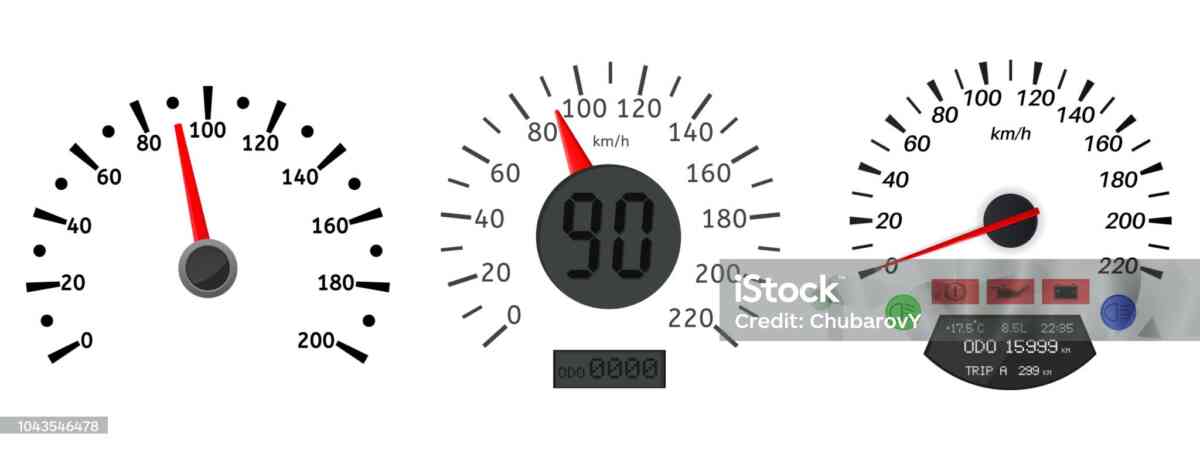
A vehicle’s speedometer appears simple: look at the dashboard and read the number.
But the relationship between the displayed number and actual vehicle speed can be more complicated than it appears.
Modern vehicles use sensors, electronic control systems, tire dimensions, transmission information, and calibration data to determine the vehicle’s speed. When the original tire size, drivetrain, or speed-sensing components are changed, the displayed speed may no longer correspond exactly to the vehicle’s actual speed.
A Speedometer Error Calculator helps drivers and automotive enthusiasts understand this relationship.
Whether you are replacing tires, installing aftermarket wheels, modifying an off-road truck, restoring a classic vehicle, or simply checking the accuracy of your dashboard, understanding speedometer error is useful.
What Does Speedometer Error Mean?
Speedometer error is the difference between the speed shown by the vehicle and a reference measurement of actual speed.
For example:
Displayed speed = 60 mph
Reference speed = 57 mph
The speedometer is displaying 3 mph more than the reference.
Another example:
Displayed speed = 60 mph
Reference speed = 63 mph
The vehicle is traveling approximately 3 mph faster than the displayed value.
A Speedometer Error Calculator can calculate both the numerical difference and percentage difference.
Why Speedometer Accuracy Is Important
Speed information affects many aspects of driving.
It helps drivers:
- Follow speed limits
- Maintain a consistent cruising speed
- Estimate travel time
- Compare vehicle performance
- Calculate fuel economy
- Evaluate tire modifications
- Understand drivetrain changes
For modified vehicles, speedometer accuracy becomes even more important because the factory calibration may have been designed around original components.
The Relationship Between Tire Rotation and Road Speed
A tire travels a certain distance every time it completes one revolution.
That distance is approximately its circumference.
The circumference formula is:
C = π × D
where:
C = circumference
D = diameter.
If the diameter increases, circumference increases.
Therefore, a larger tire travels farther per revolution.
This simple geometric relationship is the foundation of tire-based speedometer calculations.
Example of Tire Circumference
Suppose a tire has a diameter of 28 inches.
Circumference:
π × 28
≈ 87.96 inches.
A tire with a diameter of 30 inches has:
π × 30
≈ 94.25 inches.
The 30-inch tire travels approximately 7% farther per revolution.
Therefore, if a speedometer system continues interpreting wheel rotation as though the vehicle still had 28-inch tires, the actual road speed can differ from the displayed value.
Calculating Speedometer Correction
The simplest tire-based formula is:
Corrected Speed = Displayed Speed × New Diameter ÷ Original Diameter
Consider:
Original diameter = 28 inches
New diameter = 30 inches
Displayed speed = 60 mph
Corrected speed:
60 × 30 ÷ 28
≈ 64.29 mph.
The estimated difference is:
64.29 − 60
≈ 4.29 mph.
Calculating Percentage Difference
The percentage difference can be calculated as:
Percentage Difference = (New Diameter − Original Diameter) ÷ Original Diameter × 100
For 28 inches and 30 inches:
(30 − 28) ÷ 28 × 100
≈ 7.14%.
This means the new tire diameter is approximately 7.14% larger.
Under the simplified model, the speed relationship changes by approximately the same percentage.
Why a Calculator Is Better Than Manual Math
The formulas are simple, but tire specifications can make the calculation more complicated.
A user may need to convert:
- Millimeters to inches
- Aspect ratio to sidewall height
- Wheel diameter to total tire diameter
- mph to km/h
A free online calculator can perform these calculations automatically.
This is particularly useful when comparing multiple tire sizes.
Calculating Tire Diameter From a Metric Tire
Take the tire:
265/70R17
Width:
265 mm.
Aspect ratio:
70%.
Sidewall:
265 × 0.70
= 185.5 mm.
Convert to inches:
185.5 ÷ 25.4
≈ 7.30 inches.
Overall diameter:
17 + 7.30 + 7.30
≈ 31.60 inches.
The approximate diameter is therefore 31.6 inches.
Comparing Two Tire Sizes
Suppose the replacement is:
285/70R17
Sidewall:
285 × 0.70
= 199.5 mm.
Convert:
199.5 ÷ 25.4
≈ 7.85 inches.
Overall diameter:
17 + 7.85 + 7.85
≈ 32.70 inches.
The difference is approximately:
32.70 − 31.60
= 1.10 inches.
Percentage increase:
1.10 ÷ 31.60 × 100
≈ 3.48%.
At an indicated 60 mph, the simplified corrected speed would be approximately:
60 × 32.70 ÷ 31.60
≈ 62.09 mph.
This is a useful example of why tire dimensions should be calculated rather than guessed.
Speedometer Error in Kilometers Per Hour
The same calculations work with km/h.
Suppose:
Displayed = 100 km/h
Original tire diameter = 650 mm
New tire diameter = 680 mm.
Corrected:
100 × 680 ÷ 650
≈ 104.62 km/h.
The difference is approximately 4.62 km/h.
Drivers using metric speed limits can therefore use the same mathematical principle without converting the speed unit.
Speedometer Error in Miles Per Hour
For a vehicle using mph:
Displayed = 70 mph
Original diameter = 27 inches
New diameter = 28 inches.
Corrected speed:
70 × 28 ÷ 27
≈ 72.59 mph.
The estimated difference is approximately 2.59 mph.
What Happens When the New Tire Is Smaller?
Now consider the opposite situation.
Original diameter = 28 inches
New diameter = 26 inches
Displayed speed = 60 mph.
Corrected:
60 × 26 ÷ 28
≈ 55.71 mph.
Under this simplified model, the actual speed would be approximately 55.71 mph when the speedometer indicates 60 mph.
This demonstrates that the direction of error depends on whether the new tire is larger or smaller.
Speedometer Error Table
A simple example using an original 28-inch tire illustrates the relationship.
| New Tire Diameter | Displayed Speed | Estimated Actual Speed |
|---|---|---|
| 26 in | 60 mph | 55.71 mph |
| 27 in | 60 mph | 57.86 mph |
| 28 in | 60 mph | 60.00 mph |
| 29 in | 60 mph | 62.14 mph |
| 30 in | 60 mph | 64.29 mph |
| 31 in | 60 mph | 66.43 mph |
| 32 in | 60 mph | 68.57 mph |
This table is based on a simplified diameter-ratio model and should not be treated as a measurement of a particular vehicle.
Tire Circumference Versus Nominal Diameter
A tire’s advertised dimensions do not always represent its exact real-world rolling circumference.
Differences can occur because of:
- Manufacturing tolerances
- Tire construction
- Tread depth
- Inflation pressure
- Load
- Temperature
- Wear
For basic planning, nominal diameter is useful.
For highly precise measurement, actual rolling circumference may provide better information.
Loaded Radius
Engineers sometimes distinguish between static radius and loaded radius.
The loaded radius considers the tire while supporting the vehicle.
Because the tire deforms where it contacts the road, the effective rolling behavior can differ from a perfect geometric circle.
This is one reason theoretical calculations and real-world measurements may not match perfectly.
Why Tire Width Can Matter Indirectly
Tire width itself does not automatically determine speedometer error.
However, width is used in calculating sidewall height.
For example:
A 245/50 tire has a sidewall height of:
245 × 0.50 = 122.5 mm.
A 275/50 tire has:
275 × 0.50 = 137.5 mm.
Even though the aspect ratio is identical, the wider tire has a taller sidewall and therefore a larger potential overall diameter when mounted on the same wheel size.
Maintaining Similar Diameter
Many vehicle owners try to maintain a replacement tire diameter close to the original.
Benefits may include:
- Smaller speedometer change
- Smaller odometer change
- More predictable gearing
- Reduced effect on electronic systems
- Similar ground clearance
However, compatibility must still be checked.
A tire that has a similar diameter may still be unsuitable because of width, load rating, wheel fitment, clearance, or other specifications.
Speedometer Error After Changing Wheel Size
Suppose a vehicle changes from a 17-inch wheel to a 20-inch wheel.
A common assumption is that the speedometer will automatically become inaccurate.
That conclusion is incomplete.
If the original tire was:
225/65R17
and the replacement is:
245/45R20
the overall diameter of the two assemblies may be relatively close.
The wheel has become much larger, but the tire sidewall has become much shorter.
Therefore, the speedometer effect depends on total tire diameter, not wheel diameter alone.
Speedometer Error and Gear Ratio
A vehicle’s final-drive ratio also determines the relationship between engine speed and wheel speed.
For example, changing from a numerically lower final drive to a numerically higher final drive changes the number of driveshaft or engine revolutions required for a wheel revolution.
Whether this creates speedometer error depends on where the vehicle obtains its speed signal and how the system is calibrated.
Older vehicles may be more directly affected.
Modern electronic vehicles can sometimes compensate through programming.
Speedometer Error in Classic Cars
Classic vehicles are particularly interesting because many use mechanical speedometer systems.
A classic car may have a speedometer cable driven by a transmission gear.
If the owner changes:
- Rear axle ratio
- Transmission
- Tire diameter
- Speedometer gear
the speedometer may require recalibration.
A Speedometer Error Calculator can help determine the approximate correction needed before selecting a different speedometer gear or calibration approach.
Speedometer Error in 4×4 Vehicles
Four-wheel-drive vehicles often receive larger tires.
However, tire size changes can affect more than speedometer readings.
Large tires can change:
- Effective gearing
- Engine load
- Transmission behavior
- Acceleration
- Braking
- Steering effort
- Suspension clearance
- Driveline stress
A speedometer calculator is therefore useful, but it should be treated as one component of a broader modification analysis.
Why Odometer Error Matters
Suppose a vehicle has an actual tire circumference that is 5% larger than expected.
Over a long journey, the distance indicated by the vehicle may differ from actual travel distance depending on how the system calculates mileage.
This matters when:
- Tracking fuel consumption
- Planning maintenance
- Comparing trip distances
- Recording business mileage
- Monitoring long-term vehicle use
If accuracy is important, drivers should verify the vehicle’s calibration after major tire changes.
Using a Speedometer Error Calculator Before Buying Tires
One of the best applications is preventive.
Instead of buying tires first and discovering a problem afterward, calculate the effect beforehand.
Compare:
- Original tire size
- Proposed tire size
- Overall diameter
- Diameter percentage difference
- Estimated speedometer correction
Then consider the other fitment requirements.
This approach can help eliminate unsuitable tire options before purchase.
Example Tire Comparison
Suppose the original tire is approximately 27 inches.
Three proposed replacements are:
- 26.5 inches
- 27.2 inches
- 29 inches
At a displayed speed of 60 mph:
26.5-inch tire:
60 × 26.5 ÷ 27
≈ 58.89 mph.
27.2-inch tire:
60 × 27.2 ÷ 27
≈ 60.44 mph.
29-inch tire:
60 × 29 ÷ 27
≈ 64.44 mph.
The 27.2-inch option produces a much smaller theoretical difference than the 29-inch option.
How to Interpret Calculator Results
A good calculator should present results clearly.
Useful outputs include:
- Original tire diameter
- New tire diameter
- Diameter difference
- Percentage difference
- Displayed speed
- Estimated actual speed
- Speedometer error
- Unit conversions
Some tools may also show a comparison between original and replacement tire sizes.
Speedometer Error Does Not Mean the Vehicle Is Unsafe
A calculated difference does not automatically mean that the vehicle is unsafe.
The significance depends on:
- Size of the difference
- Driving conditions
- Vehicle design
- Tire compatibility
- Legal requirements
- Calibration capability
A small mathematical difference may have little practical impact, while a large tire change may require professional recalibration.
When Professional Calibration Is Appropriate
Consider professional assistance when:
- Tire diameter changes substantially
- The vehicle receives a transmission swap
- Axle gearing changes
- ABS or traction-control behavior changes
- Electronic control modules are modified
- The vehicle is heavily customized
- The speedometer is clearly inaccurate
A qualified automotive technician can determine how the vehicle’s speed signal is generated and whether recalibration is possible.
Speedometer Error Calculator for Fleet Vehicles
Businesses operating multiple vehicles can also benefit from understanding speedometer accuracy.
Fleet managers may monitor:
- Fuel consumption
- Driver behavior
- Mileage
- Maintenance intervals
- Tire replacement schedules
If vehicles use non-standard tire sizes, speed and distance readings should be understood before analyzing fleet data.
Why Consistent Tire Size Matters for Data
Fleet data is most useful when measurements are consistent.
If one vehicle uses substantially different tire dimensions without calibration, comparisons of:
- Fuel economy
- Distance traveled
- Average speed
may be less reliable.
This is particularly important for businesses that depend on accurate mileage records.
Safety Considerations
Speedometer calculations should never be used as a reason to exceed posted speed limits.
If there is uncertainty between displayed speed and actual speed, drivers should operate conservatively and comply with applicable traffic laws.
Tire modifications should also respect:
- Load ratings
- Speed ratings
- Vehicle clearance
- Wheel specifications
- Manufacturer recommendations
Frequently Asked Questions
What is the easiest way to calculate speedometer error?
Enter the original tire diameter, replacement tire diameter, and displayed speed into a Speedometer Error Calculator.
What formula does the calculator use?
A simplified tire-size formula is:
Actual Speed = Displayed Speed × New Tire Diameter ÷ Original Tire Diameter
Does a larger tire always make the vehicle travel faster?
For a given wheel rotational speed, a larger tire travels farther per revolution. Whether the dashboard displays that difference depends on the vehicle’s speed-sensing and calibration system.
Can I use tire size in millimeters?
Yes, but the tire dimensions need to be interpreted correctly. Metric tire sizes contain width, aspect ratio, and wheel diameter information.
Does changing from 18-inch wheels to 20-inch wheels automatically cause speedometer error?
No. The total rolling diameter of the tire and wheel assembly is what matters for the basic calculation.
Can a speedometer be recalibrated?
Many vehicles can be recalibrated, but the method varies. Some require programming equipment, while older mechanical systems may use different speedometer gears or calibration procedures.
Is GPS more accurate than the vehicle speedometer?
GPS can provide a useful independent reference, particularly at steady speed, but its accuracy depends on signal and device conditions. Neither should automatically be treated as an absolute measurement in every situation.
Final Thoughts
The Speedometer Error Calculator is a simple but powerful automotive tool.
It transforms tire dimensions and displayed speed into an easy-to-understand estimate of how tire-size changes can affect vehicle speed readings.
The central concept is straightforward:
A larger tire travels farther per revolution, while a smaller tire travels less distance per revolution.
Because speedometers depend on rotational information, changing the rolling diameter can change the relationship between displayed and actual speed.
The calculator is particularly valuable when evaluating:
- Aftermarket wheels
- Larger truck tires
- Off-road tire upgrades
- Classic-car modifications
- Performance vehicles
- Transmission swaps
- Axle-ratio changes
- Tire-size comparisons
For the best results, compare the complete tire dimensions rather than wheel diameter alone. Remember that nominal tire dimensions are estimates and actual rolling behavior can vary with tire construction, pressure, load, wear, and vehicle calibration.
A free Speedometer Error Calculator cannot replace professional vehicle inspection, but it can provide an excellent first step when planning a tire or wheel change.
By calculating the expected difference before making a modification, vehicle owners can make better-informed decisions, preserve predictable driving characteristics, and identify situations where professional speedometer recalibration may be appropriate.


