
amanda nielsen
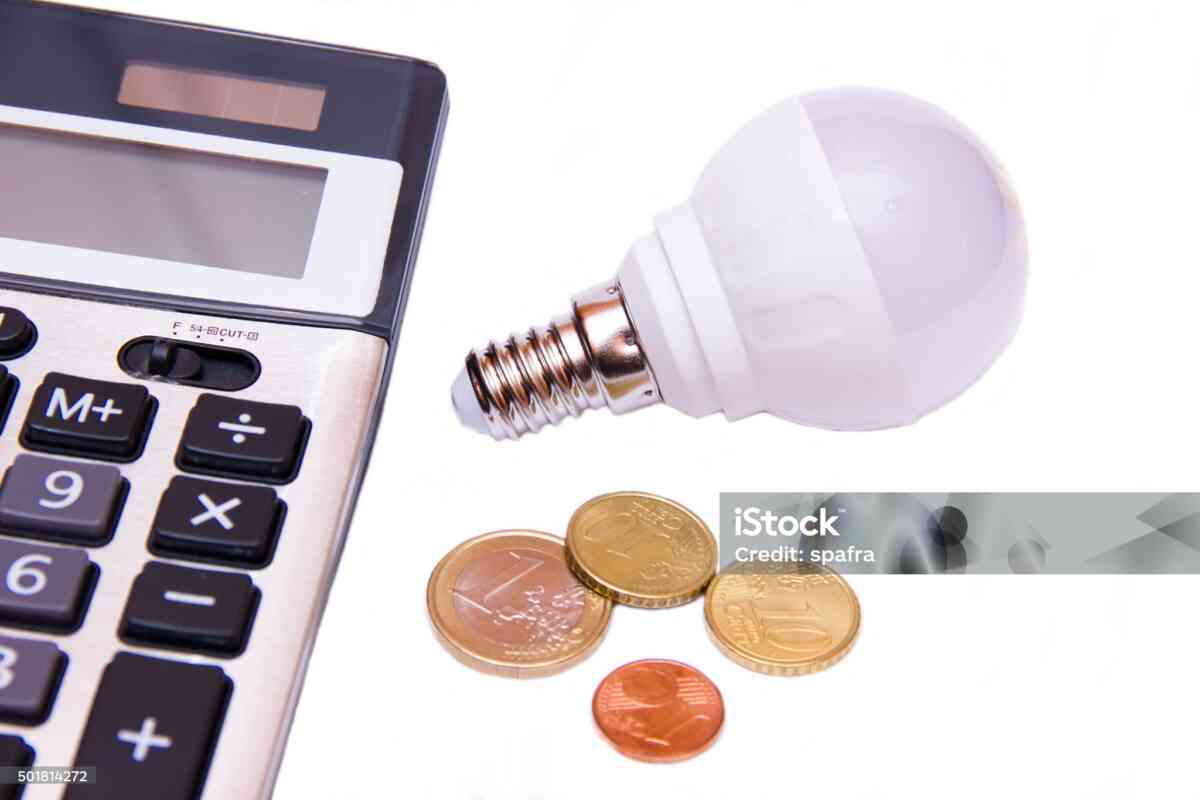
Lighting is one of the most common uses of electricity in homes, offices, stores, warehouses, restaurants, factories, and other buildings. Although a single light bulb may consume relatively little electricity, the total cost can become significant when dozens or hundreds of lights operate for many hours every day.
A Lighting Energy Cost Calculator provides a simple way to estimate how much electricity lighting consumes and how much that electricity costs. By entering the bulb wattage, number of lights, operating hours, electricity price, and usage frequency, you can estimate daily, monthly, and annual lighting expenses.
This guide explains how lighting energy costs are calculated, how to use a Lighting Energy Cost Calculator, how LED lighting compares with traditional bulbs, and how businesses and households can reduce electricity consumption without sacrificing useful illumination.
What Is a Lighting Energy Cost Calculator?
A Lighting Energy Cost Calculator is a free online tool designed to estimate the electricity consumption and operating cost of lighting equipment.
The calculator generally uses several basic inputs:
- Light bulb wattage
- Number of bulbs or fixtures
- Hours of operation per day
- Days of operation per month or year
- Electricity price per kilowatt-hour
- Optional efficiency or usage assumptions
The calculator converts the electrical power used by the lights into kilowatt-hours, commonly abbreviated as kWh. Electricity providers generally use kWh when calculating electricity bills.
For example, suppose a 10-watt LED bulb operates for five hours per day.
The calculation is:
10 watts ÷ 1,000 × 5 hours = 0.05 kWh per day
If electricity costs $0.20 per kWh:
0.05 × $0.20 = $0.01 per day
One bulb therefore costs approximately one cent per day under those assumptions.
The cost becomes more meaningful when multiple lights operate for longer periods.
Why Calculate Lighting Energy Costs?
Knowing how much lighting costs can help you make better purchasing and energy-management decisions.
A calculator can answer questions such as:
- How much does one LED bulb cost to operate?
- How much does a 100-watt floodlight cost per month?
- How much electricity does a building’s lighting system consume?
- How much could I save by replacing fluorescent lamps with LEDs?
- How much does leaving lights on overnight cost?
- What is the annual electricity cost of warehouse lighting?
- How much would an occupancy sensor reduce lighting costs?
- Is upgrading to LED lighting financially worthwhile?
These calculations can be particularly valuable for businesses because lighting may operate for thousands of hours each year.
Understanding Watts and Kilowatt-Hours
One of the most important concepts when calculating lighting costs is the difference between watts and kilowatt-hours.
Watts
Watts measure electrical power.
A 60-watt incandescent bulb uses substantially more power than a 10-watt LED bulb producing a comparable amount of light.
Common lighting wattages include:
- 4–6 W LED bulbs
- 8–12 W LED bulbs
- 15–20 W LED bulbs
- 30–50 W LED fixtures
- 60–100 W traditional bulbs
- 100–300 W commercial floodlights
- Higher-powered industrial lighting
Kilowatt-hours
A kilowatt-hour measures energy consumption.
One kilowatt equals 1,000 watts.
The basic formula is:
Energy Consumption = Watts ÷ 1,000 × Hours
For example, a 50-watt light operating for 8 hours consumes:
50 ÷ 1,000 × 8 = 0.4 kWh
If the light operates every day for 30 days:
0.4 × 30 = 12 kWh per month
If electricity costs $0.15 per kWh:
12 × $0.15 = $1.80 per month
Lighting Energy Cost Formula
The fundamental lighting energy formula is straightforward:
Daily kWh = (Wattage × Number of Lights × Hours per Day) ÷ 1,000
Then:
Daily Cost = Daily kWh × Electricity Rate
For monthly calculations:
Monthly Cost = Daily kWh × Days per Month × Electricity Rate
For annual calculations:
Annual Cost = Daily kWh × Days per Year × Electricity Rate
These formulas make it possible to estimate lighting costs even without a calculator.
Example: One LED Bulb
Consider a 12-watt LED bulb used for six hours per day.
Energy use:
12 × 6 ÷ 1,000 = 0.072 kWh per day
Over 30 days:
0.072 × 30 = 2.16 kWh
At an electricity rate of $0.18 per kWh:
2.16 × $0.18 = $0.3888
The estimated monthly electricity cost is approximately $0.39.
This illustrates why modern LED bulbs are inexpensive to operate.
Example: Ten LED Lights
Now consider ten 12-watt LED lights.
Total power:
12 × 10 = 120 watts
If they operate for eight hours per day:
120 × 8 ÷ 1,000 = 0.96 kWh per day
Over 30 days:
0.96 × 30 = 28.8 kWh
At $0.18 per kWh:
28.8 × $0.18 = $5.18 per month
A group of ten lights therefore costs approximately $5.18 per month under this example.
Why LED Lighting Usually Costs Less
LED technology has changed the economics of lighting.
Traditional incandescent bulbs convert a large portion of electrical energy into heat rather than visible light. LEDs generally provide the required illumination with much lower electrical power.
For example, a traditional incandescent bulb might use approximately 60 watts for a particular lighting application, while an LED replacement may use around 8–12 watts.
If both provide suitable illumination, the LED can significantly reduce electricity consumption.
However, actual savings depend on:
- Fixture design
- Lumens produced
- Operating hours
- Electricity rates
- Lighting controls
- Maintenance
- Product quality
The best comparison is not simply watts versus watts. Compare the amount of light produced and the total operating cost.
Lumens Matter More Than Watts
Watts describe electrical power, while lumens describe visible light output.
A modern LED can produce substantial illumination using relatively little electrical power.
When selecting lighting, consider:
Lumens = how much light
Watts = how much electrical power
Lumens per watt = lighting efficiency
Higher lumens per watt generally indicate greater efficiency.
For example, if one fixture produces 1,000 lumens using 10 watts and another produces the same 1,000 lumens using 20 watts, the first fixture consumes half as much electrical power for the same nominal light output.
Calculating Lighting Costs for a Home
Homeowners can use a Lighting Energy Cost Calculator to estimate the cost of individual rooms or the entire house.
Start by listing:
- Number of bulbs
- Wattage of each bulb
- Average hours used per day
- Electricity price
Consider separate areas such as:
- Kitchen
- Living room
- Bedrooms
- Bathrooms
- Hallways
- Garage
- Basement
- Exterior lighting
- Garden lighting
- Security lighting
Exterior and security lights deserve special attention because they may operate for long periods.
Example: Whole-House Lighting
Suppose a home has:
- 20 LED bulbs
- 10 watts each
- 5 hours of average daily use
- 30 days per month
- Electricity price of $0.18/kWh
Total power:
20 × 10 = 200 watts
Daily energy:
200 × 5 ÷ 1,000 = 1 kWh
Monthly consumption:
1 × 30 = 30 kWh
Monthly cost:
30 × $0.18 = $5.40
The actual cost may be different because households rarely use every light for exactly the same amount of time.
Calculating Commercial Lighting Costs
Commercial lighting can produce much larger energy expenses because businesses often operate lighting for extended periods.
A retail store may have:
- Hundreds of fixtures
- Long operating hours
- Exterior signs
- Parking lot lighting
- Display lighting
- Emergency lighting
- Warehouse fixtures
Even modest savings per fixture can become substantial across an entire facility.
Suppose a business operates 200 fixtures rated at 40 watts for 10 hours per day.
Total power:
200 × 40 = 8,000 watts
That equals:
8 kW
Daily energy:
8 × 10 = 80 kWh
Annual consumption for 365 days:
80 × 365 = 29,200 kWh
At $0.15 per kWh:
29,200 × $0.15 = $4,380 per year
This example demonstrates why commercial lighting efficiency deserves careful attention.
Lighting Cost and Operating Hours
Operating time is one of the biggest factors affecting energy costs.
A highly efficient light can still consume substantial electricity if it operates continuously.
For example, a 100-watt fixture running:
- 2 hours/day uses 0.2 kWh/day
- 8 hours/day uses 0.8 kWh/day
- 12 hours/day uses 1.2 kWh/day
- 24 hours/day uses 2.4 kWh/day
Reducing unnecessary operating hours can therefore complement efficiency improvements.
The Cost of Leaving Lights On
People often underestimate the cost of leaving individual lights on because a single bulb may cost only a small amount.
However, unnecessary lighting becomes more significant when multiplied across:
- Multiple rooms
- Multiple buildings
- Many fixtures
- Long periods
- Large organizations
A Lighting Energy Cost Calculator helps turn an abstract habit into a measurable financial figure.
Instead of simply thinking, “It’s only one light,” you can calculate its actual annual cost.
Lighting Controls Can Reduce Consumption
Replacing bulbs is not the only way to reduce lighting costs.
Controls can reduce operating hours.
Common options include:
Occupancy sensors
Occupancy sensors automatically turn lights on or off depending on whether people are present.
They can be useful in:
- Bathrooms
- Storage rooms
- Offices
- Hallways
- Warehouses
- Meeting rooms
Timers
Timers can schedule lighting during predetermined periods.
They are particularly useful for:
- Outdoor lighting
- Signs
- Decorative lighting
- Security lighting
Photocells
Photocells respond to ambient light.
Exterior lights can automatically switch on when darkness arrives and off when daylight returns.
Dimmers
Dimming can reduce electrical consumption in suitable lighting systems while providing the desired illumination level.
Not every LED fixture is compatible with every dimmer, so compatibility should be checked before installation.
Comparing Incandescent and LED Lighting
Suppose an incandescent bulb uses 60 watts and an LED replacement uses 10 watts.
The LED uses:
10 ÷ 60 = 16.7%
of the incandescent bulb’s power.
That represents an approximate 83.3% reduction in electrical power consumption, assuming equivalent useful lighting performance.
If both operate for 1,000 hours:
Incandescent:
60 × 1,000 ÷ 1,000 = 60 kWh
LED:
10 × 1,000 ÷ 1,000 = 10 kWh
Energy difference:
50 kWh
At $0.20/kWh, the electricity savings would be:
50 × $0.20 = $10
The savings become larger with longer operating hours and higher electricity prices.
Lighting Replacement Payback
Energy savings can also be used to estimate a lighting upgrade’s payback period.
Suppose:
- New LED fixture costs $20
- Old fixture consumes 60 W
- New fixture consumes 10 W
- Annual operation is 2,000 hours
- Electricity costs $0.20/kWh
Annual energy savings:
(60 − 10) × 2,000 ÷ 1,000 = 100 kWh
Annual electricity savings:
100 × $0.20 = $20
Simple payback:
$20 ÷ $20 = 1 year
Actual project economics should also consider installation costs, maintenance, fixture life, controls, rebates, and other factors.
Maintenance Savings
Energy efficiency is only one component of lighting economics.
LED lighting may also reduce maintenance requirements because many LED products have long rated lifetimes.
In commercial facilities, replacing lamps can involve:
- Labor
- Ladders or lifts
- Facility disruption
- Disposal
- Inventory management
A lighting upgrade may therefore provide financial benefits beyond the electricity bill.
Factors That Can Change the Calculation
A Lighting Energy Cost Calculator provides an estimate, but real-world electricity costs can be affected by additional factors.
These can include:
- Utility rate structure
- Fixed monthly charges
- Demand charges
- Time-of-use rates
- Seasonal electricity pricing
- Taxes
- Utility fees
- Different operating schedules
- Standby or emergency operation
For a simple household estimate, energy consumption multiplied by the applicable kWh price may be sufficient.
For a large commercial facility, a full utility-bill analysis can provide a more accurate picture.
How to Use a Lighting Energy Cost Calculator
A typical process is:
Step 1: Identify the fixture wattage
Check the bulb, fixture label, product specification, or manufacturer documentation.
Step 2: Count the fixtures
Determine how many lights are operating.
Step 3: Estimate daily usage
Estimate the average number of hours each fixture operates.
Step 4: Enter the electricity rate
Use the applicable electricity price per kWh.
Step 5: Select the calculation period
Calculate daily, monthly, or annual consumption.
Step 6: Compare alternatives
Run the calculation again using different bulbs, operating schedules, or lighting controls.
This comparison feature can be particularly useful when planning an energy-efficiency project.
Common Mistakes When Calculating Lighting Costs
Mistake 1: Forgetting to convert watts to kilowatts
Electricity consumption is normally expressed in kWh.
Always divide watts by 1,000.
Mistake 2: Using bulb wattage instead of total wattage
If there are 20 bulbs, multiply the wattage by 20.
Mistake 3: Ignoring operating hours
The same bulb can have dramatically different annual costs depending on usage.
Mistake 4: Using the wrong electricity rate
Check the actual rate relevant to the property.
Mistake 5: Assuming every month has exactly the same usage
A calculator estimate may use 30 days, while annual calculations may use 365 days.
Mistake 6: Comparing fixtures based only on wattage
Compare useful light output, quality, controls, and application suitability as well.
Frequently Asked Questions
Is a Lighting Energy Cost Calculator free?
Many online Lighting Energy Cost Calculators are available as free tools. A free calculator can provide quick estimates without requiring complicated spreadsheets.
What information do I need?
Usually, you need wattage, number of lights, operating hours, and electricity price.
Does an LED bulb always cost less to operate?
LEDs are generally highly energy efficient, but the actual operating cost depends on wattage, usage, and electricity rates.
Can the calculator estimate annual cost?
Yes. Annual calculations multiply estimated daily energy consumption by the number of operating days and the electricity rate.
Can businesses use the calculator?
Absolutely. It can be useful for offices, retail stores, factories, warehouses, restaurants, schools, and other commercial properties.
Does turning off lights save electricity?
If the lighting system consumes electricity while operating, reducing unnecessary operating time generally reduces energy consumption.
Final Thoughts
A Lighting Energy Cost Calculator turns lighting electricity consumption into understandable numbers. By entering fixture wattage, quantity, operating hours, and electricity rates, you can estimate daily, monthly, and annual costs.
The tool is especially useful when comparing lighting technologies, planning LED upgrades, evaluating controls, and identifying unnecessary lighting usage.
For homeowners, the calculation can reveal where electricity is being consumed. For businesses, it can support larger energy-management decisions.
The most effective lighting strategy combines efficient fixtures with sensible operating schedules, appropriate illumination levels, and automatic controls where practical.
A few watts saved on one bulb may seem insignificant. Across dozens, hundreds, or thousands of fixtures operating year after year, however, those savings can become substantial.


