
lindsay rose
Introduction
Electrostatic force is one of the most important concepts in electricity and magnetism. Every charged object can interact with another charged object through an electrical force. The size and direction of that force depend primarily on the amount of charge and the distance separating the charges.
Coulomb’s Law Charge Calculator is a free tool that makes these calculations simple. Instead of manually handling scientific notation, unit conversions, multiplication, division, and square-root calculations, users can enter their known values and quickly determine the unknown quantity.
The calculator is useful for students, teachers, engineers, technicians, electronics enthusiasts, and anyone studying electrostatics.
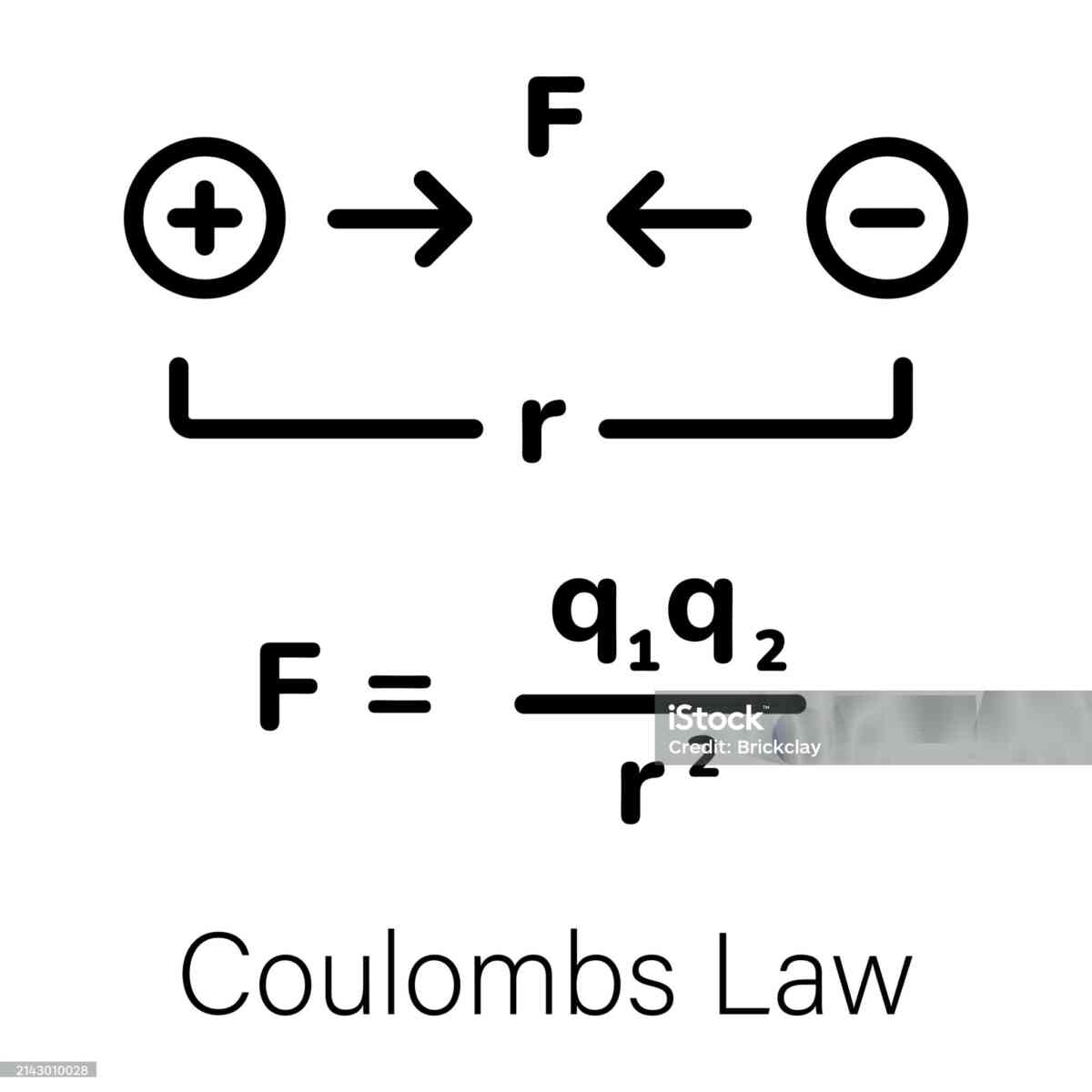
Coulomb’s law provides the mathematical foundation for calculating the electrostatic force between two point charges:
F = k|q₁q₂| / r²
where:
- F is electrostatic force in newtons
- k is Coulomb’s constant
- q₁ is the first electric charge
- q₂ is the second electric charge
- r is the distance between the charges
The relationship is deceptively simple, but it provides important insight into how electric charges interact.
This guide explains how a free Coulomb’s Law Charge Calculator works, how to enter values correctly, how to interpret the result, and how Coulomb’s law applies to practical electrical and scientific problems.
What Is Coulomb’s Law?
Coulomb’s law describes the force between two electrically charged objects.
Charles-Augustin de Coulomb established the relationship through experimental work involving charged bodies. The law became one of the fundamental principles used to describe electrostatic interactions.
The basic idea is straightforward:
More charge produces more force.
Greater separation produces less force.
However, the effect of distance is particularly important because the distance is squared.
If the distance between two charges doubles, the force decreases to one-quarter of its original magnitude.
If the distance triples, the force decreases to one-ninth.
This inverse-square relationship explains why electrostatic interactions can become much weaker as charged objects move farther apart.
What Is a Coulomb’s Law Charge Calculator?
A Coulomb’s Law Charge Calculator is an online calculation tool that applies Coulomb’s law automatically.
Depending on its design, the calculator can determine:
- Electrostatic force
- Unknown charge
- Distance between charges
- Attraction or repulsion
- Charge relationships
A typical calculator requires users to enter:
- First charge
- Second charge
- Distance
The calculator then evaluates the equation and provides the result.
For educational purposes, a good calculator may also show the formula, converted units, intermediate values, and final answer.
Why Use a Free Coulomb’s Law Calculator?
There are several reasons an online calculator can be useful.
1. It Saves Time
Manual Coulomb’s law calculations can require several steps.
You may need to:
- Convert units
- Convert scientific notation
- Multiply charges
- Square distance
- Multiply by Coulomb’s constant
- Divide the values
- Interpret the sign
A calculator handles these steps quickly.
2. It Reduces Arithmetic Errors
Small mistakes in exponents can produce extremely large errors.
For example, confusing:
10⁻⁶
with:
10⁻³
changes a charge by a factor of 1,000.
An online calculator reduces the likelihood of these basic arithmetic mistakes.
3. It Helps Verify Homework
Students can calculate the answer manually and then compare it with the calculator result.
This is particularly useful when learning electrostatics.
4. It Supports Unit Conversion
Many users work with microcoulombs or nanocoulombs rather than coulombs.
A calculator that handles units can simplify these conversions.
5. It Makes Experiment Analysis Easier
In laboratory settings, researchers may need to perform many similar calculations using different measurements.
An online calculator can speed up the process.
Understanding the Coulomb’s Law Formula
The basic equation is:
F = k|q₁q₂| / r²
Each component has a specific meaning.
F — Electrostatic Force
The symbol F represents the electrostatic force.
Its SI unit is the newton (N).
The force tells us how strongly the two charges interact.
A larger value means a stronger electrostatic interaction.
k — Coulomb’s Constant
Coulomb’s constant is approximately:
8.9875517923 × 10⁹ N·m²/C²
For many introductory calculations, it is rounded to:
8.99 × 10⁹ N·m²/C²
The exact value used by a calculator may depend on the assumptions and precision of the calculation.
q₁ — First Charge
This is the amount of electric charge on the first object.
It is measured in coulombs.
Common smaller units include:
- mC
- μC
- nC
- pC
q₂ — Second Charge
This represents the second charge.
It is also measured in coulombs.
r — Distance
The distance between the centers of the two point charges is represented by r.
The SI unit is meters.
The distance is squared in Coulomb’s law, which makes it one of the most important variables.
How Charge Affects Electrostatic Force
Coulomb’s law shows that force is directly proportional to the product of the two charges.
Suppose:
q₁ = 2 C
and:
q₂ = 3 C
The charge product is:
q₁q₂ = 6 C²
If q₁ doubles:
q₁ = 4 C
the product becomes:
4 × 3 = 12 C²
The force therefore doubles, assuming everything else remains constant.
This gives us an important rule:
Doubling one charge doubles the force.
If both charges double, the force becomes four times larger.
How Distance Affects Force
Distance has a stronger mathematical effect because it is squared.
Suppose the original separation is:
r = 1 m
If the distance becomes:
r = 2 m
then:
r² = 4 m²
The force therefore becomes one-quarter of the original value.
If the distance becomes:
r = 3 m
then:
r² = 9 m²
The force becomes one-ninth.
This is called an inverse-square relationship.
Attraction and Repulsion
Coulomb’s law can describe two different types of interactions.
Like Charges Repel
Two positive charges repel one another.
Two negative charges also repel one another.
Examples:
+2 μC and +5 μC → repulsion
−2 μC and −5 μC → repulsion
Opposite Charges Attract
A positive charge and a negative charge attract one another.
Example:
+2 μC and −5 μC → attraction
The magnitude of the force can be calculated using the absolute value of the charge product, while the charge signs determine the direction of interaction.
Example 1: Calculating Force Between Two Positive Charges
Consider:
- q₁ = +4 μC
- q₂ = +6 μC
- r = 0.5 m
First convert the charges:
4 μC = 4 × 10⁻⁶ C
6 μC = 6 × 10⁻⁶ C
Then substitute the values into Coulomb’s law.
The two charges are both positive, so the force is repulsive.
The calculator handles the numerical computation and displays the resulting force in newtons.
This example demonstrates why unit conversion is critical.
Example 2: Opposite Charges
Consider:
- q₁ = +3 μC
- q₂ = −8 μC
- r = 0.4 m
The charges have opposite signs.
Therefore, the interaction is attractive.
The magnitude of the force is calculated from the absolute product of the charges.
The negative sign does not mean that the magnitude of force is a negative number in a simple magnitude calculator. Instead, the signs tell us about the direction of interaction.
Example 3: Increasing the Distance
Suppose two charges initially produce a force of:
100 N
at a distance of:
1 m
If the distance increases to:
2 m
the new force is:
100 / 2² = 25 N
If the distance becomes:
5 m
the force becomes:
100 / 5² = 4 N
This example illustrates how rapidly electrostatic force decreases with distance.
Solving for an Unknown Charge
Coulomb’s law can be rearranged.
Starting with:
F = kq₁q₂ / r²
Suppose q₂ is unknown.
Rearrange the equation:
q₂ = Fr² / (kq₁)
This calculation can be useful in laboratory experiments where force is measured and one charge is unknown.
For example, if you know:
- Force
- Distance
- One charge
you can determine the second charge.
A calculator designed to solve multiple variables can make this process much easier.
Solving for Distance
Distance can also be calculated when force and both charges are known.
Rearranging Coulomb’s law gives:
r = √(k|q₁q₂| / F)
This is useful when asking questions such as:
- How far apart should two charges be?
- At what distance will the force reach a specific value?
- What separation produces a particular electrostatic interaction?
Because the equation requires a square root, using a calculator can reduce calculation time.
Solving for Force
The most common application is calculating force.
If q₁, q₂, and r are known:
F = k|q₁q₂| / r²
This is the primary function of a Coulomb’s Law Charge Calculator.
Common Charge Units
Electric charge is often expressed using prefixes.
| Unit | Symbol | Coulombs |
|---|---|---|
| Coulomb | C | 1 |
| Millicoulomb | mC | 10⁻³ |
| Microcoulomb | μC | 10⁻⁶ |
| Nanocoulomb | nC | 10⁻⁹ |
| Picocoulomb | pC | 10⁻¹² |
Understanding these conversions is essential.
For example:
250 nC = 250 × 10⁻⁹ C
and:
5 μC = 5 × 10⁻⁶ C
Common Distance Conversions
Distance may also be entered in different units.
Useful conversions include:
1 m = 100 cm
1 m = 1,000 mm
Therefore:
25 cm = 0.25 m
and:
50 mm = 0.05 m
A calculator with built-in unit conversion can automatically convert these values.
Why Scientific Notation Is Important
Electrostatic calculations often involve very small charges.
For example:
0.000003 C
is easier to write as:
3 × 10⁻⁶ C
Scientific notation makes calculations easier to understand and reduces the number of zeros that need to be counted.
However, it also creates opportunities for exponent errors.
An online calculator can help users avoid these mistakes.
Coulomb’s Law and Electric Field
Coulomb’s law is closely related to the electric field.
The electric field produced by a point charge can be expressed as:
E = k|q| / r²
where:
- E is electric field strength
- q is charge
- r is distance
Electric field is measured in:
N/C
Coulomb force and electric field should not be confused.
The relationship between them is:
F = qE
Therefore, Coulomb’s law helps form the foundation for understanding electric fields.
Coulomb’s Law and Superposition
Coulomb’s law becomes more interesting when more than two charges are present.
Suppose a test charge is surrounded by several other charges.
Each charge produces its own force.
The total force is the vector sum of all individual forces.
This is called the principle of superposition.
For example:
Ftotal = F₁ + F₂ + F₃ + …
Because force has both magnitude and direction, these forces cannot always simply be added as ordinary numbers.
A basic Coulomb’s Law Charge Calculator is generally designed for two charges. Complex systems require vector calculations.
Coulomb’s Law in Different Materials
The standard form of Coulomb’s law commonly assumes charges in vacuum or approximately in air.
In a material medium, the electrical interaction can be affected by the medium’s permittivity.
A generalized relationship can involve the medium’s relative permittivity.
This is important in engineering and advanced physics because electric interactions can differ significantly between materials.
For basic classroom calculations, however, the vacuum constant is usually sufficient.
Practical Applications of Coulomb’s Law
Coulomb’s law is not simply a theoretical equation.
It is relevant to many technologies.
Capacitors
Capacitors store electrical energy through separated charges.
The interactions between positive and negative charges help establish the electric field between capacitor plates.
Photocopiers
Electrostatic forces can be used to attract toner particles to selected areas.
Laser Printers
Electrostatic principles are also involved in the movement and placement of toner.
Electrostatic Painting
Charged paint particles can be attracted toward surfaces with an opposite electrical potential.
Air Cleaning
Electrostatic precipitators use electric fields to charge and collect particles.
Semiconductor Devices
Charge interactions are central to semiconductor physics.
Scientific Instruments
Many sensors and measurement systems rely on controlled electrical forces.
Coulomb’s Law in Education
Coulomb’s law is commonly introduced when students begin studying electrostatics.
A typical physics lesson may include:
- Electric charge
- Positive and negative charge
- Electric force
- Coulomb’s law
- Electric fields
- Electric potential
- Capacitance
- Circuits
A calculator can be especially useful after students understand the underlying physics.
Instead of spending excessive time on arithmetic, students can concentrate on interpreting relationships.
How Students Can Use the Calculator Correctly
A good approach is:
Step 1: Identify the Known Values
Write down q₁, q₂, and r.
Step 2: Convert Units
Convert charges to coulombs and distance to meters.
Step 3: Identify Charge Signs
Determine whether the charges have the same or opposite signs.
Step 4: Enter Values
Input the values into the calculator.
Step 5: Check the Result
Verify that the magnitude and units make sense.
Step 6: Interpret the Direction
Determine whether the force is attractive or repulsive.
This process helps students understand rather than blindly accept a numerical answer.
Common Coulomb’s Law Mistakes
Forgetting the Square
One of the most common errors is using:
F = kq₁q₂ / r
instead of:
F = kq₁q₂ / r²
The square is essential.
Using the Wrong Distance
The distance should represent the separation between the charges.
For ideal point charges, this means the distance between their positions.
Forgetting Unit Conversion
Microcoulombs are not coulombs.
Centimeters are not meters.
These conversions must be handled correctly.
Ignoring Signs
Charge signs provide information about attraction and repulsion.
Confusing Force With Charge
A coulomb measures charge.
A newton measures force.
They represent completely different quantities.
Coulomb’s Law Calculator vs. Manual Calculation
Both methods have advantages.
| Method | Main Advantage |
|---|---|
| Manual calculation | Builds understanding |
| Online calculator | Fast and convenient |
| Spreadsheet | Useful for many calculations |
| Programming | Useful for complex simulations |
For learning, manual calculation is important.
For checking results or handling repetitive calculations, a calculator is extremely useful.
How to Check Whether Your Answer Makes Sense
Even when using a calculator, users should perform a quick reasonableness check.
Ask:
Are the charges very small?
If charges are in microcoulombs or nanocoulombs, the resulting force may be relatively small depending on distance.
Is the distance very small?
A very small separation can dramatically increase the force.
Did you square the distance?
This is one of the most important checks.
Are the units correct?
Force should normally be reported in newtons.
Is the force attractive or repulsive?
Check the signs of the charges.
Order-of-Magnitude Thinking
Physics students should learn to estimate whether an answer is reasonable.
Suppose:
- q₁ is approximately 10⁻⁶ C
- q₂ is approximately 10⁻⁶ C
- r is approximately 1 m
- k is approximately 10⁹
Then:
F ≈ 10⁹ × 10⁻⁶ × 10⁻⁶
which gives approximately:
10⁻³ N
This quick estimate can help detect calculator-entry errors.
If your calculator instead produces something like 10⁹ N, you should check the charge units.
Coulomb’s Law and Other Physics Laws
Coulomb’s law shares mathematical similarities with several physical relationships.
The inverse-square pattern appears in:
- Gravitational force
- Point-source radiation intensity
- Certain field relationships
However, the physical mechanisms are different.
Coulomb’s law specifically concerns electrostatic interactions between electric charges.
When a Simple Coulomb Calculator Is Not Enough
There are situations where a basic calculator should not be used as the only analysis tool.
These include:
- Distributed charge
- Large charged objects
- Complex geometries
- Conductive surfaces
- Multiple interacting charges
- Dielectric materials
- Time-varying electromagnetic fields
- Relativistic particle systems
In these situations, more advanced electromagnetic analysis may be required.
Coulomb’s Law for Electronics Hobbyists
Electronics enthusiasts may encounter electrostatic principles when working with:
- Capacitors
- Static electricity
- High-voltage circuits
- Insulating materials
- Sensitive semiconductor components
- Electrostatic discharge
Although ordinary circuit design often relies more directly on Ohm’s law, Kirchhoff’s laws, power equations, and component specifications, Coulomb’s law provides deeper insight into how electrical charge behaves.
Electrostatic Discharge and Coulomb’s Law
Static electricity is a familiar example of charge accumulation.
When a person walks across a carpet, charges can accumulate on the body.
When a conductive object is touched, the charge may suddenly redistribute.
The resulting discharge can produce a spark.
The exact behavior of an electrostatic discharge involves much more than a simple two-charge Coulomb calculation, but the underlying concept of electric charge interaction remains fundamental.
Tips for Using a Coulomb’s Law Charge Calculator
For reliable results:
- Use SI units whenever possible.
- Convert microcoulombs correctly.
- Convert nanocoulombs correctly.
- Convert centimeters to meters.
- Confirm the distance is squared.
- Check the signs of the charges.
- Verify the result’s units.
- Compare the answer with an approximate estimate.
- Remember that Coulomb’s law is an idealized point-charge relationship.
- Use vector analysis for multiple charges.
Frequently Asked Questions
What is Coulomb’s law?
Coulomb’s law calculates the electrostatic force between two charged objects under appropriate point-charge conditions.
What does a Coulomb’s Law Charge Calculator calculate?
It primarily calculates electrostatic force from charge values and distance, although some calculators can also solve for unknown charge or distance.
What is measured in coulombs?
Electric charge is measured in coulombs.
What is measured in newtons?
Force is measured in newtons.
What happens if the distance doubles?
The electrostatic force becomes one-quarter as large.
What happens if one charge doubles?
The electrostatic force doubles, assuming all other values remain unchanged.
Do opposite charges attract?
Yes.
Do like charges repel?
Yes.
Why is distance squared?
Coulomb’s law follows an inverse-square relationship for point charges in the relevant idealized conditions.
Can Coulomb’s law calculate multiple charges?
The principle of superposition can be used, but multiple charges require vector addition rather than simply applying one two-charge calculation.
Can the calculator solve for charge?
If designed for it, yes. Coulomb’s law can be algebraically rearranged to solve for an unknown charge.
Can it solve for distance?
Yes. The equation can be rearranged to solve for separation distance.
Conclusion
A free Coulomb’s Law Charge Calculator is a useful tool for understanding and calculating electrostatic force. It allows users to enter charge and distance values and quickly determine the interaction between two charges.
The most important concepts to remember are simple:
- Larger charges produce stronger electrostatic forces.
- Greater distance produces weaker forces.
- Doubling distance reduces force by a factor of four.
- Like charges repel.
- Opposite charges attract.
- Charge should be converted into appropriate SI units.
- Distance should normally be expressed in meters.
- Force is measured in newtons.
The calculator is especially useful for students and educators because it allows calculations to be checked quickly. Engineers, technicians, researchers, and electronics enthusiasts can also use it for basic electrostatic calculations.
Most importantly, users should understand what the result means rather than treating the calculator as a black box. Coulomb’s law provides a direct mathematical connection between charge, distance, and electrostatic force, making it one of the most valuable equations for studying electricity and magnetism.


