
lindsay rose
Introduction
Understanding the force between electric charges is one of the foundations of physics and electrical engineering. Whenever two charged objects interact, an electrical force exists between them. This force can either pull the objects together or push them apart, depending on whether the charges have opposite or identical signs.
A Coulomb’s Law Charge Calculator is a free online tool designed to make these calculations faster and easier. Instead of manually rearranging equations and working through scientific notation, users can enter known values such as charge and distance and quickly determine the resulting electrostatic force.
Coulomb’s law is especially useful in physics, electronics, electrical engineering, chemistry, laboratory work, education, and scientific research. It provides a mathematical relationship between two point charges and the electrostatic force acting between them.
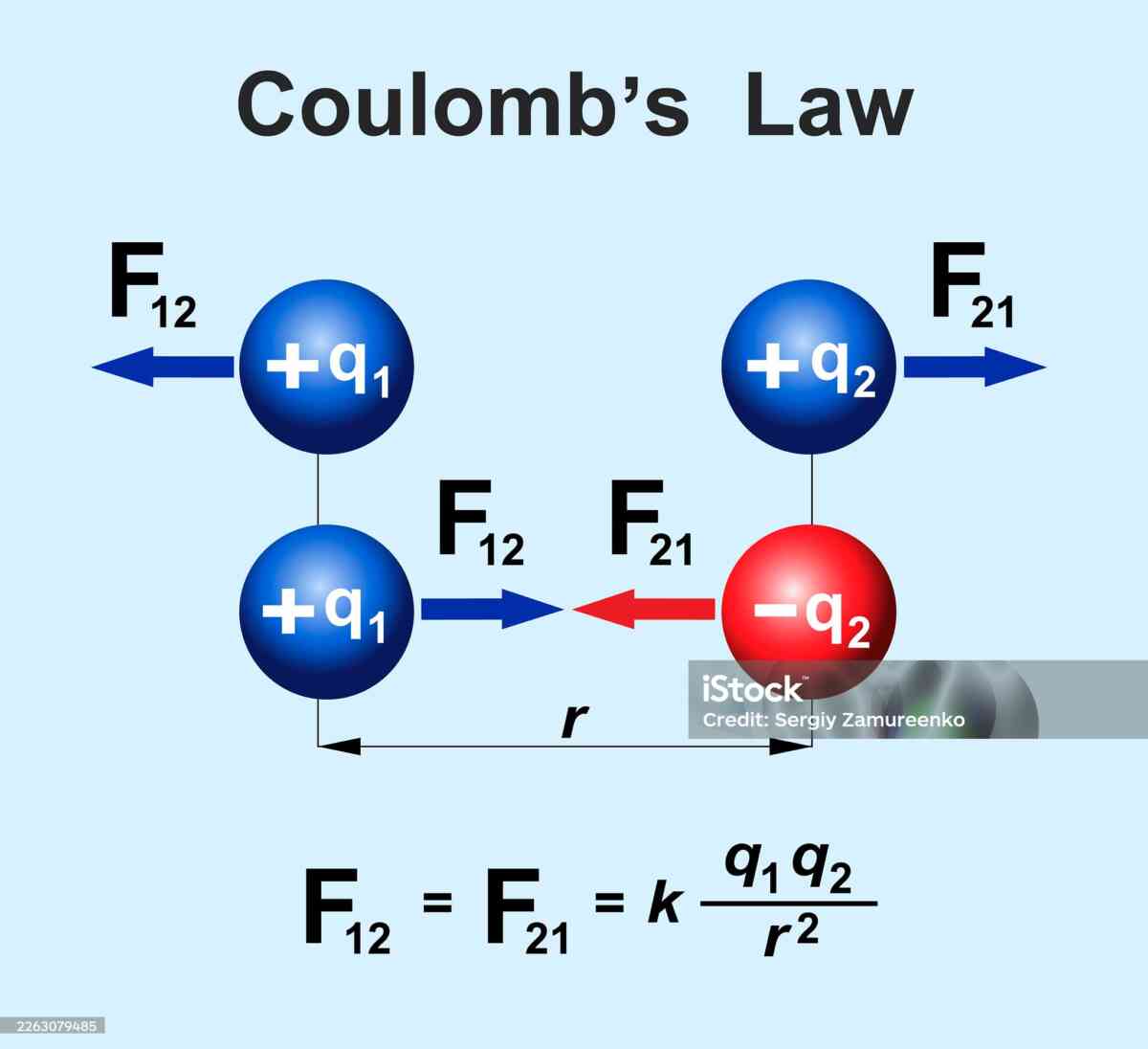
The fundamental relationship is:
F = k × |q₁ × q₂| / r²
Where:
- F = electrostatic force in newtons (N)
- k = Coulomb’s constant
- q₁ = first charge in coulombs (C)
- q₂ = second charge in coulombs (C)
- r = distance between the charges in meters (m)
A free Coulomb’s Law Charge Calculator can automatically perform this calculation and reduce common arithmetic errors.
What Is Coulomb’s Law?
Coulomb’s law describes the electrostatic force between two charged particles or objects. It was developed from experiments by French physicist Charles-Augustin de Coulomb.
The law states that the magnitude of the electrostatic force between two point charges is directly proportional to the product of the magnitudes of the charges and inversely proportional to the square of the distance separating them.
In simple terms, increasing either charge increases the electrical force. Increasing the distance decreases the force very rapidly because distance is squared.
For example, if the distance between two charges doubles, the electrostatic force becomes one-fourth as large.
If the distance becomes three times larger, the force becomes one-ninth as large.
This inverse-square relationship is one of the most important concepts to understand when working with electric fields and charged particles.
How Does a Coulomb’s Law Charge Calculator Work?
A typical calculator asks for three primary values:
- First charge
- Second charge
- Distance between the charges
The calculator then applies Coulomb’s law.
For example, suppose:
- q₁ = 2 μC
- q₂ = 3 μC
- r = 0.5 m
The microcoulomb values must first be converted into coulombs:
- 2 μC = 2 × 10⁻⁶ C
- 3 μC = 3 × 10⁻⁶ C
The calculator then substitutes these values into the equation.
Using Coulomb’s constant of approximately:
k = 8.9875517923 × 10⁹ N·m²/C²
the resulting force can be determined.
A calculator handles the scientific notation automatically, making the process considerably easier for students and professionals.
Why Use a Free Coulomb’s Law Calculator?
Manual calculations are useful for learning, but an online calculator provides several advantages.
Faster Calculations
Users can enter values and obtain a result almost immediately. This is particularly useful when performing multiple calculations.
Fewer Arithmetic Errors
Scientific notation can be confusing. A small exponent error can produce a result that is thousands or millions of times incorrect.
Convenient Unit Conversion
Some calculators allow users to work with:
- Coulombs
- Millicoulombs
- Microcoulombs
- Nanocoulombs
- Picocoulombs
- Meters
- Centimeters
- Millimeters
The calculator can convert the values into appropriate SI units before applying the equation.
Useful for Students
Students can use the tool to verify homework calculations and understand how changing charge or distance affects force.
Useful for Engineers
Engineers and technicians can use Coulomb’s law calculations when evaluating electrostatic interactions, sensors, capacitive systems, high-voltage environments, and other electrical applications.
Understanding the Variables
Electric Charge
Electric charge is measured in coulombs.
There are two fundamental types:
- Positive charge
- Negative charge
The sign of a charge determines whether the interaction is attractive or repulsive.
Two positive charges repel.
Two negative charges repel.
A positive and negative charge attract.
When calculating the magnitude of force, the absolute value of the charge product is often used.
Distance
Distance is represented by r and should normally be entered in meters when using SI units.
This variable has a particularly strong effect because it is squared.
For example:
At 1 meter, a particular pair of charges produces force F.
At 2 meters:
F₂ = F / 4
At 4 meters:
F₄ = F / 16
This demonstrates why distance is so important in electrostatic calculations.
Coulomb’s Constant
Coulomb’s constant is approximately:
8.99 × 10⁹ N·m²/C²
It is related to the permittivity of free space.
For calculations involving vacuum or approximately air-like conditions, this value is commonly used.
Attractive vs. Repulsive Force
One important feature of Coulomb’s law is determining whether the force is attractive or repulsive.
If both charges have the same sign, the force is repulsive.
If the charges have opposite signs, the force is attractive.
For example:
(+q) and (+q) → repel
(-q) and (-q) → repel
(+q) and (-q) → attract
A good calculator may display both the force magnitude and the interaction type.
Example Calculation
Consider two charges:
- q₁ = +5 μC
- q₂ = +2 μC
- r = 0.2 m
Convert the charges:
5 μC = 5 × 10⁻⁶ C
2 μC = 2 × 10⁻⁶ C
Because both charges are positive, the force is repulsive.
Substituting the values into Coulomb’s law gives the force magnitude.
A calculator performs this operation automatically.
This example also demonstrates why unit conversion is essential. Entering 5 instead of 5 × 10⁻⁶ as the charge would create an enormously incorrect result.
How Distance Changes Electrostatic Force
The inverse-square relationship deserves special attention.
Suppose the initial distance is:
r = 1 m
If the distance changes to:
r = 2 m
the force becomes:
1/2² = 1/4
of the original force.
If the distance changes to:
r = 5 m
the force becomes:
1/25
of the original force.
Therefore, even relatively small changes in distance can dramatically affect electrostatic force.
How Charge Changes Electrostatic Force
Charge affects force linearly.
If one charge doubles while the other remains unchanged, the force doubles.
If both charges double, the force becomes four times larger.
For example:
Original:
q₁ × q₂
If q₁ becomes 2q₁:
2q₁ × q₂ = 2 times the original force.
If both become twice as large:
2q₁ × 2q₂ = 4q₁q₂
Therefore, the calculator can also be used to explore how changing charge values affects electrical interaction.
Rearranging Coulomb’s Law
A useful calculator does not necessarily need to calculate force only. Coulomb’s law can be rearranged to solve for other variables.
Solving for Charge
If force, one charge, and distance are known, the unknown charge can be calculated.
For example:
q₂ = F × r² / (k × q₁)
Solving for Distance
If force and both charges are known:
r = √(k × |q₁q₂| / F)
This is useful when determining how far apart charges must be to produce a particular force.
Solving for Coulomb’s Constant
Although less common, the equation can also be rearranged to determine the constant from experimental measurements.
Common Units
The SI unit for charge is the coulomb.
Common charge units include:
| Unit | Symbol | Equivalent |
|---|---|---|
| Coulomb | C | 1 C |
| Millicoulomb | mC | 10⁻³ C |
| Microcoulomb | μC | 10⁻⁶ C |
| Nanocoulomb | nC | 10⁻⁹ C |
| Picocoulomb | pC | 10⁻¹² C |
Distance should normally be converted to meters.
For example:
- 1 cm = 0.01 m
- 10 cm = 0.10 m
- 50 cm = 0.50 m
- 1 mm = 0.001 m
Coulomb’s Law vs. Newton’s Law of Gravitation
Coulomb’s law and Newton’s gravitational law have similar mathematical structures.
Coulomb’s law:
F ∝ q₁q₂/r²
Gravity:
F ∝ m₁m₂/r²
Both follow an inverse-square relationship.
However, electrical forces can be attractive or repulsive, while gravitational force between ordinary masses is attractive.
Electrical interactions can also be dramatically stronger than gravitational interactions at the particle level.
Applications of Coulomb’s Law
Coulomb’s law has applications across many scientific and engineering disciplines.
Electronics
Electrostatic forces influence charged components and materials.
Capacitors
Charge interactions are fundamental to capacitor operation and electric fields.
Electrostatic Precipitators
Industrial pollution-control equipment uses electric fields and charged particles.
Photocopiers and Laser Printers
Electrostatic principles are used to control toner particles.
Semiconductor Technology
Charge interactions are fundamental to semiconductor behavior.
Chemistry
Interactions between charged particles are essential to understanding ionic systems.
Physics Education
Coulomb’s law is a standard topic in introductory electricity and magnetism.
Limitations of the Calculator
A basic Coulomb’s law calculator assumes point charges or situations where the point-charge approximation is appropriate.
Real objects can have distributed charge.
For complicated geometries, a simple two-charge calculation may not accurately represent the complete electric force.
The calculator also generally assumes a simple medium. In a material, the effective electrical interaction can depend on the material’s permittivity.
For multiple charges, the principle of superposition must be applied.
Coulomb’s Law and Multiple Charges
When several charged particles are present, the total force on one charge is the vector sum of forces produced by every other charge.
For example, if charge Q interacts with three other charges:
Ftotal = F₁ + F₂ + F₃
Because force is a vector, direction matters.
A simple two-charge calculator cannot replace a full vector analysis for complicated charge arrangements.
Common Mistakes
Mistake 1: Forgetting Unit Conversion
Entering microcoulombs as if they were coulombs can create a huge error.
Mistake 2: Forgetting to Square Distance
The denominator is r², not simply r.
Mistake 3: Ignoring Charge Signs
The signs determine attraction or repulsion.
Mistake 4: Using Centimeters Without Conversion
SI calculations normally require meters.
Mistake 5: Confusing Force With Electric Field
Coulomb force is measured in newtons.
Electric field is measured in newtons per coulomb.
They are related but not identical quantities.
Who Should Use a Coulomb’s Law Charge Calculator?
The tool is useful for:
- High school students
- College physics students
- Engineering students
- Electrical engineers
- Electronics hobbyists
- Science teachers
- Laboratory technicians
- Researchers
- STEM educators
- Anyone studying electrostatics
Conclusion
A free Coulomb’s Law Charge Calculator provides a convenient way to calculate electrostatic force between two charges. By entering the charges and their separation distance, users can quickly determine the magnitude of the force and understand whether the interaction is attractive or repulsive.
The tool is particularly useful because Coulomb’s law involves scientific notation, very small charge values, and an inverse-square relationship. These factors make manual calculations susceptible to mistakes.
However, understanding the equation remains important. A calculator should support understanding rather than replace it.
Once users understand how charge, distance, and the sign of each charge affect electrostatic force, Coulomb’s law becomes much easier to apply to real-world physics and engineering problems.


