
Jessy obrien
Introduction
Understanding the relationship between voltage, current, and resistance is one of the first steps toward understanding electricity. Whether you are studying electronics, building a DIY circuit, repairing an automotive electrical system, selecting a resistor, or checking a power supply, Ohm’s Law provides a fundamental mathematical framework.
A FREE Ohm’s Law Calculator makes these calculations easier by allowing you to determine voltage, current, or resistance when the other two values are known.
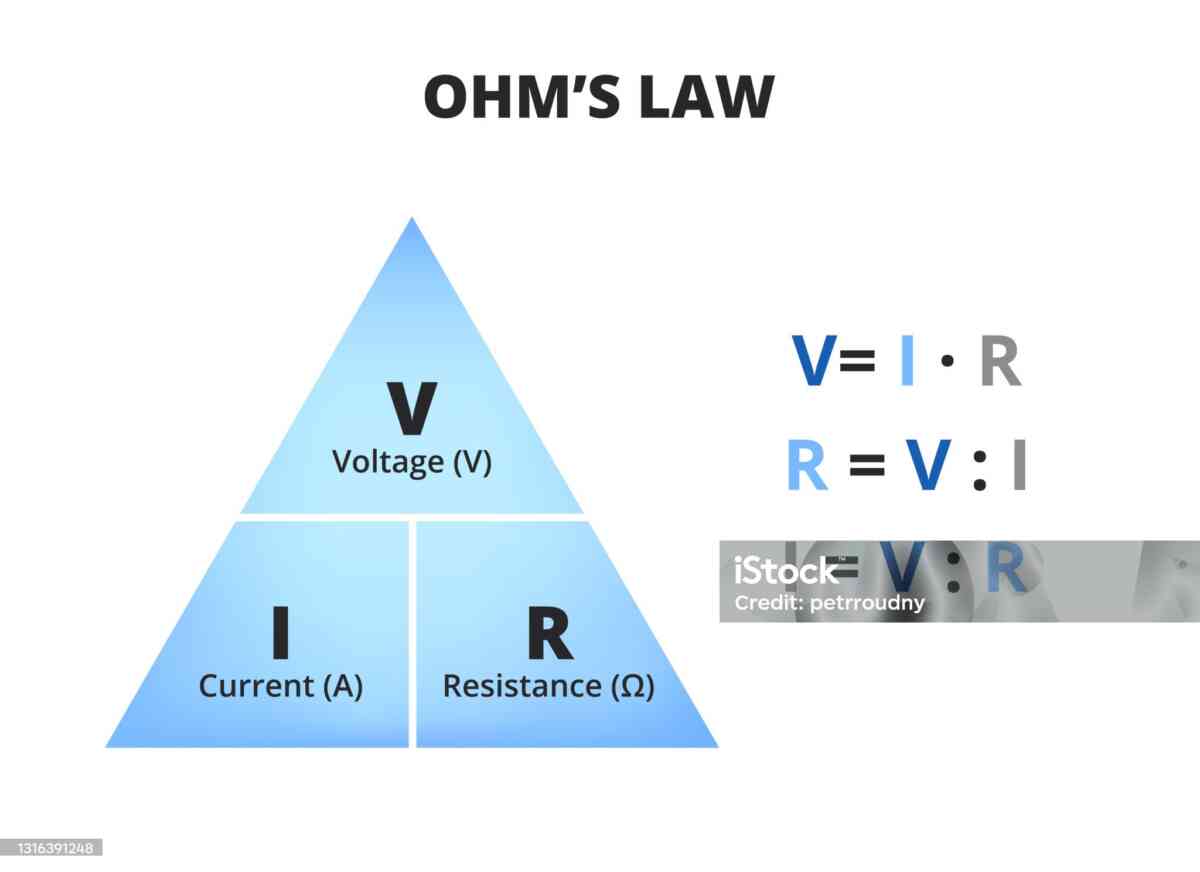
The basic relationship is:
V = I × R
Where:
- V is voltage in volts (V)
- I is current in amperes (A)
- R is resistance in ohms (Ω)
From this equation, we can calculate each variable:
V = I × R
I = V ÷ R
R = V ÷ I
Although these formulas are simple, they have applications across electronics, electrical engineering, automotive technology, renewable energy, instrumentation, telecommunications, and electrical troubleshooting.
This guide explains how to use an Ohm’s Law Calculator, how to interpret its results, and how to apply the calculations to practical circuit problems.
What Is Ohm’s Law?
Ohm’s Law is a fundamental electrical relationship that describes how voltage, current, and resistance interact in an electrical circuit.
In a simple resistive circuit, voltage causes current to flow, while resistance limits that current.
The relationship can be summarized as:
Voltage drives current, while resistance limits current.
For a constant resistance, increasing voltage causes current to increase.
For a constant voltage, increasing resistance causes current to decrease.
This simple relationship is the foundation for many basic electrical calculations.
What Is a FREE Ohm’s Law Calculator?
A FREE Ohm’s Law Calculator is an online tool designed to solve basic electrical equations.
Instead of manually rearranging formulas, you enter the known values and allow the calculator to determine the unknown value.
For example, if you know:
- Voltage = 12 V
- Resistance = 4 Ω
You can calculate current:
I = V ÷ R
I = 12 ÷ 4
I = 3 A
The calculator can perform the same calculation instantly.
This is especially useful when working with many calculations or values containing decimals, milliamps, kilohms, or other electrical units.
The Three Main Ohm’s Law Calculations
There are three primary calculations.
Calculate Voltage
Use:
V = I × R
Example:
Current = 2 A
Resistance = 10 Ω
V = 2 × 10
V = 20 V
Calculate Current
Use:
I = V ÷ R
Example:
Voltage = 20 V
Resistance = 10 Ω
I = 20 ÷ 10
I = 2 A
Calculate Resistance
Use:
R = V ÷ I
Example:
Voltage = 20 V
Current = 2 A
R = 20 ÷ 2
R = 10 Ω
These are three versions of the same fundamental relationship.
How to Use an Ohm’s Law Calculator
Using an online Ohm’s Law Calculator generally requires only a few steps.
Step 1: Determine the Known Values
Look at the circuit or problem and identify what you already know.
For example:
- Supply voltage: 24 V
- Resistance: 120 Ω
Step 2: Determine the Unknown
Suppose you need to find current.
Step 3: Select the Correct Calculation
Use:
I = V ÷ R
Step 4: Enter the Values
Enter:
- 24 V
- 120 Ω
Step 5: Calculate
I = 24 ÷ 120
I = 0.2 A
The answer is:
200 mA
Ohm’s Law Units
Using the correct units is critical.
Voltage
Voltage is measured in:
volts (V)
Current
Current is measured in:
amperes (A)
Resistance
Resistance is measured in:
ohms (Ω)
Power
Power is measured in:
watts (W)
Common Electrical Unit Conversions
Electrical calculations frequently require unit conversions.
Amperes and Milliamperes
1 A = 1,000 mA
Therefore:
0.1 A = 100 mA
0.05 A = 50 mA
0.01 A = 10 mA
Ohms and Kilohms
1 kΩ = 1,000 Ω
Therefore:
2 kΩ = 2,000 Ω
4.7 kΩ = 4,700 Ω
10 kΩ = 10,000 Ω
Volts and Millivolts
1 V = 1,000 mV
Therefore:
0.5 V = 500 mV
0.025 V = 25 mV
Unit conversion mistakes are among the most common causes of incorrect Ohm’s Law calculations.
Example: Calculating Current Through a Resistor
Suppose a 100 Ω resistor is connected to a 5 V source.
Known values:
- V = 5 V
- R = 100 Ω
Calculate current:
I = V ÷ R
I = 5 ÷ 100
I = 0.05 A
Convert to milliamps:
0.05 × 1,000 = 50 mA
Therefore:
I = 50 mA
Example: Calculating Resistance
Suppose an electronic device receives 12 V and consumes 0.5 A.
The equivalent resistance is:
R = V ÷ I
R = 12 ÷ 0.5
R = 24 Ω
Therefore, the load has an equivalent resistance of 24 Ω under the assumed conditions.
Example: Calculating Voltage
Suppose a circuit carries 0.25 A through a 40 Ω resistor.
Use:
V = I × R
V = 0.25 × 40
V = 10 V
Therefore, the voltage across the resistor is 10 V.
Ohm’s Law and Electrical Power
Ohm’s Law is closely connected to electrical power.
Power is calculated using:
P = V × I
Suppose:
- Voltage = 12 V
- Current = 2 A
Then:
P = 12 × 2
P = 24 W
The load consumes 24 watts under the assumed conditions.
Power Formulas Derived From Ohm’s Law
Because:
V = I × R
we can derive additional power formulas.
Power Based on Current and Resistance
P = I² × R
Power Based on Voltage and Resistance
P = V² ÷ R
These formulas are particularly useful for resistor calculations.
Example: Calculating Resistor Power
Suppose a 50 Ω resistor carries 0.4 A.
Use:
P = I²R
P = 0.4² × 50
P = 0.16 × 50
P = 8 W
The resistor dissipates 8 watts.
A resistor with an insufficient power rating could overheat.
Therefore, a practical circuit design must consider both resistance and power rating.
Selecting the Correct Resistor
When choosing a resistor, you need more than the resistance value.
Important specifications include:
- Resistance
- Power rating
- Tolerance
- Maximum working voltage
- Temperature coefficient
- Physical size
- Environmental conditions
For example, a 1 kΩ resistor rated at 0.25 W is very different from a 1 kΩ resistor rated at 5 W in terms of power-handling capability.
Ohm’s Law for LED Circuits
LED circuits are among the most common applications for basic resistor calculations.
An LED generally requires appropriate current control.
For a simple resistor-limited LED circuit:
R = (Vsupply − Vf) ÷ I
Where:
- Vsupply = supply voltage
- Vf = LED forward voltage
- I = desired LED current
LED Calculation Example
Suppose:
- Supply = 5 V
- LED forward voltage = 2 V
- Desired current = 10 mA
Convert:
10 mA = 0.010 A
Then:
R = (5 − 2) ÷ 0.010
R = 3 ÷ 0.010
R = 300 Ω
The theoretical resistor value is 300 Ω.
A real circuit should use an appropriate standard resistor value and remain within the LED’s specified operating limits.
LED Resistor Power
The resistor drops:
5 − 2 = 3 V
At 10 mA:
P = V × I
P = 3 × 0.010
P = 0.03 W
Therefore, the theoretical resistor dissipation is 30 mW.
Even though the calculated power is small, component tolerances and operating conditions should still be considered.
Ohm’s Law and Voltage Drop
Voltage drop is an important practical application.
Whenever current flows through resistance, there is a voltage drop:
Vdrop = I × R
Suppose:
- Current = 5 A
- Resistance = 0.2 Ω
Then:
Vdrop = 5 × 0.2
Vdrop = 1 V
One volt is lost across the resistance.
Why Voltage Drop Matters
Voltage drop can cause electrical equipment to operate incorrectly.
Potential symptoms include:
- Dim lights
- Slow motors
- Weak heating elements
- Unstable electronics
- Battery charging problems
- Intermittent operation
- Excessive connector heating
Voltage drop is especially important in high-current and long-distance wiring.
Example: Automotive Voltage Drop
Suppose an automotive circuit carries 20 A and the total resistance of a connection and wiring path is 0.05 Ω.
Calculate voltage drop:
Vdrop = I × R
Vdrop = 20 × 0.05
Vdrop = 1 V
Power dissipated:
P = I²R
P = 20² × 0.05
P = 20 W
Twenty watts of heat generated in wiring or a connection can be significant.
This is why poor electrical connections can become hot under heavy loads.
Ohm’s Law and Automotive Diagnostics
Ohm’s Law is useful when troubleshooting automotive electrical systems.
Applications include:
- Headlights
- Relays
- Solenoids
- Electric fans
- Sensors
- Motors
- Heating elements
- Wiring
- Grounds
- Electrical accessories
For example, suppose a load is expected to draw 4 A at 12 V.
Its approximate equivalent resistance is:
R = V ÷ I
R = 12 ÷ 4
R = 3 Ω
If measurements indicate a significantly different operating condition, further diagnosis may be necessary.
Important Automotive Limitation
Not every automotive component behaves like a fixed resistor.
Examples include:
- Motors
- Fuel injectors
- Alternators
- Electronic control modules
- Sensors
- Solenoids
- Lamps
Their electrical characteristics can change with temperature, speed, operating state, frequency, or control signals.
Ohm’s Law remains useful, but it may represent only part of the complete analysis.
Ohm’s Law in Battery Circuits
Battery-powered projects often require current calculations.
Suppose a 9 V battery powers a 90 Ω resistive load.
I = V ÷ R
I = 9 ÷ 90
I = 0.1 A
The current is 100 mA.
Power:
P = V × I
P = 9 × 0.1
P = 0.9 W
Theoretical load power is 0.9 W.
Real battery voltage can change as the battery discharges, so actual current may also change.
Internal Battery Resistance
A real battery has internal resistance.
When current flows, some voltage can be lost internally.
The result is that the voltage measured with no load may be higher than the voltage available under load.
This is particularly important for:
- Automotive batteries
- Lithium battery packs
- Portable power stations
- UPS systems
- High-current applications
A basic Ohm’s Law calculation can help illustrate these effects, but battery modeling may require additional equations.
Ohm’s Law and Solar Panels
Solar systems also involve voltage and current relationships.
Suppose a solar-powered load operates at 24 V and consumes 5 A.
Power:
P = V × I
P = 24 × 5
P = 120 W
The system therefore requires approximately 120 W at that operating point.
Actual solar-system sizing must also consider:
- Solar irradiance
- Temperature
- Panel efficiency
- Controller efficiency
- Battery losses
- Inverter losses
- Cable voltage drop
- Peak demand
Ohm’s Law is one part of the overall design process.
Ohm’s Law and Power Supplies
Power supplies are typically specified by output voltage and maximum current.
Suppose a circuit requires:
- 12 V
- 1.5 A
Power:
P = 12 × 1.5
P = 18 W
A suitable power supply must provide the required voltage and sufficient current capacity.
In practical designs, additional margin may be desirable depending on the load and manufacturer recommendations.
Series Resistors
In a series circuit, resistances add.
Rtotal = R1 + R2 + R3
For example:
- R1 = 10 Ω
- R2 = 20 Ω
- R3 = 70 Ω
Then:
Rtotal = 100 Ω
With 10 V:
I = 10 ÷ 100
I = 0.1 A
The current through each resistor is approximately 0.1 A in the ideal series circuit.
Parallel Resistors
For two resistors in parallel:
Rtotal = (R1 × R2) ÷ (R1 + R2)
Suppose:
- R1 = 20 Ω
- R2 = 30 Ω
Then:
Rtotal = (20 × 30) ÷ (20 + 30)
Rtotal = 600 ÷ 50
Rtotal = 12 Ω
If connected to 12 V:
I = 12 ÷ 12
I = 1 A
The total current is 1 A.
Why Parallel Resistance Is Lower
A parallel circuit provides multiple paths for current.
Therefore, the equivalent resistance of two positive resistances in parallel is lower than either individual resistance.
For example:
- 10 Ω parallel 10 Ω = 5 Ω
- 10 Ω parallel 20 Ω ≈ 6.67 Ω
- 10 Ω parallel 100 Ω ≈ 9.09 Ω
This principle is important in circuit design.
Ohm’s Law and Voltage Dividers
A voltage divider uses resistors to reduce voltage.
The basic formula is:
Vout = Vin × R2 ÷ (R1 + R2)
Suppose:
- Vin = 15 V
- R1 = 20 kΩ
- R2 = 10 kΩ
Then:
Vout = 15 × 10 ÷ 30
Vout = 5 V
This is an ideal unloaded calculation.
When another circuit is connected to Vout, its input resistance can affect the result.
Ohm’s Law and Pull-Up Resistors
Pull-up resistors are commonly used in digital circuits.
Suppose a 5 V supply is connected through a 10 kΩ resistor.
If the circuit pulls the line to ground:
I = 5 ÷ 10,000
I = 0.0005 A
or:
0.5 mA
This demonstrates how a resistor can limit current while establishing a default voltage state.
Ohm’s Law and Pull-Down Resistors
Pull-down resistors perform a similar conceptual function but connect a signal toward ground.
They help prevent an input from floating when no active signal is present.
The actual resistor value depends on the circuit’s electrical requirements, switching speed, leakage currents, noise environment, and other factors.
Ohm’s Law can be used to estimate current through the resistor when a voltage is applied.
Ohm’s Law and Heating Elements
Heating elements are commonly modeled as resistive loads.
Suppose a heating element has a resistance of 24 Ω and operates at 120 V.
Current:
I = 120 ÷ 24
I = 5 A
Power:
P = 120 × 5
P = 600 W
The heater theoretically consumes 600 W.
Real heating elements may change resistance as their temperature changes.
Ohm’s Law and Incandescent Lamps
An incandescent lamp has a resistance that changes significantly as its filament heats.
Therefore, simply measuring its cold resistance does not necessarily predict its operating resistance.
The cold filament can have much lower resistance than its hot operating resistance.
This is a useful example of why real electrical components do not always behave like ideal fixed resistors.
Ohm’s Law and Motors
Motors present another important limitation.
A motor winding has resistance, but a spinning motor generates back EMF.
At startup:
- Motor speed is low.
- Back EMF is low.
- Current can be high.
As speed increases:
- Back EMF increases.
- Current changes.
- Mechanical output changes.
Therefore, a motor cannot generally be analyzed accurately using only:
I = V ÷ R
based on winding resistance.
The formula remains useful for understanding certain aspects of the circuit, but motor behavior requires a broader model.
Ohm’s Law and Diodes
Diodes are nonlinear semiconductor devices.
A small change in voltage can produce a significant change in current once the diode enters its conducting region.
Therefore, the diode should not simply be treated as a fixed resistor.
For practical diode circuits, use:
- Manufacturer specifications
- Forward-voltage information
- Current ratings
- Thermal considerations
- Appropriate circuit models
An Ohm’s Law Calculator can still be useful for calculating current-limiting resistors around the diode.
Ohm’s Law and Transistors
Transistors are even more complex.
Their behavior depends on:
- Device type
- Bias conditions
- Current
- Voltage
- Temperature
- Circuit configuration
- Control signals
Ohm’s Law remains fundamental for individual resistive portions of transistor circuits, but transistor operation requires additional semiconductor equations and device specifications.
Ohm’s Law and AC Circuits
For simple resistive AC loads, Ohm’s Law can be applied using RMS values.
For circuits containing inductance or capacitance, impedance becomes important.
The generalized AC relationship is:
V = I × Z
where:
- V = voltage
- I = current
- Z = impedance
Impedance can contain both resistance and reactance.
Therefore, a simple Ohm’s Law Calculator designed for resistance should not be confused with a full AC impedance calculator.
RMS Voltage and Ohm’s Law
For sinusoidal AC, RMS voltage is commonly used for power calculations.
For example, if a purely resistive load receives an RMS voltage of 120 V and has resistance of 60 Ω:
I = 120 ÷ 60
I = 2 A
Power:
P = 120 × 2
P = 240 W
This assumes a purely resistive load and appropriate RMS quantities.
Ohm’s Law and Measurement Instruments
A multimeter can measure:
- Voltage
- Resistance
- Current
- Continuity
Ohm’s Law can connect these measurements.
For example, if voltage across a resistor is 8 V and current is 0.4 A:
R = 8 ÷ 0.4
R = 20 Ω
This gives an effective resistance of 20 Ω under that operating condition.
Measuring Voltage Safely
Voltage measurements are normally made by connecting the meter across the component or points being tested.
The meter should be set to the appropriate voltage mode and range.
When dealing with hazardous voltage, appropriate safety procedures and equipment are essential.
Never assume that a low-risk electronics measurement method is appropriate for mains or industrial electrical systems.
Measuring Current Safely
Current measurements are different from voltage measurements.
A current meter is normally inserted into the circuit so that current flows through the meter.
Incorrectly connecting a current meter directly across a voltage source can cause a short circuit and potentially damage the meter or circuit.
Always follow the instrument manufacturer’s instructions.
Measuring Resistance Safely
Resistance measurements should normally be performed with the circuit de-energized.
The component may also need to be isolated from other parallel paths to obtain a meaningful measurement.
Attempting to measure resistance on an energized circuit can produce incorrect readings and potentially damage the meter.
Common Ohm’s Law Calculation Mistakes
Mistake 1: Using milliamps as amps
Suppose:
20 mA
This is:
0.020 A
not 20 A.
Mistake 2: Forgetting kilohms
A 10 kΩ resistor is:
10,000 Ω
not 10 Ω.
Mistake 3: Using the wrong formula
To calculate current:
I = V ÷ R
To calculate voltage:
V = I × R
To calculate resistance:
R = V ÷ I
Mistake 4: Ignoring power
A resistor can have the correct resistance but still fail because its power rating is too low.
Mistake 5: Ignoring circuit configuration
Series and parallel circuits require different resistance calculations.
Mistake 6: Treating nonlinear components as resistors
LEDs, diodes, motors, and other devices may not have constant resistance.
A Practical Ohm’s Law Workflow
When solving a circuit problem, use this process.
1. Identify the circuit
Determine what components are connected.
2. List known values
Write down voltage, current, resistance, and other known information.
3. Identify the unknown
Decide exactly what you need to calculate.
4. Convert units
Make sure values are compatible.
5. Select the formula
Choose the appropriate Ohm’s Law equation.
6. Calculate
Use the FREE calculator or perform the calculation manually.
7. Check the result
Ask whether the answer is reasonable.
8. Consider power
Check component power ratings.
9. Consider safety
Evaluate voltage, current, stored energy, and fault conditions.
Example of a Complete Circuit Analysis
Suppose a 12 V source powers a 100 Ω resistor.
Step 1: Calculate current
I = 12 ÷ 100
I = 0.12 A
or:
120 mA
Step 2: Calculate power
P = V × I
P = 12 × 0.12
P = 1.44 W
Step 3: Select resistor
A resistor should have:
- 100 Ω resistance
- Power rating greater than the expected 1.44 W
- Suitable voltage rating
- Appropriate tolerance
This example demonstrates why Ohm’s Law and power calculations should be used together.
Ohm’s Law Calculator for DIY Projects
DIY electronics projects often involve simple circuits.
Examples include:
- LED indicators
- Battery-powered lights
- Small sensors
- Relay circuits
- Switches
- Resistor networks
- Simple alarms
- Microcontroller circuits
Before building a circuit, calculate expected current and power.
This helps prevent selecting components that are under-rated.
Ohm’s Law Calculator for Arduino-Type Projects
Microcontroller projects commonly use resistors for:
- LEDs
- Buttons
- Pull-ups
- Pull-downs
- Sensors
- Signal conditioning
For example, if an LED circuit uses a 5 V output and an LED forward voltage of 2 V with desired current of 10 mA:
R = (5 − 2) ÷ 0.01
R = 300 Ω
A suitable standard resistor can then be selected based on the actual circuit requirements.
Ohm’s Law for Relay Coils
Relay coils can often be analyzed approximately using voltage and coil resistance.
Suppose a relay coil has:
- Voltage = 12 V
- Resistance = 240 Ω
Then:
I = 12 ÷ 240
I = 0.05 A
or:
50 mA
Power:
P = 12 × 0.05
P = 0.6 W
Actual relay behavior should be checked against its manufacturer specifications.
Ohm’s Law for Solenoids
Solenoids are coils and therefore can have inductive characteristics.
Ohm’s Law can calculate the steady-state resistive component:
I = V ÷ R
But current can change over time because of inductance.
The initial and steady-state behavior may therefore differ.
For accurate solenoid analysis, inductance and control circuitry may need to be considered.
Ohm’s Law and Electrical Efficiency
Ohm’s Law can also help explain electrical losses.
Suppose a wire has resistance of 0.1 Ω and carries 10 A.
Power loss:
P = I²R
P = 10² × 0.1
P = 10 W
That 10 W is converted primarily into heat in the resistive wire.
Reducing unnecessary resistance can therefore improve efficiency and reduce heating.
Why Electrical Connections Need Low Resistance
A good electrical connection should have very low resistance.
Corrosion, loose terminals, damaged connectors, and poor crimps can introduce resistance.
At low current, the effect may be difficult to notice.
At high current, however, the same resistance can cause substantial voltage drop and heat.
This is why connector quality matters in automotive, industrial, battery, and renewable-energy applications.
Ohm’s Law and Wire Sizing
Wire selection involves more than Ohm’s Law.
However, Ohm’s Law can help calculate the voltage drop caused by conductor resistance.
Wire selection should consider:
- Current capacity
- Wire length
- Conductor material
- Temperature
- Installation method
- Voltage-drop requirements
- Applicable codes
- Insulation rating
A dedicated wire-size or voltage-drop calculator can be used when more detailed calculations are required.
Advantages of a FREE Online Ohm’s Law Calculator
A free calculator provides several benefits.
Fast
Calculations can be completed in seconds.
Convenient
No calculator app or spreadsheet is required.
Educational
Students can verify manual calculations.
Practical
It can help with real-world electrical projects.
Accessible
The tool can be used from a computer, tablet, or smartphone when available online.
Reduces arithmetic mistakes
The calculator handles repetitive mathematical operations.
Why You Should Still Understand the Formula
Although calculators are convenient, understanding Ohm’s Law remains important.
A person who understands:
V = I × R
can identify incorrect results.
For example, if resistance stays constant and voltage doubles, current should also double.
If the calculator gives a result that contradicts this relationship, the input or unit selection should be checked.
The best approach is to use the calculator as a tool for understanding rather than as a replacement for electrical knowledge.
Frequently Asked Questions
What is an Ohm’s Law Calculator?
It is a tool for calculating voltage, current, or resistance using Ohm’s Law.
What is the formula for current?
I = V ÷ R
What is the formula for voltage?
V = I × R
What is the formula for resistance?
R = V ÷ I
What is the unit of resistance?
The ohm, represented by Ω.
What is the unit of voltage?
The volt, represented by V.
What is the unit of current?
The ampere, represented by A.
What is electrical power?
Electrical power describes the rate at which electrical energy is transferred or consumed.
It is measured in watts.
Can Ohm’s Law calculate watts?
Power can be calculated using:
P = V × I
and related formulas derived from Ohm’s Law.
Can Ohm’s Law be used for LEDs?
Yes, especially when calculating current-limiting resistance. LED-specific voltage and current characteristics must also be considered.
Can Ohm’s Law be used for batteries?
Yes, for basic circuit calculations. Real battery behavior also depends on internal resistance, state of charge, temperature, and chemistry.
Can Ohm’s Law be used for motors?
Only as part of a larger analysis because motors have back EMF and dynamic behavior.
Is Ohm’s Law useful for automotive troubleshooting?
Yes. It can help calculate current, resistance, and voltage drop, although many automotive components are not simple resistive loads.
Ohm’s Law Quick Reference
| Quantity | Formula | Unit |
|---|---|---|
| Voltage | V = I × R | Volts |
| Current | I = V ÷ R | Amperes |
| Resistance | R = V ÷ I | Ohms |
| Power | P = V × I | Watts |
| Power | P = I²R | Watts |
| Power | P = V²/R | Watts |
| Voltage Drop | Vdrop = I × R | Volts |
Final Thoughts
The FREE Ohm’s Law Calculator is a valuable resource for anyone working with basic electrical calculations.
The calculator can quickly determine:
- Voltage
- Current
- Resistance
- Power
It can support a wide variety of applications, including:
- Electronics
- Electrical engineering
- Automotive diagnostics
- LED projects
- Battery systems
- Solar projects
- Resistor selection
- Voltage dividers
- Sensors
- Relay circuits
- Heating elements
- Wiring analysis
- Educational exercises
The foundation is always the same:
V = I × R
From this relationship, you can derive:
I = V ÷ R
and:
R = V ÷ I
Power calculations extend the usefulness of Ohm’s Law:
P = V × I
P = I²R
P = V²/R
The biggest advantage of an online calculator is convenience. It lets you focus on understanding the circuit rather than spending unnecessary time performing repetitive arithmetic.
However, calculations should always be interpreted in context. Real electrical systems include tolerances, temperature changes, wiring resistance, nonlinear components, battery limitations, inductance, capacitance, and other factors.
For simple resistive circuits, Ohm’s Law provides an excellent foundation. For complex systems, it should be combined with appropriate circuit-analysis techniques, component datasheets, measurements, and safety procedures.
Whether you are a beginner learning electronics or an experienced technician checking a circuit, an Ohm’s Law Calculator can make basic electrical calculations faster, easier, and more accessible.


