Nicky Love
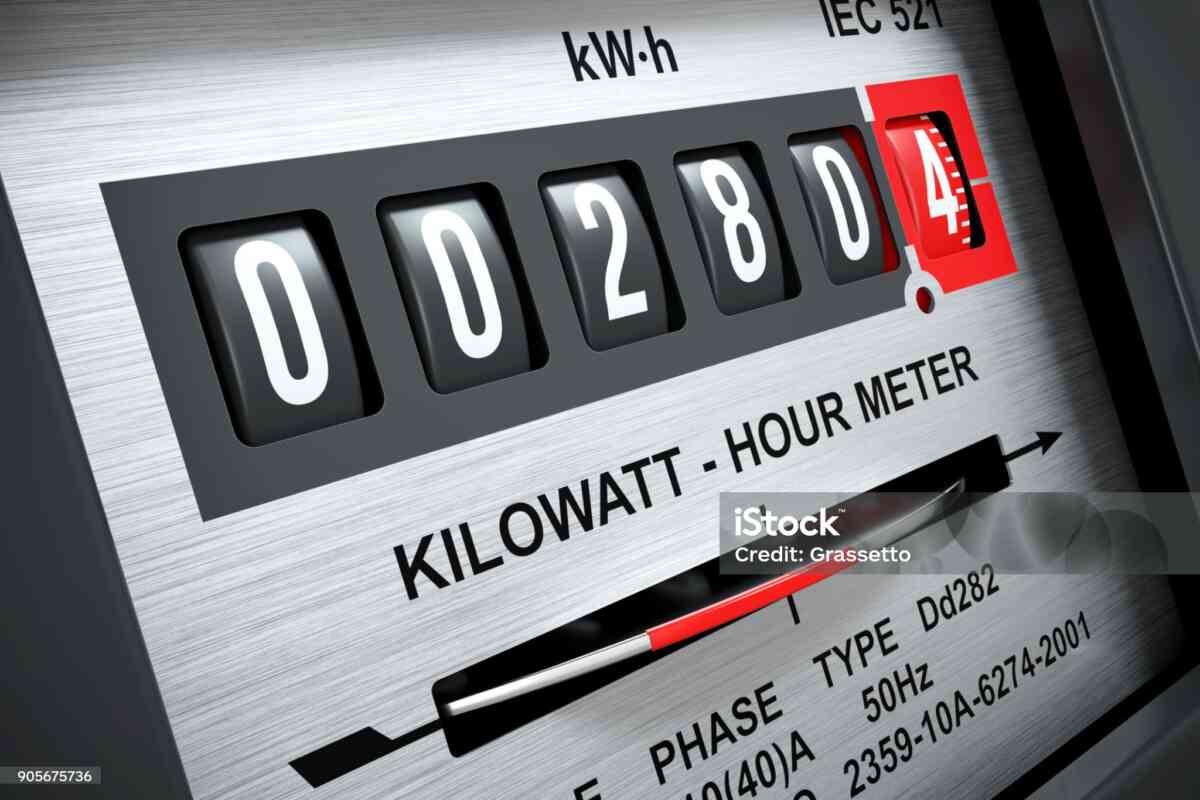
Electrical energy calculations often involve two important units: kilowatt-hours (kWh) and kilowatts (kW). These units may look similar, but they represent different physical quantities.
Kilowatts describe power, while kilowatt-hours describe energy.
If you know how much energy was consumed or produced and how long it took, you can calculate the average power using a simple formula:
Average kW = kWh ÷ hours
The FREE TOOLS Kilowatt-Hours to Kilowatts Calculator is designed to make this calculation fast and convenient.
This article provides a detailed explanation of the calculator, the mathematical formula behind it, practical examples, applications in homes and businesses, and common mistakes to avoid.
What Is the Kilowatt-Hours to Kilowatts Calculator?
The Kilowatt-Hours to Kilowatts Calculator is a free online calculator that determines average power from total energy and elapsed time.
You provide:
- Energy in kilowatt-hours
- Time in hours
The calculator then determines the average power in kilowatts.
For example:
Energy = 50 kWh
Time = 10 hours
Therefore:
50 ÷ 10 = 5 kW
The average power is 5 kW.
Why Is This Calculator Useful?
Electrical systems can generate or consume different amounts of power throughout the day.
Instead of manually calculating average power each time, an online calculator allows users to quickly evaluate energy data.
It can be useful for:
- Home energy analysis
- Solar power calculations
- Battery planning
- Generator evaluation
- Electric vehicle charging
- Appliance analysis
- Industrial equipment
- Energy efficiency studies
- Engineering homework
- Electrical education
- Business energy management
Understanding the Energy-Power-Time Relationship
The foundation of the calculation is:
Energy = Power × Time
When energy is measured in kWh and time is measured in hours:
kWh = kW × h
To find power, divide both sides by time:
kW = kWh ÷ h
This simple relationship explains how the calculator works.
Why kWh Is an Energy Unit
A kilowatt-hour describes an accumulated quantity of energy.
Consider a 1-kW device operating for one hour.
It uses:
1 kW × 1 hour = 1 kWh
If the same device operates for five hours:
1 × 5 = 5 kWh
If a 5-kW device operates for five hours:
5 × 5 = 25 kWh
Therefore, energy depends on both power and time.
Why kW Is a Power Unit
Power describes how quickly energy is consumed or delivered.
Imagine two machines:
- Machine A: 1 kW
- Machine B: 5 kW
Machine B uses energy at five times the rate of Machine A when both operate under comparable conditions.
However, total energy consumption depends on operating time.
A 1-kW machine running for ten hours consumes:
1 × 10 = 10 kWh
A 5-kW machine running for two hours also consumes:
5 × 2 = 10 kWh
They use the same total energy but at different power levels and operating durations.
How to Calculate kW From kWh
The process has three basic steps.
Step 1: Identify the Energy
Determine the total energy in kWh.
Example:
80 kWh
Step 2: Determine the Time
Find the time period in hours.
Example:
16 hours
Step 3: Divide Energy by Time
80 ÷ 16 = 5 kW
Therefore, the average power is:
5 kW
More kWh to kW Examples
2 kWh Over 2 Hours
2 ÷ 2 = 1 kW
6 kWh Over 3 Hours
6 ÷ 3 = 2 kW
15 kWh Over 5 Hours
15 ÷ 5 = 3 kW
25 kWh Over 10 Hours
25 ÷ 10 = 2.5 kW
36 kWh Over 12 Hours
36 ÷ 12 = 3 kW
75 kWh Over 15 Hours
75 ÷ 15 = 5 kW
200 kWh Over 20 Hours
200 ÷ 20 = 10 kW
Fractional and Decimal Results
Not every calculation produces a whole number.
For example:
10 kWh ÷ 3 hours = 3.333… kW
The average power can be rounded to:
3.33 kW
Another example:
25 kWh ÷ 8 hours = 3.125 kW
Therefore:
Average power = 3.125 kW
An online calculator can make these decimal calculations easier.
Converting Different Time Units
The formula requires time in hours.
If your time is provided in minutes, convert it first.
Minutes to Hours
Use:
hours = minutes ÷ 60
For example:
30 minutes:
30 ÷ 60 = 0.5 hours
Suppose 4 kWh is consumed over 30 minutes.
First convert the time:
0.5 hours
Then:
4 ÷ 0.5 = 8 kW
The average power is 8 kW.
15 Minutes
15 minutes equals:
15 ÷ 60 = 0.25 hours
If 2 kWh is used over 15 minutes:
2 ÷ 0.25 = 8 kW
90 Minutes
90 minutes equals:
90 ÷ 60 = 1.5 hours
If 12 kWh is consumed:
12 ÷ 1.5 = 8 kW
Using kWh to kW Calculations With Solar Power
Solar energy is one of the most common areas where users encounter both kWh and kW.
A solar installation might have a rated capacity expressed in kW.
Its electricity production over a day may be reported in kWh.
For example, a system produces 30 kWh of energy over an effective five-hour production period.
Average production:
30 ÷ 5 = 6 kW
However, solar output is variable.
At sunrise, output may be low. Around the strongest sunlight period, production may be much higher. It may decline again later in the day.
Consequently, average power calculated from kWh should not be interpreted as constant instantaneous power.
Using kWh to kW With Home Batteries
Battery capacity is usually described in kWh.
Suppose a home battery stores 15 kWh.
If the battery supplies that energy evenly over three hours:
15 ÷ 3 = 5 kW
The average output would be 5 kW.
But actual battery systems have technical limitations.
Factors may include:
- Maximum discharge power
- Inverter rating
- Usable battery capacity
- Battery efficiency
- Temperature
- State of charge
- Manufacturer limits
- Battery management system settings
Therefore, a kWh-to-kW calculation provides a mathematical average, not necessarily the battery’s actual maximum output.
Using kWh to kW With Electric Vehicles
Electric vehicle batteries are typically rated in kWh.
Charging stations are often rated in kW.
For example, if 40 kWh is delivered to an EV over four hours:
40 ÷ 4 = 10 kW
The average charging power is 10 kW.
However, EV charging curves can change during the session.
The vehicle may accept a higher charging power at one stage and lower power later.
Using kWh to kW With Generators
Generators are often described using their power output.
For example, a generator may be rated at 10 kW.
If a facility consumes 80 kWh over eight hours:
80 ÷ 8 = 10 kW
That is the average load.
But average load is not necessarily the same as generator sizing requirements.
A generator may need additional capacity for:
- Motor starting
- Pumps
- Compressors
- Air conditioners
- Welding equipment
- Industrial machinery
- Sudden load changes
Professional electrical design should consider peak demand and equipment specifications.
Using kWh to kW With Air Conditioning
Air conditioners are an excellent example of why average and rated power can differ.
An air conditioner might have a particular electrical rating, but actual energy consumption can change according to:
- Outdoor temperature
- Thermostat setting
- Room size
- Insulation
- Number of occupants
- Door and window openings
- Compressor cycling
- Equipment efficiency
Suppose an air conditioner contributes to 18 kWh of electricity use over six hours.
The average power contribution is:
18 ÷ 6 = 3 kW
This is an average over the period.
Using kWh to kW for Industrial Equipment
Factories and workshops may monitor energy use over operating shifts.
Suppose machinery consumes:
1,500 kWh during a 10-hour shift.
Average power:
1,500 ÷ 10 = 150 kW
This information can be useful when reviewing electrical demand.
However, industrial facilities may also need to analyze peak demand because average power can hide short periods of very high load.
kWh to kW and Electricity Costs
It is important to distinguish power calculations from energy cost calculations.
If electricity costs $0.15 per kWh and a device uses 20 kWh:
20 × $0.15 = $3
The electricity cost is $3.
The kW value is not directly used to calculate the energy charge unless you first determine how many hours the equipment operates.
For example, a 4-kW machine operating for five hours consumes:
4 × 5 = 20 kWh
Then:
20 × $0.15 = $3
kWh, kW, and Appliance Ratings
Appliance labels may use watts or kilowatts.
For example:
1,500 W = 1.5 kW
If the appliance runs continuously for four hours:
1.5 × 4 = 6 kWh
If you know that it consumed 6 kWh over four hours, you can reverse the calculation:
6 ÷ 4 = 1.5 kW
This demonstrates how kWh and kW are connected.
Common kWh to kW Mistakes
Mistake #1: Treating kWh as kW
A value such as 50 kWh does not automatically mean 50 kW.
You need a time period.
Mistake #2: Forgetting to Convert Minutes
If the time is 30 minutes, do not enter 30 as hours.
30 minutes = 0.5 hours.
Mistake #3: Using Multiplication
For kWh to kW, divide:
kWh ÷ hours
For kW to kWh, multiply:
kW × hours
Mistake #4: Confusing Average and Peak Power
The kWh-to-kW calculation gives average power over the specified period.
It does not necessarily tell you the maximum instantaneous demand.
Mistake #5: Confusing kW and Watts
Remember:
1 kW = 1,000 W
Quick Reference Formula
The most important equations are:
kW = kWh ÷ hours
kWh = kW × hours
hours = kWh ÷ kW
These three formulas allow you to solve for any of the three variables when the other two are known.
Quick Conversion Examples
| kWh | Hours | kW |
|---|---|---|
| 5 | 1 | 5 |
| 5 | 2 | 2.5 |
| 10 | 2 | 5 |
| 10 | 5 | 2 |
| 20 | 4 | 5 |
| 20 | 10 | 2 |
| 30 | 5 | 6 |
| 50 | 10 | 5 |
| 100 | 20 | 5 |
| 200 | 40 | 5 |
Who Can Use a kWh to kW Calculator?
The tool can be useful for many audiences.
Homeowners
Homeowners can use it to understand appliance energy consumption and household electricity usage.
Students
Students studying physics, electrical engineering, or energy systems can use it to check calculations and understand the relationship between energy and power.
Electricians
Electricians may use kWh and kW calculations when reviewing energy data, although professional electrical design often requires additional calculations.
Solar Installers
Solar professionals can use energy and power calculations when evaluating system performance.
EV Owners
Electric vehicle owners can use the relationship to understand charging energy and average charging power.
Businesses
Businesses can analyze energy usage across operating periods.
Frequently Asked Questions
What is the formula for kWh to kW?
The formula is:
kW = kWh ÷ hours
Can kWh be converted to kW directly?
No. You need the time period.
What is 10 kWh over 2 hours?
10 ÷ 2 = 5 kW.
What is 50 kWh over 10 hours?
50 ÷ 10 = 5 kW.
What is 100 kWh over 24 hours?
100 ÷ 24 ≈ 4.17 kW.
What is 1 kWh over 30 minutes?
Thirty minutes equals 0.5 hours.
Therefore:
1 ÷ 0.5 = 2 kW
Does a 10-kWh battery produce 10 kW?
Not necessarily. kWh represents energy capacity, while kW represents power output. The battery’s maximum power depends on its specifications.
Does a 10-kW appliance use 10 kWh?
Only if it operates for one hour at that power level.
For two hours:
10 × 2 = 20 kWh
Is kWh used for electricity billing?
Yes. Electricity consumption is commonly measured in kWh.
Is kW used to describe power capacity?
Yes. Equipment, generators, solar systems, motors, and other electrical systems can have power ratings expressed in kW.
Final Conclusion
The FREE TOOLS Kilowatt-Hours to Kilowatts Calculator is a convenient way to calculate average power when you know total energy consumption and operating time.
The fundamental relationship is:
kW = kWh ÷ hours
The most important lesson is that kilowatt-hours and kilowatts are not the same unit.
- kW measures power.
- kWh measures energy.
- Hours measure time.
Once these three concepts are understood, many electrical calculations become much easier.
Whether you are analyzing household electricity, solar panels, batteries, generators, electric vehicles, appliances, or industrial equipment, the kWh-to-kW relationship provides a useful way to connect energy consumption with average power.
For quick calculations, enter your energy value and time period into the FREE TOOLS Kilowatt-Hours to Kilowatts Calculator and use the result as your average power value.


