
alicia rose
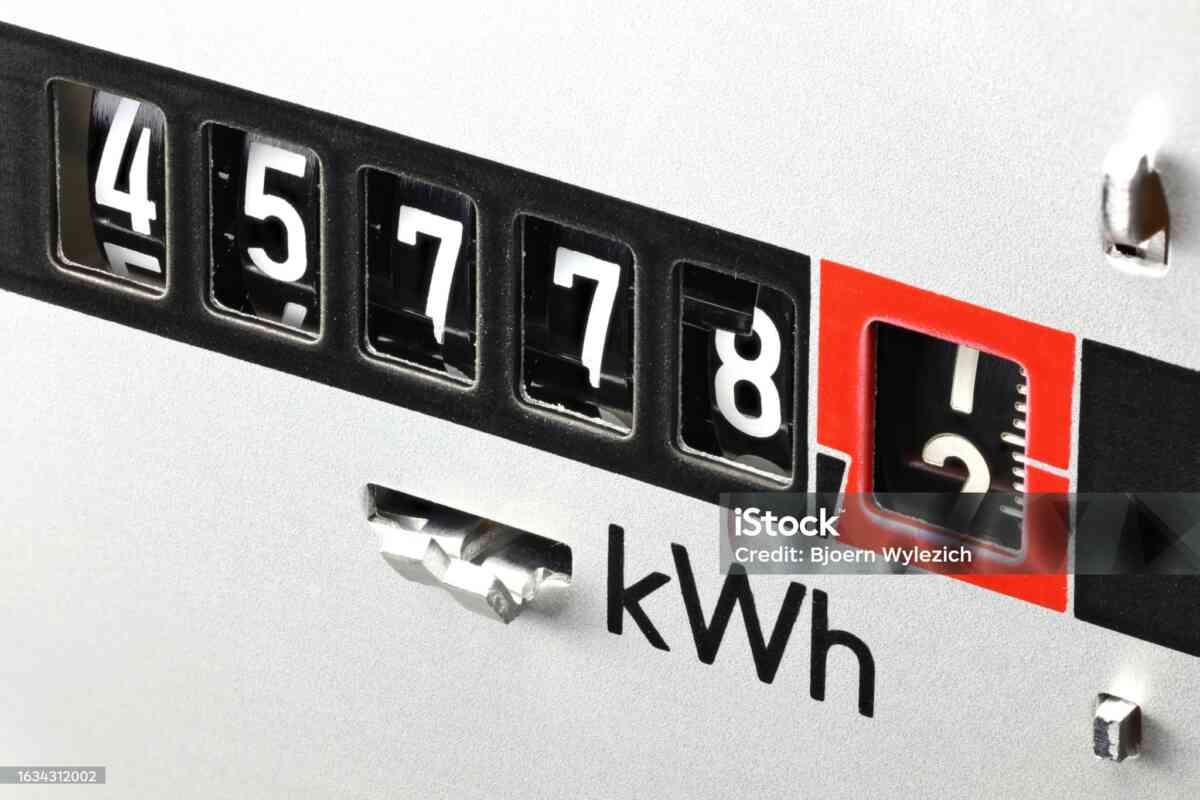
The Kilowatts to Kilowatts Calculator is a straightforward online tool for working with power measurements expressed in kilowatts. Since both the input and output are kilowatts, there is no change in the numerical value.
For example:
10 kW = 10 kW
This simple relationship can be useful when learning unit conversions, checking technical specifications, preparing electrical calculations, or using a larger online calculator system.
Kilowatts are important in modern electrical systems. They are used to describe the power capacity of electrical appliances, motors, generators, solar systems, industrial machines, heating equipment, and electric vehicle charging systems.
Understanding exactly what a kilowatt represents can help prevent confusion between power, energy, current, voltage, and apparent power.
What Is a Kilowatt?
A kilowatt is a unit used to measure power.
The prefix kilo- means 1,000.
Therefore:
1 kilowatt = 1,000 watts
The symbol for kilowatt is:
kW
The lowercase k represents kilo, while the uppercase W represents watt.
Correct notation is:
kW
Not:
KW
In many technical contexts, proper unit notation matters.
What Is the Kilowatts to Kilowatts Conversion?
The conversion is an identity conversion.
That means the input unit and output unit are exactly the same.
The equation is:
P₂ = P₁
where both values are measured in kW.
For example:
3 kW → 3 kW
8 kW → 8 kW
12.5 kW → 12.5 kW
250 kW → 250 kW
Nothing is multiplied or divided.
Why Would Anyone Need This Calculator?
At first glance, converting kW to kW may seem unnecessary.
However, online conversion tools are often part of larger calculation systems. Users may encounter a conversion field where they need to select a source and target unit.
A dedicated calculator can provide:
- Quick verification
- Consistent unit formatting
- Easy data entry
- Educational assistance
- Error checking
- Convenient technical reference
It can also serve as a simple introduction to power-unit conversion.
Basic Formula
The basic formula is:
Kilowatts = Kilowatts
Or:
Output kW = Input kW
For an input of X kW:
X kW = X kW
There is no conversion factor.
Example Calculations
Example 1: 1 kW
Input:
1 kW
Output:
1 kW
Example 2: 4 kW
Input:
4 kW
Output:
4 kW
Example 3: 15 kW
Input:
15 kW
Output:
15 kW
Example 4: 37.5 kW
Input:
37.5 kW
Output:
37.5 kW
Example 5: 1,000 kW
Input:
1,000 kW
Output:
1,000 kW
The value remains unchanged regardless of its size.
Kilowatts and Watts
The most common conversion involving kilowatts is kW to W.
The relationship is:
1 kW = 1,000 W
Therefore:
kW × 1,000 = W
Examples:
2 kW × 1,000 = 2,000 W
7 kW × 1,000 = 7,000 W
25 kW × 1,000 = 25,000 W
The reverse conversion is:
W ÷ 1,000 = kW
For example:
5,000 W ÷ 1,000 = 5 kW
Kilowatts and Megawatts
Large electrical installations may use megawatts.
One megawatt equals:
1 MW = 1,000 kW
Therefore:
1,000 kW = 1 MW
For example:
5,000 kW = 5 MW
This is particularly relevant for power plants, utility systems, large solar farms, wind farms, and industrial facilities.
Kilowatts and Horsepower
Mechanical equipment sometimes uses horsepower instead of kilowatts.
The exact conversion depends on the definition of horsepower.
A commonly used mechanical horsepower relationship is approximately:
1 hp ≈ 0.7457 kW
Therefore:
1 kW ≈ 1.341 hp
For example, a 10 kW motor corresponds to approximately:
10 × 1.341 = 13.41 hp
Actual motor selection should always consider manufacturer specifications and operating conditions.
Kilowatts and kVA
Kilowatts and kilovolt-amperes are related but different.
kW represents real power.
kVA represents apparent power.
Power factor connects them:
kW = kVA × PF
where PF represents power factor.
For example, if an electrical system has:
50 kVA
and a power factor of:
0.8
then:
50 × 0.8 = 40 kW
Therefore, 50 kVA is not automatically equal to 50 kW.
Kilowatts and Kilowatt-Hours
One of the most important distinctions in electricity is the difference between kW and kWh.
A kilowatt measures power.
A kilowatt-hour measures energy.
Suppose an appliance has a power rating of:
3 kW
If it operates for:
4 hours
then the theoretical energy usage is:
3 × 4 = 12 kWh
This relationship is:
Energy = Power × Time
or:
kWh = kW × hours
How Electricity Bills Relate to kW and kWh
Electricity billing commonly uses energy consumption rather than instantaneous power.
If a device uses 2 kW and operates continuously for 5 hours:
2 kW × 5 h = 10 kWh
If the electricity price were represented by a hypothetical rate of $0.20 per kWh:
10 × $0.20 = $2.00
The actual electricity price depends on the location, tariff, utility provider, taxes, fees, and other factors.
Using kW in Home Appliances
Many household appliances have power ratings.
Examples include:
- Air conditioners
- Electric ovens
- Water heaters
- Electric heaters
- Pumps
- Washing machines
- Dryers
- EV chargers
A device may have a rated power of 2 kW.
That means the device’s rated power is:
2,000 watts
It does not necessarily mean the appliance will consume exactly 2 kWh every hour under every operating condition, because real appliances may cycle, modulate, or operate at different loads.
Using kW for Air Conditioners
Air-conditioning equipment may have electrical input power expressed in watts or kilowatts.
Suppose an air conditioner has an electrical input rating of:
1.5 kW
That represents its rated electrical power under specified conditions.
It should not automatically be interpreted as the cooling capacity.
Cooling capacity may be expressed in BTU/h, tons of refrigeration, or other units.
Using kW for Electric Vehicles
Electric vehicle charging systems can also be described in kW.
For example:
7.4 kW home charger
or:
11 kW charger
or:
22 kW charger
The charging power determines how quickly energy can theoretically be delivered to the vehicle, although actual charging speed depends on the vehicle, battery state, temperature, charger, electrical installation, and other factors.
Using kW for Solar Panels
Solar systems often use kW to describe system capacity.
A system might be described as:
5 kW solar system
or:
10 kW solar system
However, actual electricity generation varies with:
- Solar irradiance
- Weather
- Temperature
- Panel orientation
- Shading
- System losses
- Inverter limitations
- Time of day
- Season
Therefore, a 5 kW system does not necessarily produce 5 kW continuously.
Using kW for Generators
Generators can be rated in kW and kVA.
When selecting a generator, users should consider the total load and the characteristics of the connected equipment.
Motors and compressors can have starting currents that are considerably higher than their normal running current.
Consequently, generator sizing may require more than simply adding the nominal kW values.
Common Mistakes
Mistake 1: Confusing kW and kWh
kW is power.
kWh is energy.
Mistake 2: Assuming kW Equals kVA
kW and kVA are related through power factor but are not generally identical.
Mistake 3: Forgetting the 1,000-Watt Relationship
1 kW = 1,000 W
Mistake 4: Mixing Units
Calculations can become incorrect if some values are in watts and others are in kilowatts.
Mistake 5: Assuming Rated Power Equals Constant Consumption
Equipment may not operate at its maximum rated power continuously.
Kilowatts Conversion Table
| Input | Output |
|---|---|
| 0.1 kW | 0.1 kW |
| 0.25 kW | 0.25 kW |
| 0.5 kW | 0.5 kW |
| 1 kW | 1 kW |
| 2 kW | 2 kW |
| 5 kW | 5 kW |
| 10 kW | 10 kW |
| 20 kW | 20 kW |
| 50 kW | 50 kW |
| 100 kW | 100 kW |
| 500 kW | 500 kW |
| 1,000 kW | 1,000 kW |
Frequently Asked Questions
How do I convert kilowatts to kilowatts?
No conversion is required. The value remains the same.
What is 10 kW in kW?
10 kW is exactly 10 kW.
What is 100 kW in kW?
100 kW is exactly 100 kW.
What is 1 kW in watts?
1 kW equals 1,000 watts.
What does kW measure?
kW measures power.
What does kWh measure?
kWh measures energy.
Can a kW calculator calculate electricity costs?
A kW calculator alone does not determine electricity costs. Cost calculations generally require operating time and an electricity rate.
Is kW the same as horsepower?
No. Horsepower and kilowatts are different units of power and can be converted using an appropriate conversion factor.
Conclusion
The Kilowatts to Kilowatts Calculator provides a simple way to verify a power measurement while keeping the unit unchanged.
The fundamental rule is:
Input kW = Output kW
Although the conversion itself is trivial, understanding kilowatts is valuable because kW is widely used in electrical and mechanical applications.
Once users understand kW, they can more easily work with related units such as watts, megawatts, horsepower, kVA, and kilowatt-hours.
Meta Title: Kilowatts to Kilowatts Calculator – Free kW Conversion Tool
Meta Description: Calculate and verify kilowatt values with this free Kilowatts to Kilowatts Calculator. Learn kW formulas, examples, watts, kVA, kWh, and power conversions.
Suggested URL Slug: /kilowatts-to-kilowatts/
Primary Keyword: Kilowatts to Kilowatts Calculator
Secondary Keywords: kW to kW calculator, free kilowatt calculator, kW conversion, kilowatt converter, power calculator, electrical power calculator

