Tanya olsen
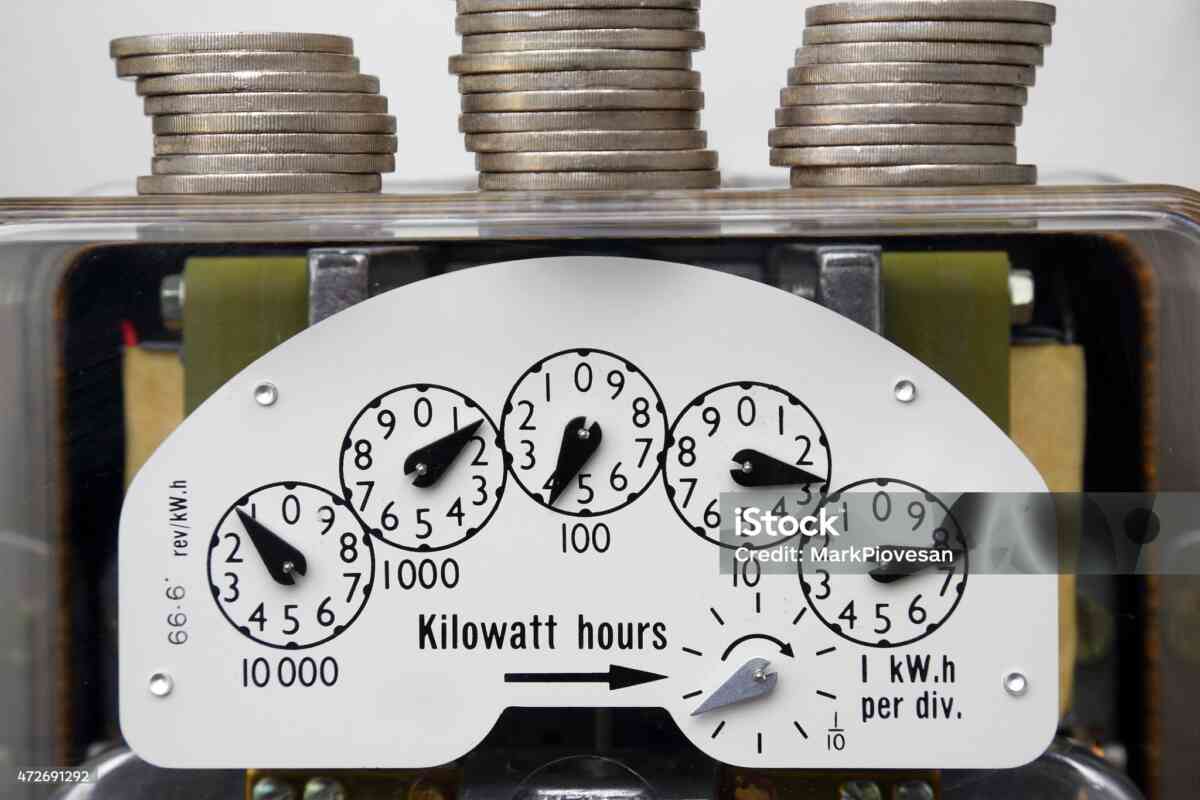
Understanding how to convert watts to kilowatt-hours can help homeowners, students, engineers, business owners, and anyone interested in electricity consumption estimate how much energy an electrical device uses.
A watt tells you the rate of power use, while a kilowatt-hour tells you the amount of energy used over time.
The conversion itself is straightforward:
Kilowatt-hours = Watts × Hours ÷ 1,000
The important part is determining the correct wattage and operating time.
What Does Watt Mean?
The watt (W) is the standard unit used to describe power.
If an appliance is rated at 1,000 watts, it requires approximately 1,000 watts of power while operating under the conditions represented by that rating.
Examples include:
- 10 W LED lamp
- 60 W traditional light bulb
- 100 W laptop
- 150 W television
- 1,000 W microwave
- 1,500 W heater
The wattage shown on an appliance does not by itself tell you how much energy the appliance consumes over an entire day or month.
Time must also be considered.
What Is a Kilowatt-Hour?
A kilowatt-hour, abbreviated kWh, measures energy.
One kilowatt is equal to 1,000 watts.
Therefore:
1 kW = 1,000 W
If a 1,000 W appliance runs for one hour:
1,000 W × 1 hour ÷ 1,000 = 1 kWh
If it runs for five hours:
1,000 × 5 ÷ 1,000 = 5 kWh
This demonstrates why operating time is essential.
The Basic Watts to kWh Formula
The standard calculation is:
kWh = W × h / 1,000
Where:
- W = power in watts
- h = operating time in hours
- 1,000 = conversion factor from watts to kilowatts
Another way to calculate it is to convert watts to kilowatts first.
Step 1
Divide watts by 1,000:
kW = W ÷ 1,000
Step 2
Multiply kilowatts by hours:
kWh = kW × h
For example:
600 W ÷ 1,000 = 0.6 kW
0.6 kW × 5 hours = 3 kWh
Quick Watts to kWh Chart
For one hour of operation:
| Power | Energy in 1 Hour |
|---|---|
| 10 W | 0.01 kWh |
| 50 W | 0.05 kWh |
| 100 W | 0.10 kWh |
| 200 W | 0.20 kWh |
| 300 W | 0.30 kWh |
| 500 W | 0.50 kWh |
| 750 W | 0.75 kWh |
| 1,000 W | 1.00 kWh |
| 1,500 W | 1.50 kWh |
| 2,000 W | 2.00 kWh |
| 3,000 W | 3.00 kWh |
| 5,000 W | 5.00 kWh |
For longer operating periods, multiply the hourly consumption by the number of hours.
How to Calculate 100 Watts to kWh
Suppose a device consumes 100 W and runs for 8 hours.
100 × 8 ÷ 1,000 = 0.8 kWh
Therefore, it uses approximately 0.8 kWh.
If it operates 8 hours every day for 30 days:
0.8 × 30 = 24 kWh
Estimated monthly consumption is 24 kWh.
How to Calculate 200 Watts to kWh
A 200 W device runs for 10 hours.
200 × 10 ÷ 1,000 = 2 kWh
Daily consumption is approximately 2 kWh.
Over 30 days:
2 × 30 = 60 kWh
How to Calculate 500 Watts to kWh
A 500 W device runs for 6 hours.
500 × 6 ÷ 1,000 = 3 kWh
For 30 days:
3 × 30 = 90 kWh
How to Calculate 750 Watts to kWh
A 750 W appliance operates for 4 hours.
750 × 4 ÷ 1,000 = 3 kWh
Therefore, four hours of operation uses approximately 3 kWh.
How to Calculate 1,500 Watts to kWh
A 1,500 W heater runs for 5 hours.
1,500 × 5 ÷ 1,000 = 7.5 kWh
The estimated energy consumption is 7.5 kWh.
This example also shows why high-power heating appliances can contribute significantly to electricity consumption.
How to Calculate 2,000 Watts to kWh
A 2,000 W appliance operates for 3 hours.
2,000 × 3 ÷ 1,000 = 6 kWh
The appliance consumes approximately 6 kWh.
Converting Watts to kWh for Minutes
Not every appliance operates for a whole number of hours.
Suppose a 1,000 W appliance operates for 15 minutes.
Convert minutes into hours:
15 ÷ 60 = 0.25 hours
Then:
1,000 × 0.25 ÷ 1,000 = 0.25 kWh
Therefore, 15 minutes of operation uses approximately 0.25 kWh.
Watts to kWh for 30 Minutes
For a 2,000 W appliance running for 30 minutes:
30 minutes = 0.5 hours.
Therefore:
2,000 × 0.5 ÷ 1,000 = 1 kWh
Watts to kWh for 45 Minutes
45 minutes equals:
45 ÷ 60 = 0.75 hours
For a 1,200 W device:
1,200 × 0.75 ÷ 1,000 = 0.9 kWh
Watts to kWh for 90 Minutes
90 minutes equals:
90 ÷ 60 = 1.5 hours
For a 500 W appliance:
500 × 1.5 ÷ 1,000 = 0.75 kWh
Estimating Daily Usage
Daily energy consumption can be calculated using:
Daily kWh = W × daily hours ÷ 1,000
Suppose a 150 W television operates for 5 hours each day.
150 × 5 ÷ 1,000 = 0.75 kWh
Daily usage is approximately 0.75 kWh.
Estimating Monthly Usage
Use:
Monthly kWh = W × hours per day × days per month ÷ 1,000
Example:
- Power = 800 W
- Usage = 3 hours/day
- Period = 30 days
Calculation:
800 × 3 × 30 ÷ 1,000 = 72 kWh
The appliance consumes approximately 72 kWh per month.
Estimating Annual Energy Consumption
For annual estimates:
Annual kWh = W × hours per day × days per year ÷ 1,000
Suppose a 100 W device runs for 10 hours every day:
100 × 10 × 365 ÷ 1,000 = 365 kWh
Estimated annual energy use is 365 kWh.
Calculating Electricity Cost
After calculating kWh, multiply by the electricity price.
Formula:
Cost = kWh × price per kWh
Suppose:
- Consumption = 365 kWh
- Electricity rate = $0.20/kWh
Then:
365 × 0.20 = $73
Estimated energy cost is $73.
The actual amount paid may differ because utility billing structures can contain additional charges.
Why Electricity Cost Depends on Time
Consider two appliances:
Appliance A
1,000 W for 1 hour:
1 kWh
Appliance B
500 W for 4 hours:
2 kWh
Even though Appliance B has half the power rating, it consumes twice as much energy in this example because it operates for longer.
This illustrates why wattage alone cannot determine energy consumption.
Rated Power vs. Actual Consumption
A common mistake is to treat an appliance’s rated wattage as its exact continuous power consumption.
In reality, many appliances have variable power requirements.
Examples include:
- Refrigerators
- Air conditioners
- Heat pumps
- Computers
- Variable-speed motors
- Modern televisions
- Battery chargers
An appliance might consume different amounts of power depending on operating conditions.
For the most accurate estimate, use measured average power consumption when available.
Standby Power
Some devices consume small amounts of electricity while they are not actively being used.
Examples include:
- Televisions
- Game consoles
- Computers
- Printers
- Network equipment
- Chargers
- Smart-home devices
If standby power is significant and the device remains connected continuously, it can contribute to annual energy use.
For example, a device consuming 5 W continuously for one year:
5 × 24 × 365 ÷ 1,000 = 43.8 kWh
Even a small power draw can accumulate over long periods.
Multiple Devices
You can calculate energy use for multiple appliances separately and then add the results.
Suppose:
- 100 W computer for 8 hours = 0.8 kWh
- 60 W monitor for 8 hours = 0.48 kWh
- 20 W lighting for 8 hours = 0.16 kWh
Total:
0.8 + 0.48 + 0.16 = 1.44 kWh
The combined system consumes approximately 1.44 kWh per day.
Using the Calculator for Energy Audits
A Watts to Kilowatt-Hours Calculator can be useful for a basic household energy audit.
Create a list of electrical devices and record:
- Wattage
- Hours used per day
- Days used per month
- Estimated monthly kWh
High-energy appliances can then be identified.
This can help users investigate ways to reduce consumption.
Watts to kWh for Heating Devices
Heating equipment often has relatively high power ratings.
For example, a 1,500 W heater operating for 6 hours:
1,500 × 6 ÷ 1,000 = 9 kWh
If used for 30 days:
9 × 30 = 270 kWh
This illustrates how both power and operating duration affect total consumption.
Watts to kWh for Lighting
Suppose ten LED bulbs each consume 10 W.
Combined power:
10 × 10 = 100 W
If they operate for 6 hours:
100 × 6 ÷ 1,000 = 0.6 kWh
Daily energy consumption is approximately 0.6 kWh.
Watts to kWh for Computers
A computer system consuming an average of 250 W for 8 hours:
250 × 8 ÷ 1,000 = 2 kWh
If used 22 days per month:
2 × 22 = 44 kWh
This is an estimate and actual computer power consumption can vary substantially.
Watts to kWh for Solar Loads
When designing or evaluating a solar-powered system, energy demand is often more important than simply adding wattage.
A load of 500 W used for 4 hours requires:
500 × 4 ÷ 1,000 = 2 kWh
A solar system must generate enough energy to cover that demand while accounting for system losses and operating conditions.
Frequently Asked Questions
What is the formula for converting watts to kilowatt-hours?
Use:
kWh = Watts × operating hours ÷ 1,000
Is 1,000 watts equal to 1 kWh?
No. 1,000 watts equals 1 kilowatt, while 1 kWh represents one kilowatt used for one hour.
How many kWh is 500 watts for 2 hours?
500 × 2 ÷ 1,000 = 1 kWh.
How many kWh is 1,500 watts for 1 hour?
1.5 kWh.
Can watts be converted to kWh without time?
No. Energy consumption requires a time period.
Can the calculator estimate monthly electricity use?
Yes. Enter the wattage, daily operating time, and number of days.
Does the calculator determine my exact electricity bill?
It can estimate energy-related cost, but actual bills may include additional charges and different pricing structures.
Conclusion
Converting watts to kilowatt-hours is an essential skill for understanding electricity consumption.
The central formula is simple:
kWh = Watts × Hours ÷ 1,000
A FREE TOOLS Watts to Kilowatt-Hours Calculator eliminates much of the manual work and makes it easier to estimate daily, monthly, or annual energy consumption.
Use it to analyze appliances, compare energy usage, estimate operating costs, perform basic energy audits, and better understand how electrical power translates into real-world energy consumption.


