tina hils
Introduction
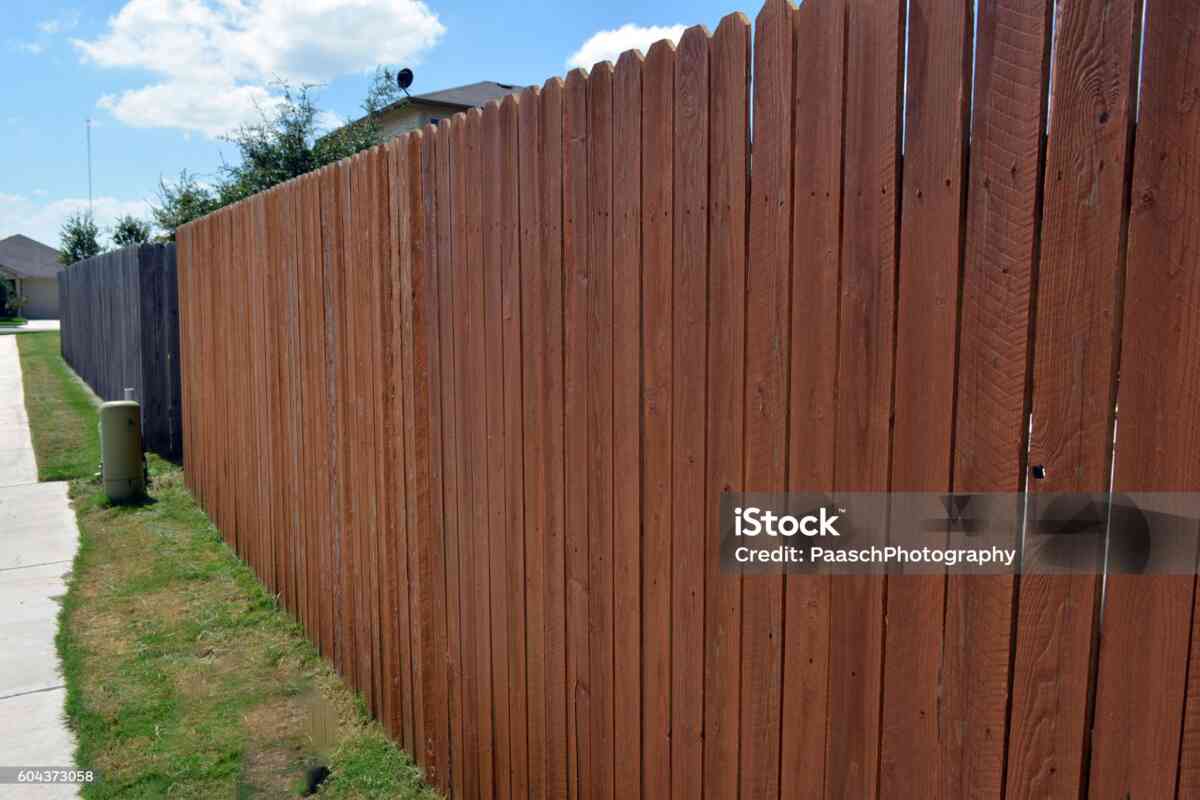
Staining a wooden fence is one of the most effective ways to protect outdoor wood while improving the appearance of a property. A quality fence stain can help protect wood from sunlight, moisture, rain, mildew, and everyday environmental exposure.
However, before starting a fence staining project, one important question needs to be answered: How much fence stain do you actually need?
Buying too little stain can interrupt your project, create inconsistent color, and force you to make additional trips to the store. Buying too much can increase project expenses and leave you with unused products.
This is where a Free Fence Stain Calculator becomes extremely useful.
A fence stain calculator helps homeowners, contractors, property managers, and DIY enthusiasts estimate the amount of stain required for their projects. By entering basic measurements such as fence length, height, number of sides, and product coverage, users can calculate the approximate gallons of stain needed.
Instead of relying on guesswork, you can plan your project using measurements and realistic coverage estimates.
This comprehensive guide explains how a fence stain calculator works, how to measure a wooden fence, how to calculate stain requirements manually, and how to estimate the total material cost.
What Is a Free Fence Stain Calculator?
A Free Fence Stain Calculator is an online calculation tool designed to estimate how much wood stain is necessary to cover a fence.
The calculator typically uses several important measurements:
- Total fence length
- Fence height
- Number of sides to stain
- Number of coats
- Product coverage per gallon
- Additional allowance for absorption and waste
- Price per gallon
After entering these details, the calculator estimates the total surface area, required stain volume, and approximate material expenses.
For example, imagine you have a wooden privacy fence measuring 150 feet long and 6 feet high.
If you plan to stain both sides, the total surface area is:
150 × 6 × 2 = 1,800 square feet.
If your selected stain covers approximately 200 square feet per gallon per coat, one coat requires:
1,800 ÷ 200 = 9 gallons.
If you apply two coats, the estimated requirement becomes 18 gallons before any additional allowance for wood absorption or waste.
This simple calculation can help you prepare your shopping list before beginning the project.
Why Use an Online Fence Stain Calculator?
Calculating stain requirements manually is possible, but an online calculator makes the process faster and easier.
1. Save Time
Measuring a fence and performing calculations can take time, particularly when the property has several sections.
An online calculator simplifies the process by combining measurements into one calculation.
2. Avoid Buying Too Much Stain
Overestimating the amount of stain can unnecessarily increase project expenses.
A calculator helps you estimate a more appropriate quantity based on the actual fence dimensions.
3. Reduce the Risk of Running Out
Running out of stain halfway through a project can create problems.
Different product batches may have slight color variations. Purchasing enough stain from the same product line and batch can help maintain a consistent appearance.
4. Estimate Project Costs
A fence stain calculator can also help estimate the material budget.
By entering the price per gallon, users can calculate approximate stain expenses before purchasing supplies.
5. Compare Different Stain Products
Different stains have different coverage rates.
One product might cover 150 square feet per gallon, while another may cover 250 square feet under suitable conditions.
Comparing coverage rates can help homeowners evaluate product value.
How to Calculate Fence Surface Area
The first step in estimating fence stain requirements is determining the surface area.
The basic formula is:
Fence Area = Fence Length × Fence Height
For rectangular fence sections, this formula provides the surface area of one side.
If both sides require staining, multiply the result by two.
Example: One-Sided Fence
Suppose your fence measures:
- Length: 100 feet
- Height: 6 feet
- Sides: 1
Calculation:
100 × 6 = 600 square feet.
The total staining area is 600 square feet.
Example: Two-Sided Fence
Suppose the same fence needs staining on both sides.
100 × 6 × 2 = 1,200 square feet.
The total staining area becomes 1,200 square feet.
Example: Large Backyard Fence
Consider a larger project:
- Fence length: 250 feet
- Fence height: 6 feet
- Number of sides: 2
Calculation:
250 × 6 × 2 = 3,000 square feet.
This is the surface area before accounting for special features, gates, or other design details.
How Much Fence Stain Do You Need?
The amount of stain depends on three major factors:
- Total fence surface area.
- Product coverage rate.
- Number of coats.
The basic formula is:
Gallons Needed = Total Surface Area ÷ Coverage Per Gallon × Number of Coats
For example:
- Total area: 1,500 square feet
- Coverage: 200 square feet per gallon
- Coats: 2
Calculation:
1,500 ÷ 200 × 2 = 15 gallons.
You should also consider an additional allowance for application waste and uneven wood absorption.
If you add a 10% allowance:
15 × 1.10 = 16.5 gallons.
You may therefore want to purchase approximately 17 gallons, depending on package sizes and product recommendations.
Factors That Affect Fence Stain Coverage
Not every wooden fence absorbs stain at the same rate.
Actual coverage depends on several conditions.
Wood Type
Different wood species have different densities, grain structures, and absorption characteristics.
Common fence materials include:
- Pine
- Cedar
- Redwood
- Spruce
- Fir
- Cypress
Softwoods may absorb stain differently from denser hardwoods.
Some wood surfaces may require more product because of their porous structure.
Wood Age
Older fences can have dry, weathered surfaces that absorb more stain.
New fences may also require special preparation because some lumber contains moisture or mill glaze that affects stain penetration.
Always follow the stain manufacturer’s recommendations regarding preparation and drying.
Wood Condition
Rough-sawn wood generally has more surface texture than smooth-planed lumber.
This can increase stain consumption.
Weathered wood may also absorb more product than a well-maintained surface.
Stain Type
Different stain products have different coverage characteristics.
Common categories include:
- Transparent stain
- Semi-transparent stain
- Semi-solid stain
- Solid-color stain
Transparent products emphasize the natural wood grain, while solid-color stains provide more opaque coverage.
Coverage varies by manufacturer and formulation, so the product label should always be your primary reference.
Number of Coats
Applying two coats generally requires more stain than applying one coat.
However, some products are designed for a single application.
Do not automatically apply additional coats without checking the manufacturer’s instructions.
Understanding Different Types of Fence Stain
Choosing the correct stain is important for both appearance and protection.
Transparent Fence Stain
Transparent stain allows the natural wood grain to remain highly visible.
It is often selected for attractive cedar and redwood fences.
Advantages include:
- Natural wood appearance
- Visible grain patterns
- Subtle color enhancement
Semi-Transparent Fence Stain
Semi-transparent stain adds color while allowing some wood grain to remain visible.
It offers a balance between natural appearance and color enhancement.
Semi-Solid Fence Stain
Semi-solid stain provides stronger color coverage while retaining some visible wood texture.
It can be useful when the fence has minor discoloration or uneven coloration.
Solid-Color Fence Stain
Solid-color stain provides a more opaque appearance.
It can create a uniform finish across older fences with noticeable color differences.
However, it may obscure much of the natural wood grain.
How to Measure a Fence Before Using the Calculator
Accurate measurements produce better estimates.
Follow these steps:
Step 1: Measure the total fence length.
Use a measuring tape to determine the length of each fence section.
For irregular properties, measure every section separately and add the results.
Step 2: Measure the fence height.
Measure from the bottom of the fence boards to the top.
If different sections have different heights, calculate them separately.
Step 3: Determine the number of sides.
Choose whether you intend to stain one side or both sides.
Remember that staining both sides can nearly double the surface area.
Step 4: Account for gates.
Gates may require separate measurements.
Include both sides if both surfaces will be stained.
Step 5: Identify special features.
Decorative panels, lattice tops, posts, and rails can increase the total surface area.
A simple length-and-height calculation may underestimate the required amount if these features are significant.
Step 6: Check the stain coverage rate.
Read the manufacturer’s product label.
Use the stated coverage rate appropriate for your wood condition and application method.
Fence Stain Calculator Example
Let’s examine a practical residential project.
A homeowner wants to stain a backyard privacy fence.
Project measurements:
| Measurement | Value |
|---|---|
| Fence length | 180 ft |
| Fence height | 6 ft |
| Sides | 2 |
| Coats | 2 |
| Coverage | 200 sq ft/gal |
| Waste allowance | 10% |
| Stain price | $45/gal |
Step 1: Calculate surface area.
180 × 6 × 2 = 2,160 square feet.
Step 2: Calculate stain for two coats.
2,160 ÷ 200 × 2 = 21.6 gallons.
Step 3: Add a 10% allowance.
21.6 × 1.10 = 23.76 gallons.
Round up to approximately 24 gallons.
Step 4: Calculate material cost.
24 × $45 = $1,080.
Example project estimate
24 gallons
Estimated stain quantity
Fence area
2,160 sq ft
Number of coats
2
Estimated stain cost
$1,080
Illustrative estimate only. Actual coverage depends on the product and surface conditions.
Conclusion
A Free Fence Stain Calculator is a valuable tool for homeowners and contractors who want to estimate stain quantities accurately and prepare a realistic project budget.
By measuring fence length and height, identifying the number of sides, selecting the correct coverage rate, and accounting for the number of coats, you can estimate the amount of stain needed before starting your project.
The most important factor is using the manufacturer’s actual coverage information rather than relying on a universal coverage assumption.
With proper planning, you can reduce waste, control expenses, and achieve a more consistent fence finish.
Use a Free Fence Stain Calculator before purchasing materials to make your next fence staining project easier, faster, and more predictable.
Frequently Asked Questions
1. What is a fence stain calculator?
It is an online tool that estimates the quantity of wood stain needed based on fence dimensions, coverage rate, and number of coats.
2. How much stain do I need for a 100-foot fence?
For a 6-foot fence stained on both sides, the surface area is 1,200 square feet. At 200 square feet per gallon, one coat requires approximately 6 gallons.
3. How many gallons of stain do I need for a 6-foot fence?
The required quantity depends on fence length, number of sides, coverage rate, and number of coats.
4. Should I stain both sides of my fence?
Staining both sides can provide a more consistent appearance and finish. Whether it is necessary depends on your goals and the product instructions.
5. Does rough wood need more stain?
Generally, rough and porous wood can consume more stain than smooth wood.
6. How many coats of fence stain should I apply?
Follow the product instructions. Some products require one coat, while others may allow or recommend additional coats.
7. Can I use a calculator for cedar fences?
Yes. Enter the cedar fence dimensions and the coverage rate specified by the selected stain manufacturer.
8. Does the calculator include stain cost?
A calculator with a price-per-gallon field can estimate material expenses.
9. Should I include gates in my calculation?
Yes. Measure gates separately and include the surfaces that will be stained.
10. Is the calculator estimate exact?
No. It provides an estimate. Actual consumption depends on wood condition, application method, temperature, and product formulation.