Moscow, the capital of Russia, is a city of immense historical, cultural, and political significance. It is known for its iconic architecture, rich history, and role as a global cultural and economic hub. Here’s an overview of Moscow:
Geography and Layout
- Location: Situated in western Russia on the Moskva River.
- Size: Moscow is one of the largest cities in the world by area and population.
- Districts: The city is divided into 12 administrative okrugs and numerous districts.
- Landmarks on the Moskva River: Many iconic landmarks, including the Kremlin and St. Basil’s Cathedral, are located near the river.
History
- Foundation: Moscow was founded in 1147, traditionally by Yuri Dolgorukiy.
- Growth: It became the Grand Duchy of Moscow in the late 13th century, a center of power for the Russian Empire.
- Napoleonic Invasion: In 1812, the city was partially burned during Napoleon’s invasion to prevent his army from accessing supplies.
- Soviet Era: Moscow became the capital of the Soviet Union in 1918, developing into a major political and cultural center.
- Modern Times: Since the collapse of the Soviet Union in 1991, Moscow has transformed into a global metropolis.
Key Attractions
- Red Square: The heart of Moscow, surrounded by iconic landmarks.
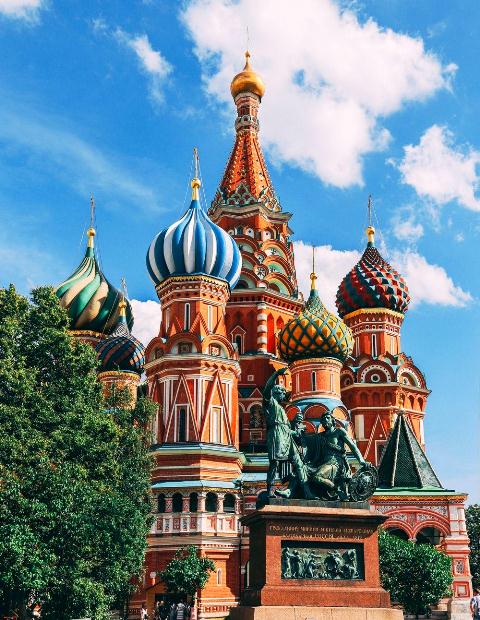
- St. Basil’s Cathedral: Famous for its colorful onion domes and unique architecture.
- Lenin’s Mausoleum: The resting place of Vladimir Lenin.
- The Kremlin: A historic fortified complex that serves as the official residence of the President of Russia.
- Bolshoi Theatre: World-renowned for its ballet and opera performances.
- Moscow Metro: Known for its opulent, palace-like stations with chandeliers and mosaics.
- Tretyakov Gallery: Home to an extensive collection of Russian art.
- GUM Department Store: A luxurious shopping destination on Red Square.
- Arbat Street: A historic pedestrian street filled with shops, cafes, and street performers.
- Moscow City: A modern district with skyscrapers and futuristic architecture.
Culture and Heritage
- Performing Arts: Moscow is famous for its contributions to ballet, opera, and classical music.
- Bolshoi Ballet: One of the oldest and most prestigious ballet companies in the world.
- Literature: The city has been home to literary giants like Leo Tolstoy, Fyodor Dostoevsky, and Anton Chekhov.
- Museums: In addition to the Tretyakov Gallery, the Pushkin Museum of Fine Arts is a must-visit for art enthusiasts.
- Religious Heritage: Moscow is a center of the Russian Orthodox Church, with significant sites like the Cathedral of Christ the Savior.
Food and Drink
- Traditional Russian Cuisine:
- Borscht: A beet-based soup often served with sour cream.
- Pelmeni: Dumplings filled with meat.
- Blini: Thin pancakes served with toppings like sour cream, caviar, or jam.
- Street Food: Kvass (a fermented beverage) and pirozhki (savory pastries) are popular.
- Cafés and Restaurants: The city boasts a mix of traditional Russian eateries and global fine dining.
- Vodka: Moscow is synonymous with this iconic Russian spirit.
Architecture
- Iconic Styles:
- Orthodox Churches: Featuring colorful onion domes and intricate frescoes.
- Soviet Architecture: Stalinist skyscrapers, known as the “Seven Sisters,” dominate the skyline.
- Modern Skyscrapers: Moscow International Business Center showcases contemporary design.
- Landmarks:
- Cathedral of Christ the Savior: The tallest Orthodox Christian church in the world.
- Novodevichy Convent: A UNESCO World Heritage Site with stunning architecture and a serene atmosphere.
Transportation
- Moscow Metro: Efficient and renowned for its architectural beauty.
- Public Transit: A network of buses, trams, and trolleybuses complements the metro.
- Airports: Major international gateways include Sheremetyevo, Domodedovo, and Vnukovo.
- Roads and Traffic: Known for heavy congestion, but the city is working to improve infrastructure.
Events and Festivals
- Victory Day (May 9): Celebrated with parades and festivities to commemorate the end of World War II.
- Moscow International Film Festival: One of the oldest film festivals in the world.
- New Year Celebrations: The city’s decorations and events are dazzling, especially in Red Square.
- Maslenitsa: A traditional festival marking the end of winter, featuring pancakes, dances, and games.
Economy and Innovation
- Financial Hub: Moscow is the economic center of Russia, with a strong presence in banking, energy, and technology.
- Cultural Tourism: The city attracts millions of visitors annually for its rich history and vibrant culture.
- Education: Home to prestigious institutions like Lomonosov Moscow State University.
Parks and Nature
- Gorky Park: A modern recreation area with outdoor activities and cultural events.
- VDNKh: A sprawling exhibition center and park showcasing Soviet-era architecture and attractions.
- Sokolniki Park: A green space offering a tranquil escape from the urban bustle.
- Kolomenskoye: A former royal estate with historic churches and scenic views.
Challenges and Modern Development
- Rapid Growth: The city is balancing modern development with the preservation of its historical identity.
- Traffic and Congestion: A significant challenge for residents and visitors alike.
- Cultural Preservation: Efforts are ongoing to maintain the city’s architectural and cultural heritage.
Moscow is a city of contrasts, where historic landmarks coexist with cutting-edge modernity. Its dynamic energy, combined with its deep cultural roots, makes it a fascinating destination.
Share To

