Tanya olsen
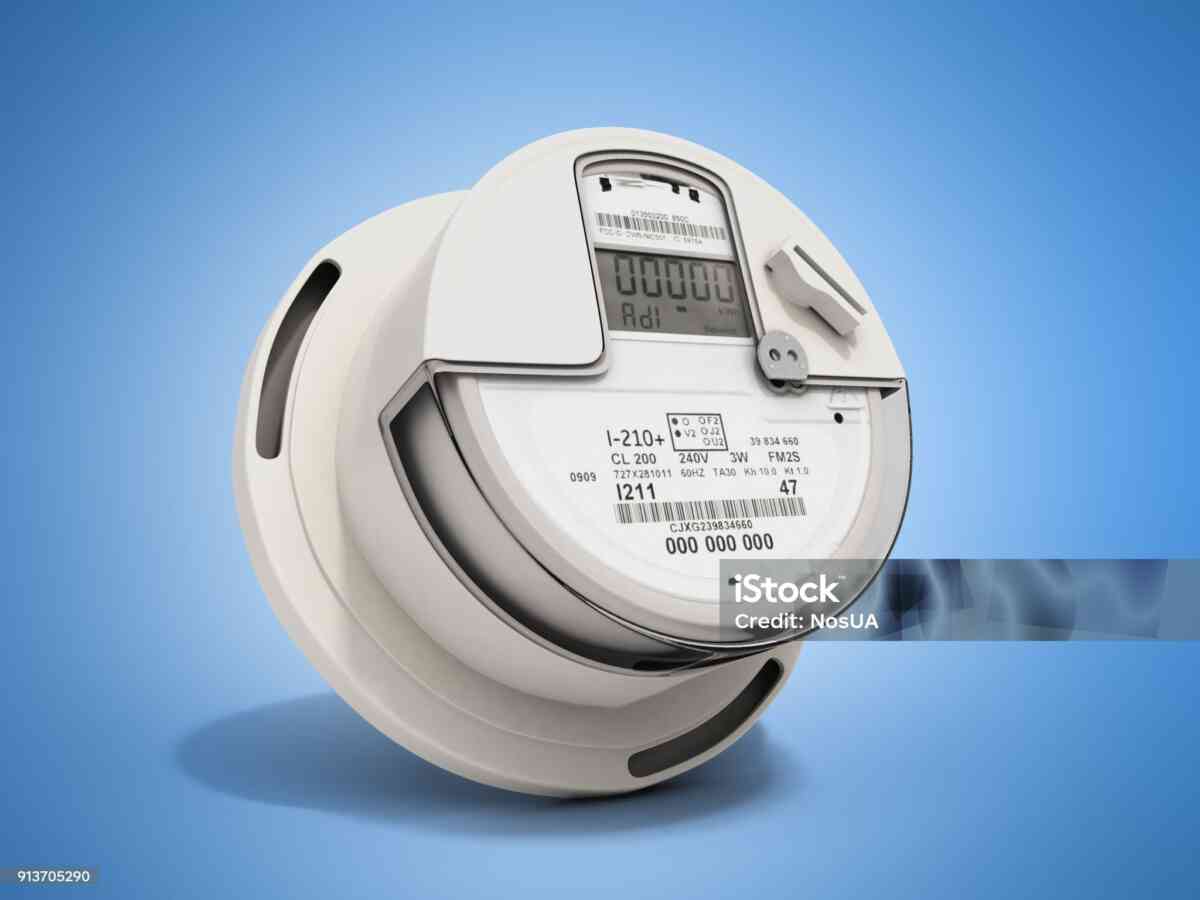
Electricity consumption can be difficult to understand when appliance labels show power in watts but electricity bills show energy in kilowatt-hours. A Free Watts to kWh Calculator bridges that gap by converting an appliance’s power rating and operating time into estimated energy consumption.
This is useful for household appliances, office equipment, workshops, commercial machinery, computers, lighting systems, heating equipment, and many other electrical loads.
The basic relationship is:
Energy in kWh = Power in watts × Time in hours ÷ 1,000
Once you understand this formula, you can estimate how much energy a device uses over an hour, day, month, or year.
Why Convert Watts to kWh?
Most appliances do not display their electricity consumption in the same unit used by utility companies.
An appliance may say:
1,200 W
while an electricity bill may report:
250 kWh
These numbers describe different properties.
The appliance’s wattage describes power.
The electricity bill’s kWh describes accumulated energy.
The Watts to kWh calculation connects the two.
Understanding Electrical Power
Power describes how quickly energy is being consumed.
A 2,000 W heater requires power at a much higher rate than a 20 W LED lamp.
However, energy consumption also depends on how long each device operates.
A 20 W lamp running for 20 hours uses:
20 × 20 ÷ 1,000 = 0.4 kWh
A 2,000 W heater running for 12 minutes uses:
12 minutes = 0.2 hours.
2,000 × 0.2 ÷ 1,000 = 0.4 kWh
In this example, both devices consume the same amount of energy even though their power ratings are dramatically different.
The Main Formula
The formula is:
kWh = W × h ÷ 1,000
Where:
- kWh = energy consumption
- W = electrical power
- h = operating time in hours
This formula works for many basic energy-consumption estimates.
Quick Calculation Method
There are two easy ways to perform the conversion.
Method 1: Direct Formula
Multiply watts by hours and divide by 1,000.
Example:
800 W × 5 hours ÷ 1,000 = 4 kWh.
Method 2: Convert Watts to Kilowatts First
800 W ÷ 1,000 = 0.8 kW
Then:
0.8 kW × 5 hours = 4 kWh.
Both methods produce the same answer.
Example: Laptop
Suppose a laptop consumes approximately 60 W and operates for 7 hours.
60 × 7 ÷ 1,000 = 0.42 kWh
Estimated daily energy use is 0.42 kWh.
For 30 days:
0.42 × 30 = 12.6 kWh
Example: Television
A television consumes 120 W and operates for 5 hours per day.
120 × 5 ÷ 1,000 = 0.6 kWh per day
For 30 days:
0.6 × 30 = 18 kWh
Example: Refrigerator
A refrigerator is more complicated because it may cycle between operating and resting states.
If its average power consumption were 150 W over a particular period, a simplified continuous-use estimate for 24 hours would be:
150 × 24 ÷ 1,000 = 3.6 kWh
However, using rated wattage continuously may overestimate actual consumption.
For appliances with cycling compressors, measured average energy consumption is generally more useful.
Example: Air Conditioner
Suppose an air-conditioning system averages 1,000 W while operating and runs for 8 hours.
1,000 × 8 ÷ 1,000 = 8 kWh
Actual consumption may vary because air conditioners can cycle, change compressor speed, and respond to indoor and outdoor conditions.
Example: Electric Heater
A 1,500 W heater operates for 4 hours.
1,500 × 4 ÷ 1,000 = 6 kWh
If it operates every day for 30 days:
6 × 30 = 180 kWh
This demonstrates how long operating periods can significantly increase energy consumption.
Example: Microwave Oven
Suppose a microwave has an input power of 1,200 W and is used for 15 minutes per day.
15 minutes:
15 ÷ 60 = 0.25 hours
Daily energy:
1,200 × 0.25 ÷ 1,000 = 0.3 kWh
Monthly energy:
0.3 × 30 = 9 kWh
Actual consumption depends on the appliance’s input power and operating pattern.
Example: Washing Machine
Suppose a washing machine has an average power demand of 500 W while operating and runs for 1 hour per cycle.
One cycle:
500 × 1 ÷ 1,000 = 0.5 kWh
If used 20 times per month:
0.5 × 20 = 10 kWh
Actual consumption may vary because washing machines use different amounts of energy during different stages.
Example: Coffee Maker
A 1,000 W coffee maker operates for 20 minutes.
20 minutes = 1/3 hour, approximately 0.333 hours.
Therefore:
1,000 × 0.333 ÷ 1,000 ≈ 0.333 kWh
So one 20-minute operating period uses approximately 0.33 kWh at a continuous 1,000 W draw.
Example: Hair Dryer
A hair dryer consumes 1,800 W and operates for 10 minutes.
10 minutes:
10 ÷ 60 = 0.1667 hours
Energy:
1,800 × 0.1667 ÷ 1,000 ≈ 0.30 kWh
Therefore, the estimated consumption is approximately 0.3 kWh.
Creating an Appliance Energy Table
A useful way to understand household consumption is to make a table.
| Appliance | Power | Daily Use | Estimated Daily kWh |
|---|---|---|---|
| Laptop | 60 W | 7 hr | 0.42 |
| TV | 120 W | 5 hr | 0.60 |
| Lighting | 100 W | 6 hr | 0.60 |
| Fan | 75 W | 8 hr | 0.60 |
| Microwave | 1,200 W | 0.25 hr | 0.30 |
| Heater | 1,500 W | 4 hr | 6.00 |
This makes it easier to identify which loads may consume the most energy.
Total Household Energy Consumption
Suppose your household has the following estimated daily consumption:
- Lighting: 2 kWh
- Electronics: 3 kWh
- Refrigerator: 3 kWh
- Cooking equipment: 4 kWh
- Cooling: 6 kWh
Total:
2 + 3 + 3 + 4 + 6 = 18 kWh/day
Monthly estimate:
18 × 30 = 540 kWh
This is a simplified estimate. Actual household consumption depends on appliance efficiency, operating cycles, weather, occupancy, and usage patterns.
How to Reduce Electricity Consumption
Once high-energy appliances are identified, users can investigate ways to reduce consumption.
Reduce Operating Time
Reducing operating time directly reduces energy consumption when power remains constant.
A 1,000 W appliance operating for 5 hours consumes:
5 kWh
Operating it for 3 hours:
3 kWh
The difference is 2 kWh.
Use Efficient Equipment
A more efficient device may provide the same service while using less electricity.
Avoid Unnecessary Standby Consumption
Disconnecting or switching off equipment that does not need to remain powered can reduce unnecessary energy use.
Maintain Appliances
Poorly maintained equipment can sometimes consume more energy or operate less efficiently.
Monitor Actual Consumption
Measurements from compatible energy meters can help replace assumptions with real data.
Watts to kWh for Commercial Equipment
Businesses can apply the same principles.
Suppose a commercial machine uses 3,500 W and operates for 10 hours per day.
Daily consumption:
3,500 × 10 ÷ 1,000 = 35 kWh
If used 26 days per month:
35 × 26 = 910 kWh
That represents approximately 910 kWh of energy consumption.
For commercial operations, actual utility costs may also depend on demand charges, tariffs, time-of-use rates, and other billing components.
Watts to kWh for Workshops
Workshops may operate equipment such as:
- Compressors
- Welders
- Drills
- Grinders
- Pumps
- Motors
- Lighting
- Fans
- Battery chargers
For example, a 2,500 W compressor operating for 3 hours:
2,500 × 3 ÷ 1,000 = 7.5 kWh
If the compressor cycles rather than running continuously, actual consumption could be lower.
Watts to kWh for Data Centers
Computing environments require careful energy analysis.
A server rated at 500 W might not continuously draw 500 W.
If average measured consumption is 350 W for 24 hours:
350 × 24 ÷ 1,000 = 8.4 kWh/day
For 30 days:
8.4 × 30 = 252 kWh
Data centers require additional consideration for cooling, networking, power supplies, UPS systems, and other infrastructure.
Watts to kWh for Battery Chargers
A charger rated at 100 W operating for 5 hours would theoretically consume:
100 × 5 ÷ 1,000 = 0.5 kWh
However, charging systems have conversion losses.
The electricity drawn from the wall can therefore differ from the energy ultimately stored in a battery.
Watts to kWh for Inverters
Inverters also introduce losses.
If an electrical load requires 1 kWh of useful energy, the inverter may need more than 1 kWh from the source depending on its efficiency.
Therefore, simple Watts-to-kWh calculations represent the load’s estimated energy requirement and may not represent total upstream energy consumption.
Watts to kWh and Solar Panels
Solar panels are commonly described by power ratings in watts.
For example, a 400 W solar panel does not automatically produce 400 Wh every hour under all conditions.
Solar production varies according to:
- Sunlight intensity
- Panel orientation
- Temperature
- Shading
- Weather
- System losses
- Location
- Time of day
Energy calculations therefore require more than simply multiplying panel wattage by 24 hours.
Watts to kWh and Generators
Generators may have power ratings in watts or kilowatts, while fuel consumption depends on load and operating conditions.
For example, a 5 kW generator operating at a particular load for 4 hours could theoretically supply:
5 × 4 = 20 kWh
Actual delivered energy and fuel consumption depend on the generator and load profile.
Why a Free Online Calculator Is Useful
Manual calculations are simple, but an online calculator can be faster when you need to perform many conversions.
A free calculator can help users:
- Convert watts to kWh
- Calculate daily consumption
- Estimate monthly consumption
- Compare appliances
- Estimate operating costs
- Check manual calculations
- Analyze energy requirements
Important Accuracy Considerations
The Watts to kWh formula is mathematically simple, but the quality of the result depends on the quality of the input.
Use Correct Wattage
Check whether the listed wattage represents:
- Rated power
- Maximum power
- Input power
- Average power
- Standby power
Use Realistic Operating Time
Estimate actual use rather than assuming an appliance operates continuously.
Account for Variable Loads
Some appliances change power consumption during operation.
Consider Efficiency
Power entering a device and useful energy delivered by the device are not always identical.
Frequently Asked Questions
How do I convert watts to kilowatt-hours?
Multiply the wattage by operating time in hours and divide by 1,000.
kWh = W × h ÷ 1,000
How many kWh does 100 watts use in 24 hours?
100 × 24 ÷ 1,000 = 2.4 kWh.
How many kWh does 1,000 watts use in 10 hours?
1,000 × 10 ÷ 1,000 = 10 kWh.
How many watts are in one kilowatt?
There are 1,000 watts in one kilowatt.
Is kWh a unit of power?
No. kWh is a unit of energy. Power is measured in watts or kilowatts.
Can I calculate electricity cost with this calculator?
If the calculator accepts an electricity rate, it can estimate cost. Otherwise, calculate kWh first and multiply by your electricity price.
Can this calculator be used for solar power?
Yes, it can help estimate load energy requirements. However, complete solar-system sizing requires additional information.
Is the result exact?
The mathematical conversion can be exact for the supplied inputs, but real-world energy consumption may differ when appliance power varies over time.
Watts to kWh Conversion Formula Summary
The most important formulas are:
Watts to kilowatts:
kW = W ÷ 1,000
Energy consumption:
kWh = kW × hours
Or directly:
kWh = W × hours ÷ 1,000
Monthly energy:
Monthly kWh = W × hours per day × days ÷ 1,000
Annual energy:
Annual kWh = W × hours per day × days per year ÷ 1,000
Estimated electricity cost:
Cost = kWh × electricity rate
Final Thoughts
A FREE TOOLS Watts to Kilowatt-Hours Calculator is a practical resource for translating appliance power ratings into estimated energy consumption.
The calculation is based on a simple relationship between power and time:
kWh = Watts × Hours ÷ 1,000
This makes it possible to estimate how much electricity an appliance may consume during a single operating session, over an entire day, throughout a month, or across a year.
The calculator can be useful for households, students, businesses, engineers, solar-energy planning, workshops, offices, and anyone who wants to understand electricity consumption more clearly.
For more accurate real-world estimates, remember that rated wattage may not equal average operating power. Devices with compressors, motors, heating controls, variable-speed systems, or electronic power management can consume different amounts of electricity at different times.
Use the Free Watts to Kilowatt-Hours Calculator to perform quick calculations, compare energy requirements, estimate consumption, and make electricity-use planning easier.


